The Style Guide · Scandinavian Folk
Scandinavian Folk Kitchen: How to Get Britta's Painted, Welcoming Look
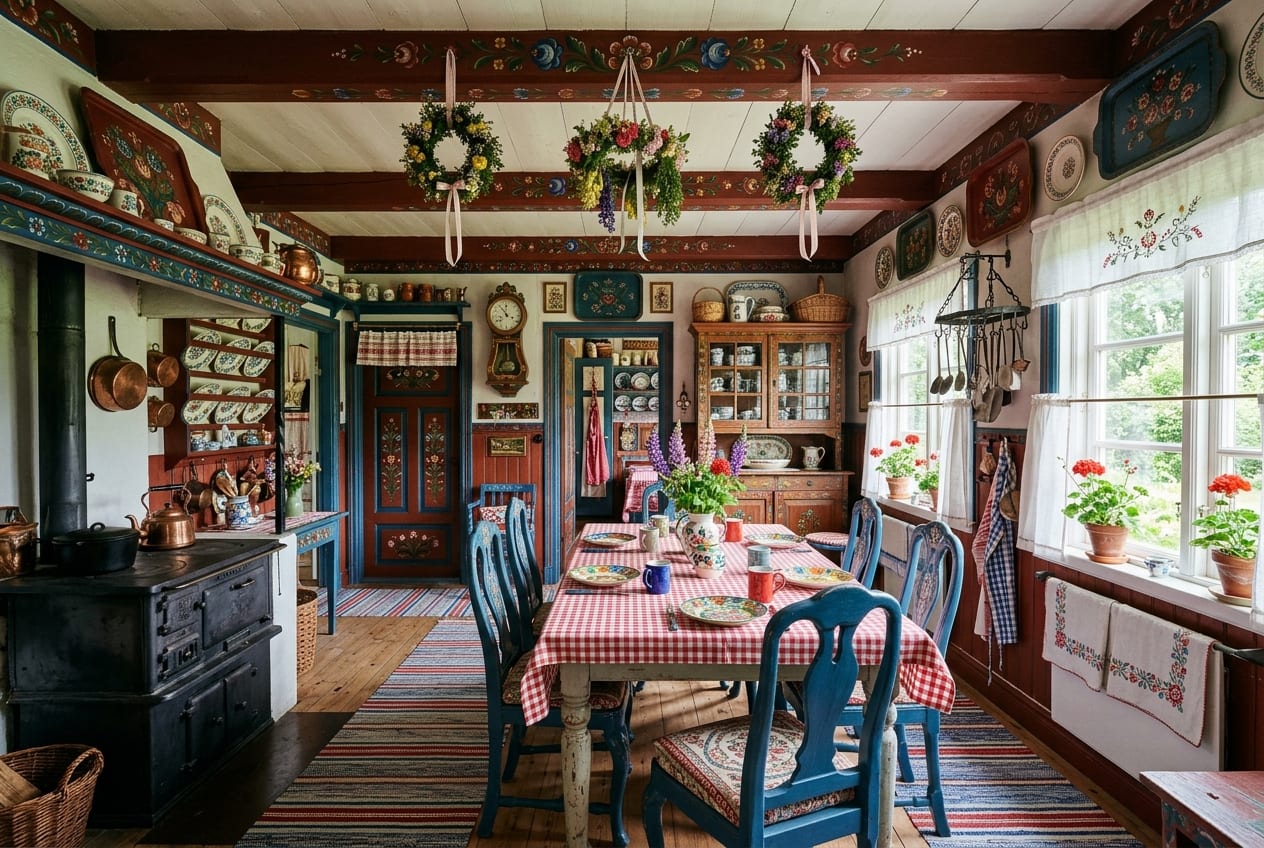
Britta is the kitchen where everyone gathers, where painted flowers bloom on wooden beams and the table is always set for one more.
What is Scandinavian Folk Kitchen Maximalism?
Scandinavian folk kitchen maximalism is the art of abundance rooted in rural tradition. Britta doesn't whisper minimalism—she sings hospitality through painted surfaces, collections of copper and enamelware, and textiles layered like a grandmother's linen closet. Every beam, every plate, every chair tells you that this kitchen was made for gathering, for feeding people, for the kind of comfort that comes from centuries of long winters and warm hearths. The look is rich without being precious, collected without being cluttered, and always, always welcoming.
This style draws from the painted folk traditions of Sweden, Norway, and rural Finland, where farmers decorated their homes with rosemaling, kurbits, and dalmålning—floral motifs painted onto furniture, walls, and architectural elements. These weren't just decorations; they were celebrations of craft, color, and the brief, brilliant Nordic summer captured and held through winter's dark months. Cottage kitchens became galleries of everyday art, where utilitarian objects—wooden spoons, enamel pots, woven baskets—were both beautiful and beloved. The tradition of visible storage, open shelving, and displayed collections comes from homes where space was limited and everything earned its place by being both useful and cherished.
People love Britta now because she offers maximalism with meaning. In a design world often dominated by stark Scandinavian minimalism, the folk kitchen maximalist approach gives permission to collect, display, and paint with joy. She's especially appealing to renters and homeowners craving warmth without fussiness, pattern without chaos, and a kitchen that feels lived-in from day one. There's something deeply comforting about a style that says 'more is more' while staying rooted in practicality—every pot has a purpose, every plate gets used, and every painted flower is a small act of defiance against the long, dark winter.
The signatures
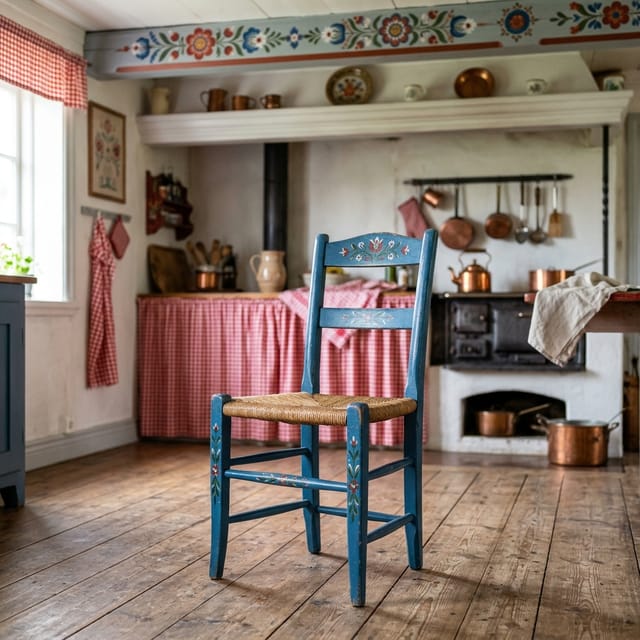
- Painted wooden beams and furniture with folk floral motifs
- Red gingham and blue-and-white textiles layered generously
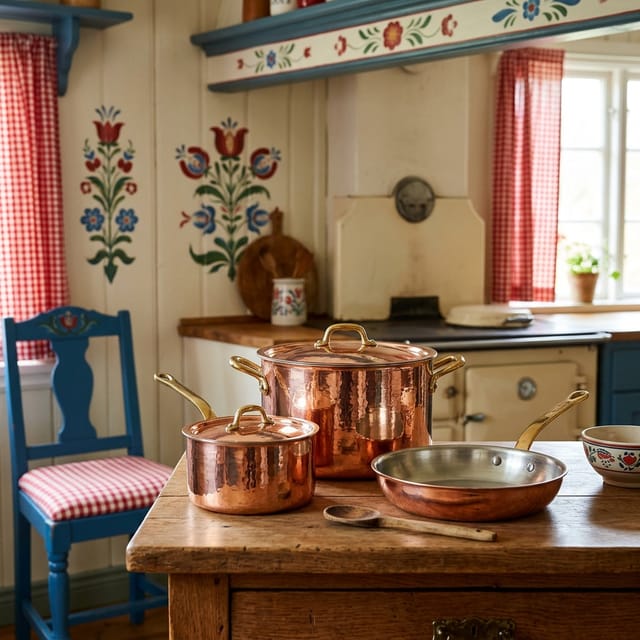
- Copper pots and enamelware displayed as art
- Open shelving with visible, organized collections
- A large communal table that seats everyone
- Natural wood tones warmed by cream, red, and blue
Anatomy of the look
Color & Paint
Britta's palette is a conversation between warmth and cool: folk red (that deep, slightly dusty barn red), painted blue (the color of summer skies over fjords), and copper accents that glow like captured firelight. Winter white walls and cream tones keep the space bright during dark months, while the colored elements—painted beams, chair backs, stenciled borders—add personality without overwhelming. The key is using color deliberately: one or two painted architectural elements, a few pieces of furniture, and textiles that tie it all together.
Walls & Pattern
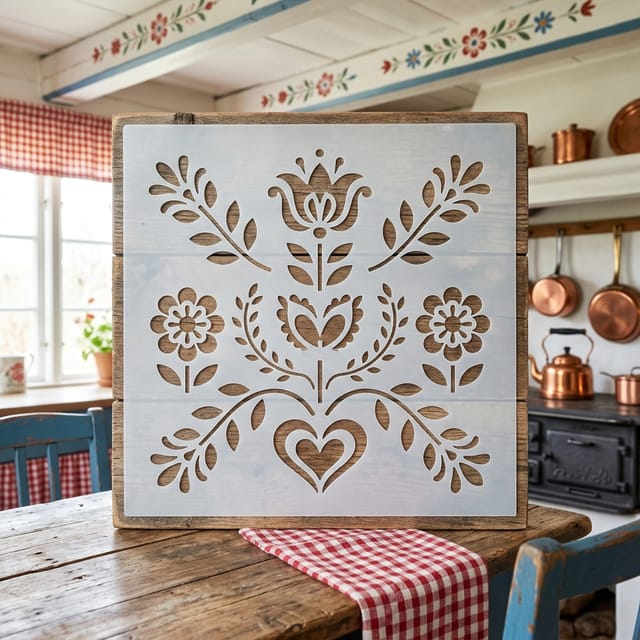
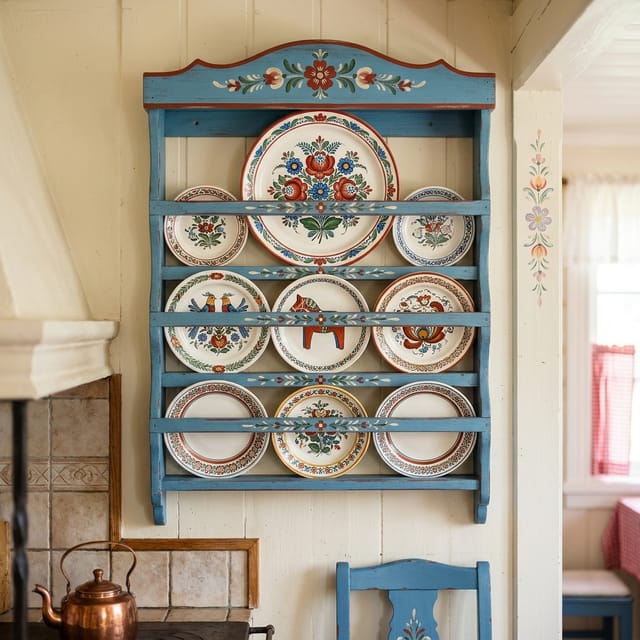
Britta's walls are mostly cream or white—practical backdrops that reflect precious light—but she saves her pattern for the places that matter. Painted beams overhead might feature simple floral motifs or geometric borders. A stenciled frieze at ceiling height adds folk charm without commitment. Beadboard wainscoting painted in soft cream adds texture and cottage authenticity, while one wall might feature a painted plate rack or open shelving that becomes a patterned display through the objects it holds.
Furniture & Shapes
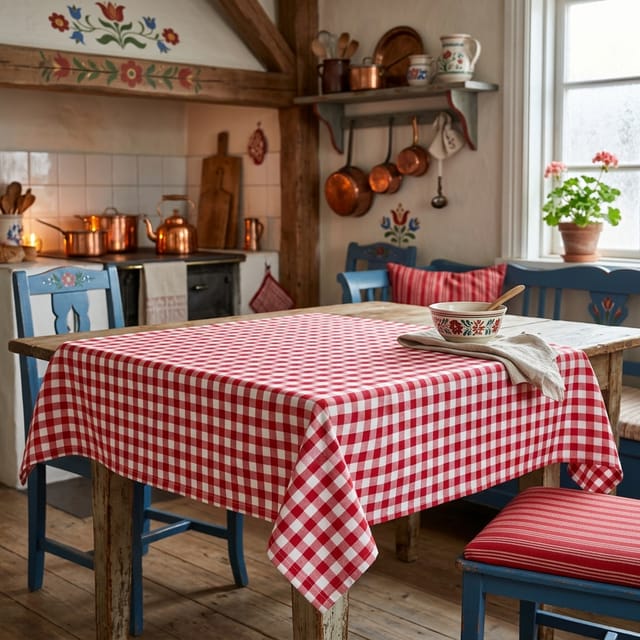
The furniture in Britta's kitchen is sturdy, wooden, and often painted. A large farmhouse table—big enough for family and strangers alike—anchors the room. Chairs might be mismatched but unified by paint: all blue, or all cream with red seats. A painted hutch or cupboard provides both storage and display space. Everything is solid wood, nothing flimsy or temporary, because this furniture is meant to last generations and gather stories along the way.
Textiles
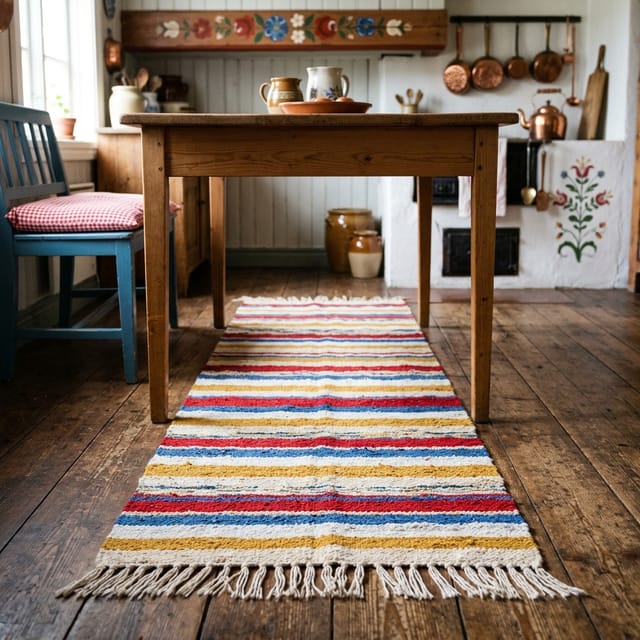
Textiles in Britta's kitchen are hardworking and cheerful: red gingham tablecloths that can handle spills, striped rag rugs that soften stone or wood floors, linen tea towels hung on hooks like flags of hospitality. Blue-and-white striped or checked curtains frame windows, and seat cushions in coordinating patterns make wooden chairs more welcoming. Every textile is washable, practical, and layered—runners over cloths, towels over hooks, cushions on every seat.
Lighting
Britta's lighting is warm, practical, and often vintage-inspired. A simple pendant or two over the table—perhaps enamel shades in cream or black—provide task lighting for meals and conversation. Wall sconces or a small chandelier add ambient warmth. During dark winter months, candles are essential: pillar candles in brass holders, taper candles in simple wooden sticks, and tea lights scattered across surfaces create the kind of hygge glow that makes long nights bearable.
Collections & Accessories
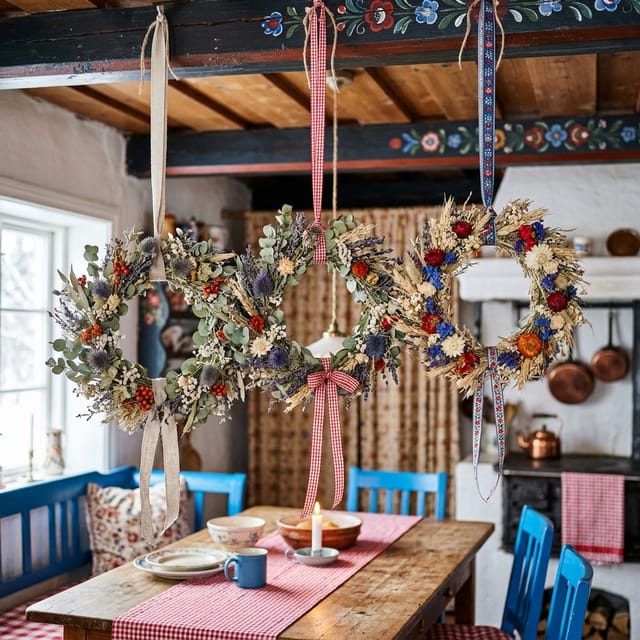
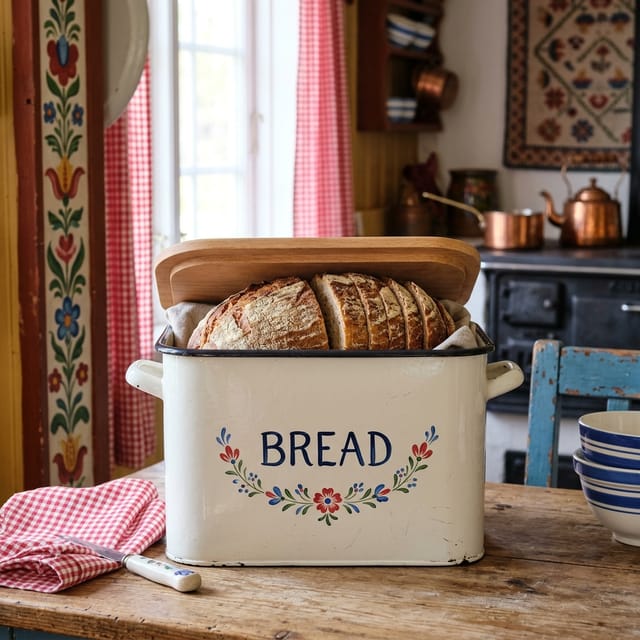
Britta displays her collections with pride: copper pots hung by the stove, enamelware in graduating sizes on open shelves, wooden spoons in crocks, and blue-and-white pottery arranged on plate racks. Hanging wreaths—dried flowers, wheat, or evergreen—mark the seasons. A bread bin sits on the counter, always full. Everything is both decorative and functional, and the abundance never feels chaotic because it's organized by type, color, and use.
Plants & Flowers
Britta keeps her plants simple and seasonal: potted herbs on the windowsill (rosemary, thyme, parsley), branches of pussy willow or birch in tall crocks, and wildflowers from the garden in simple glass bottles. In winter, evergreen boughs and dried flowers bring life indoors. Nothing is precious or fussy—these are working plants and foraged finds that connect the kitchen to the landscape outside and the rhythms of the year.
The recipe
The Britta Formula
- 160% cream and natural wood as your foundation—walls, floors, and large furniture pieces
- 230% folk red and painted blue on beams, chairs, textiles, and one major painted piece
- 310% copper and brass accents near the stove and in lighting for warmth
- 4Always have one large gathering table and at least three visible collections on display
Paint picks
Folk Red #A3262A
Paint ceiling beams, chair backs, or add folk motifs to furniture and trim
Painted Blue #2D5F8B
Perfect for dining chairs, a hutch, or painted details on cabinets
Copper Glow #B87333
Use as an accent in hardware, pot racks, or painted details near the stove
Winter White #F7F1E3
Your wall color and the base for beadboard, trim, and painted furniture
Room by room
Living Room
Bring Britta's folk warmth to your living room with a painted bookshelf, gingham throw pillows, and copper candlesticks on the mantel. Add a large communal coffee table and layer rag rugs over hardwood for that same welcoming, gathered-round feeling.
Bedroom
Create a Britta-inspired bedroom with a painted headboard featuring simple folk motifs, red gingham or blue striped bedding, and open shelving displaying white enamelware and dried flowers. Keep it cozy with layered textiles and warm candlelight.
Kitchen & Dining
This is Britta's home territory. Start with one painted element—beams, chairs, or a hutch—then build your collection of copper pots, enamelware, and gingham textiles. Make sure your table is big enough for everyone and always set with a runner or cloth.
Bathroom
Add folk kitchen charm to your bathroom with blue-and-white striped towels, a painted medicine cabinet or mirror frame, and open shelving stocked with white enamel containers. A small copper or brass detail—like a soap dish or mirror—adds warmth.
Small Spaces & Rentals
Britta scales beautifully to small kitchens and rentals. Focus on removable elements: gingham curtains, painted furniture you own, peel-and-stick beadboard, and collections displayed on wall-mounted shelves. Even a small table can feel generous when it's set with care and pattern.
Get it on any budget
Under $200
Under $500
Renter-friendly
- Paint furniture instead of walls—chairs, a small table, or a bookshelf can carry all the folk charm without touching landlord surfaces
- Use peel-and-stick beadboard wallpaper on one wall or below chair rail height for cottage texture that removes cleanly
- Hang your copper pots and enamelware on a freestanding pot rack or hooks mounted to a board, not directly into walls
- Create painted folk motifs on removable surfaces like canvas panels, wooden trays, or furniture you own and can take with you
Easy to avoid
- Painting everything—Britta's charm comes from balance, so limit painted surfaces to one or two architectural elements and a few furniture pieces against neutral backgrounds
- Choosing the wrong red or blue—look for dusty, slightly grayed folk tones rather than primary brights, which read too modern and cheerful rather than traditional and grounded
- Displaying collections without organization—even abundant displays need grouping by color, type, or size to feel intentional rather than chaotic
- Forgetting the table—Britta's heart is her gathering table, so don't sacrifice table size or seating capacity for other elements; this style needs space for people
FAQ
What is Scandinavian folk kitchen maximalism?
Scandinavian folk kitchen maximalism is a warm, abundant approach to kitchen design rooted in Nordic folk traditions. It features painted beams and furniture with floral motifs, displayed collections of copper and enamelware, red gingham and blue-and-white textiles, and a large communal table. Unlike stark Scandinavian minimalism, this style embraces pattern, color, and visible storage while staying practical and welcoming.
How do I paint folk motifs on kitchen beams?
Start with clean, sanded beams and use folk art stencils designed for Scandinavian rosemaling or kurbits patterns. Paint your base beam color first (folk red or painted blue), let it dry completely, then add floral or geometric motifs in contrasting colors using small artist brushes or stencils. Practice on paper first, and remember that folk art is meant to be hand-painted and slightly imperfect—that's part of its charm.
What colors go with red gingham in a folk kitchen?
Red gingham pairs beautifully with painted blue (for chairs or cabinets), cream and winter white (for walls and larger surfaces), natural wood tones, and copper or brass accents. Blue-and-white striped textiles, white enamelware, and green plants all complement red gingham without competing. The key is balancing the red with plenty of neutral space and one other strong color rather than adding multiple competing patterns.
How can I display copper pots in a small kitchen?
In small kitchens, use vertical space: install a wall-mounted pot rack near the stove, hang pots from a ceiling-mounted rack over an island or peninsula, or use S-hooks on a tension rod inside a cabinet door. You can also display just three graduated pots on open shelving or hang them on decorative hooks along one wall. Even a few copper pieces make an impact, so you don't need a huge collection.
Is Scandinavian folk style too busy for a small kitchen?
Not if you apply the principles thoughtfully. In small kitchens, focus on one or two painted elements (like chairs or a small hutch), keep walls light, and display collections on just one or two open shelves rather than everywhere. Use pattern in textiles that can be changed or removed, and make sure your largest furniture piece—the table—is appropriately scaled. The abundance should feel cozy, not cramped, so edit your collections to what you truly love and use.
Some links may earn MAX by Design a small commission at no cost to you.