The Style Guide · Kitschcore
Kitsch Camp Decor: How to Get Clementine's Joyful, Playful Look
Clementine proves that good taste is optional, but joy is mandatory—here's how to bring her candy-colored kitsch camp energy home.
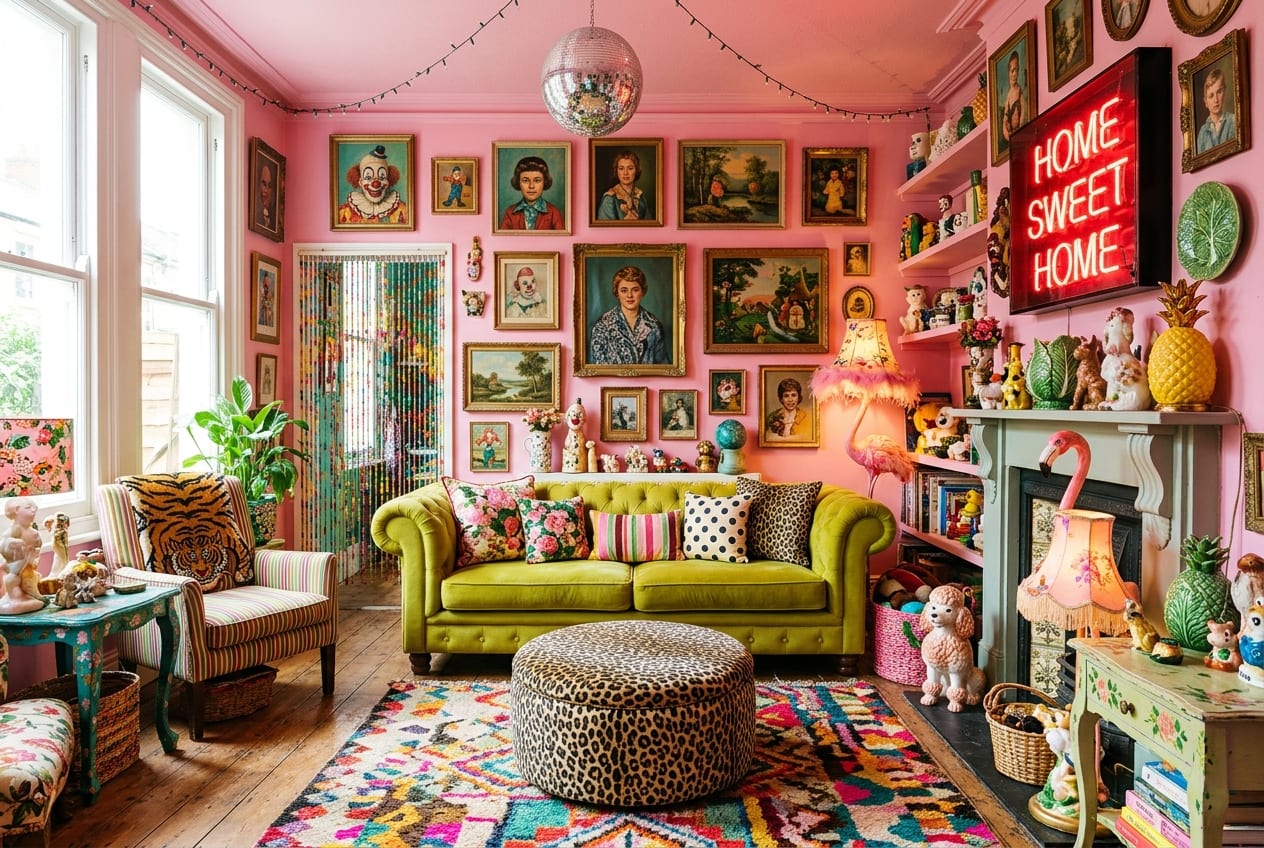
What is Joyful Kitsch Maximalism?
Kitsch camp maximalism is the design equivalent of a laugh track for your eyes—deliberate, delightful, and absolutely unashamed. It's the aesthetic of vintage motel signs, ceramic fruit, flamingo lawn ornaments promoted to indoor status, and anything else deemed 'too much' by people who take themselves too seriously. This is maximalism with a wink, where nothing matches but everything belongs, and sincerity wears a novelty hat. Clementine's version leans into candy-store colors—bubblegum pink, lime green, cherry red—and treats every surface like an opportunity for a visual punchline.
The roots run through mid-century kitsch culture, when mass production made whimsy affordable and postwar optimism made it irresistible. Think flamingo planters, tiki bars, googie diners, and the glorious excess of 1950s Americana. Camp as an aesthetic concept—celebrating the artificial, the exaggerated, the gleefully bad—was crystallized by Susan Sontag's 1964 essay, but the impulse is older: Victorian parlor games, Rococo excess, carnival aesthetics. Kitsch camp maximalism cherry-picks from all of it, mixing vintage finds with contemporary dopamine decor, creating rooms that feel like a very fun fever dream.
People love it now because it's permission to stop performing sophistication. After years of beige minimalism and curated neutrality, kitsch camp is the design world's collective exhale—a space where you can display your thrifted clown painting without irony and your inflatable palm tree with pride. It's maximalism for people who never wanted to be cool, just happy. And in a world that often feels too serious, a room that makes you smile every time you walk in isn't frivolous—it's essential.
The signatures
- Candy-bright colors that shouldn't work together but absolutely do
- Novelty items promoted from joke to centerpiece
- Vintage kitsch mixed with contemporary playfulness
- Animal motifs (especially flamingos, leopards, and tropical birds)
- Neon signs and anything that glows
- An absolute refusal to take itself seriously
Anatomy of the look
Color & Paint
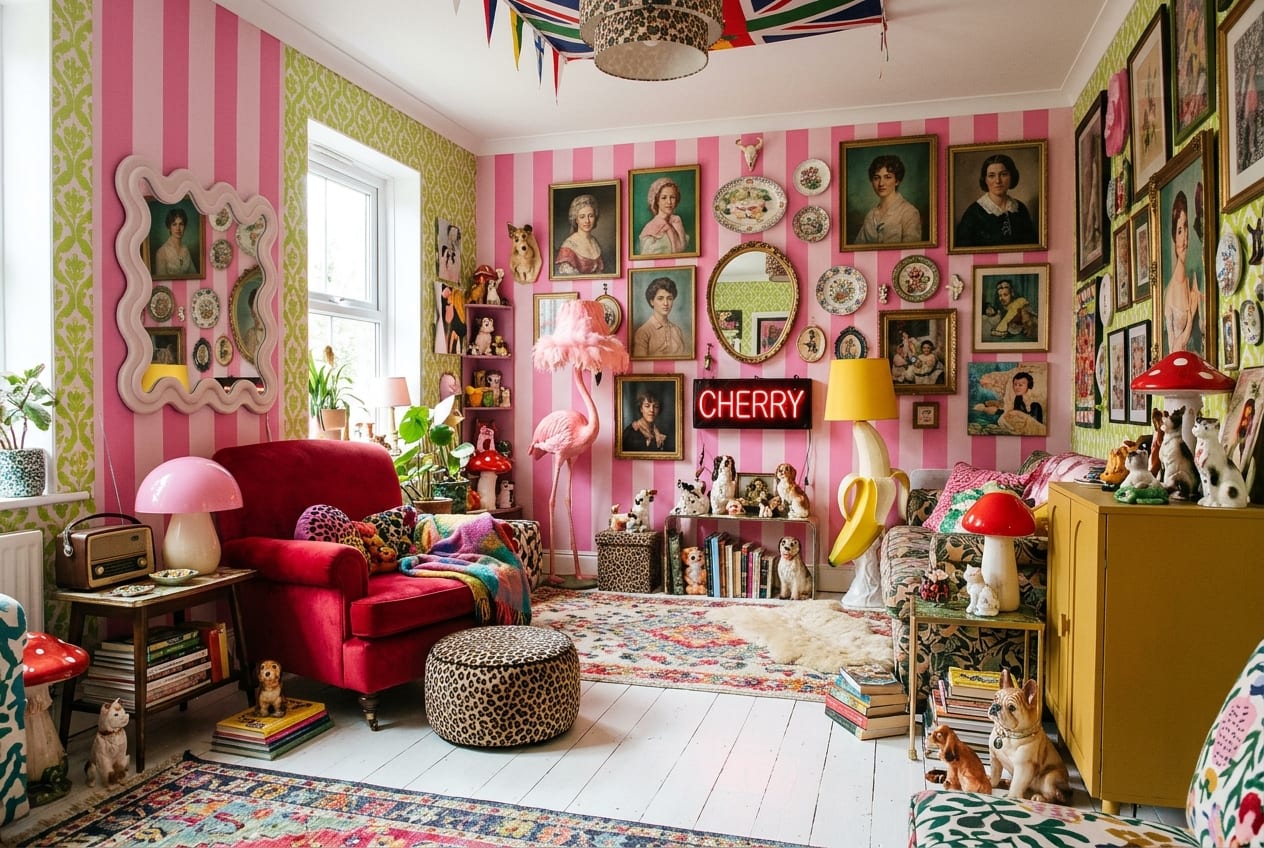
Clementine's walls wear Sugar White—a barely-there pink that reads as bright white but adds warmth—as the canvas for her candy-store chaos. The real color story happens in layers: bubblegum pink as the dominant player, lime green as the zingy contrast, and cherry red as strategic pops. This isn't subtle color theory; it's deliberate visual sugar rush, and it works because the white base gives your eyes somewhere to rest.
Walls & Pattern
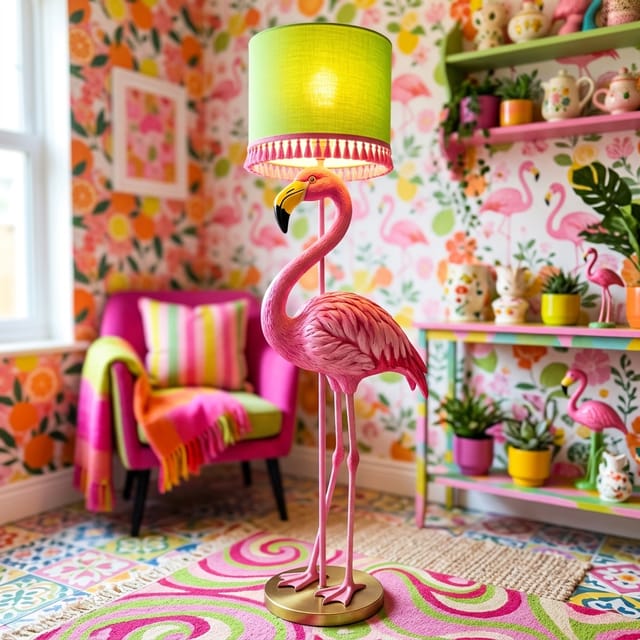
Pattern here is fearless and often figurative—think flamingo wallpaper, leopard print accents, palm fronds, and oversized fruit motifs. Clementine mixes scales shamelessly: a large-scale tropical print next to small polka dots, stripes meeting florals. One accent wall in a bold pattern (or even peel-and-stick) does the heavy lifting, while gallery walls of weird finds add texture without commitment.
Furniture & Shapes
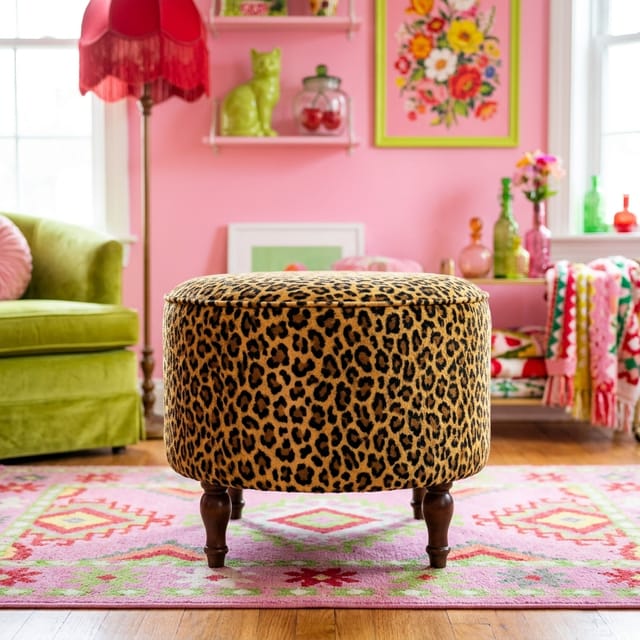
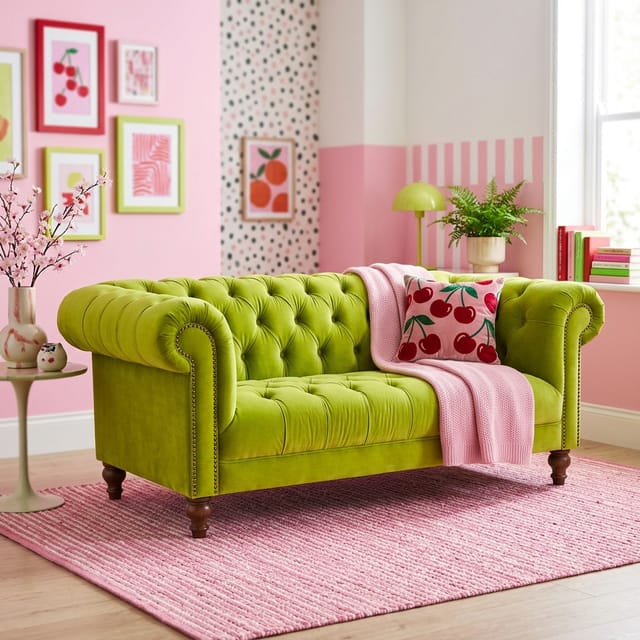
The furniture is a mix of vintage curves and contemporary pieces in unexpected colors—nothing too precious, everything a little playful. A lime velvet sofa becomes the anchor, leopard print ottomans add pattern at floor level, and vintage finds (a kidney-shaped coffee table, a tulip chair) bring mid-century kitsch credentials. Shapes lean curvy and organic rather than angular—this room wants to hug you, not impress you.
Textiles
Textiles are where Clementine really plays—mixing velvet, faux fur, vinyl, and terrycloth without apology. Think a pink faux fur throw over the lime sofa, leopard print pillows, vintage kitchen towels framed as art, and maybe a crocheted granny square blanket in clashing brights. Texture matters as much as pattern; everything should beg to be touched, even if some of it (the vinyl, the sequins) is a little tacky to the touch.
Lighting
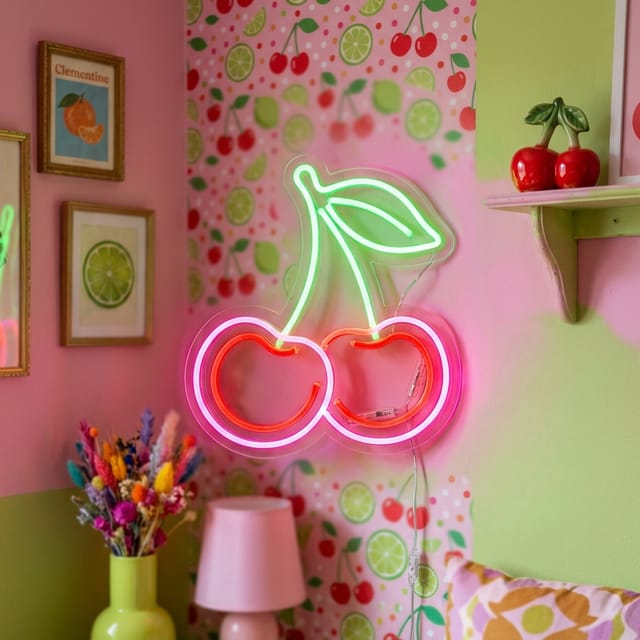
Lighting in kitsch camp is never just functional—it's a performer. Neon signs (a cherry, a flamingo, a cheeky phrase) provide ambient glow and instant personality. Novelty lamps (flamingo floor lamps, ceramic pineapples, vintage tiki torches repurposed for indoors) add sculptural interest. Clementine layers it: overhead for function, neon for mood, novelty lamps for conversation starters.
Collections & Accessories
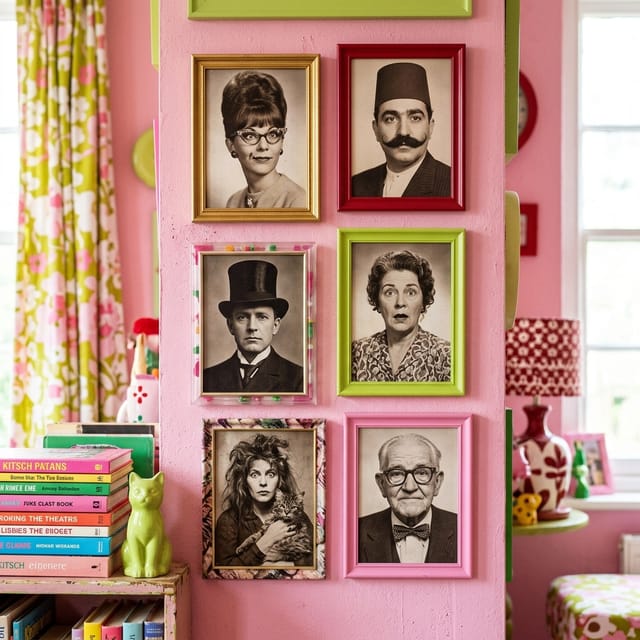
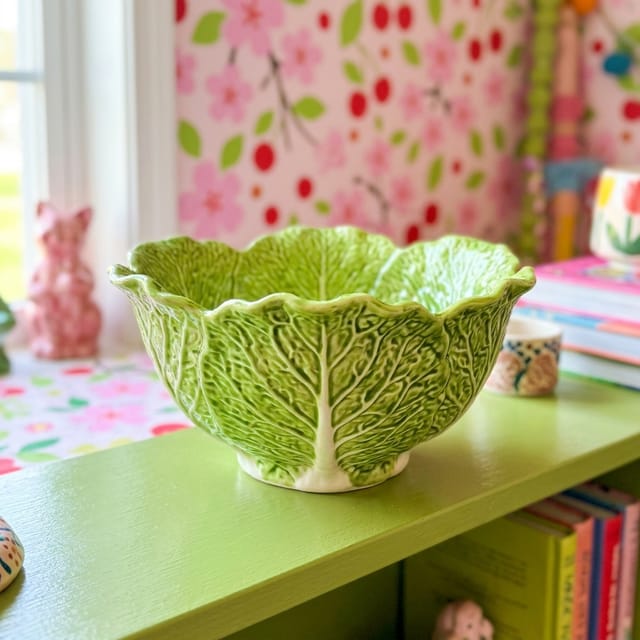
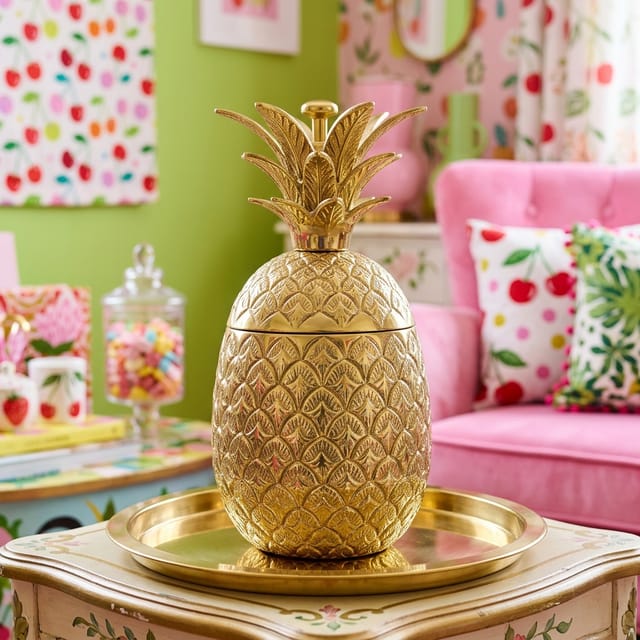
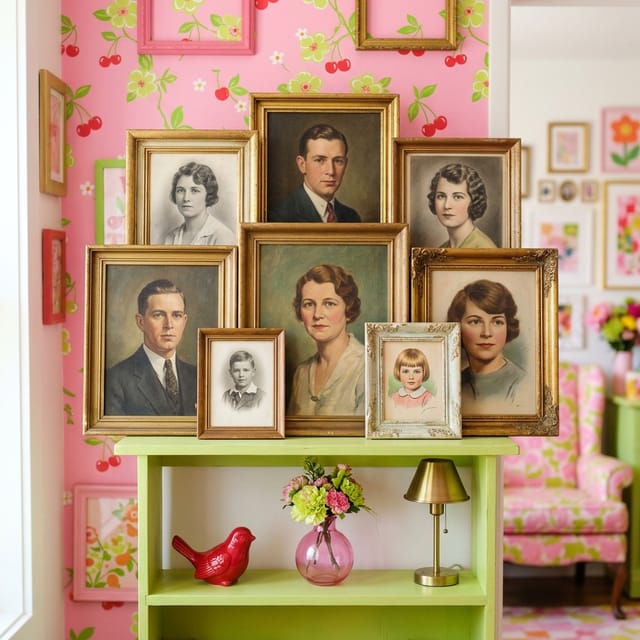
This is where Clementine really shines—collections of the delightfully weird. Ceramic fruit bowls overflow with fake lemons, thrifted portraits of strangers hang in mismatched frames, vintage barware (the pineapple ice bucket, the tiki mugs) lives on open shelves. Nothing is too kitsch to display; if it makes you smile or say 'what is that?', it earns its spot. The key is grouping things with similar energy, not similar style.
Plants & Flowers
Plants here are as much about shape and attitude as greenery—think dramatic tropical leaves (monstera, bird of paradise) in bright ceramic planters, or even high-quality faux options in colors not found in nature. Clementine also loves fake flowers in slightly wrong colors (blue roses, anyone?) and anything that references tiki culture or mid-century planters. If it can hold a plant and has a face or a flamingo on it, even better.
The recipe
The Clementine Formula
- 160% bubblegum pink and lime green as your base colors, with white as the breathing room
- 230% pattern and novelty—leopard print, flamingos, fruit, anything with personality
- 310% cherry red and neon glow as the exclamation points
- 4100% commitment to joy over good taste—if it makes you smile, it belongs
Paint picks
Sugar White #FFF3F8
All walls as a bright, warm base that lets colors pop without competing
Bubblegum #FF6FB5
One accent wall, inside bookcases, or painted furniture for maximum impact
Lime #9BE564
Trim, a bathroom vanity, or the back of open shelving for unexpected zing
Cherry #E63946
Small doses—picture frame interiors, a painted chair, or just in accessories
Room by room
Living Room
Anchor with a lime or pink velvet sofa, layer in leopard print ottomans and novelty lamps, and create a gallery wall of thrifted portraits and neon signs. This is your stage—make it as loud and joyful as you want.
Bedroom
Keep walls Sugar White but go bold with bedding—mix pink and lime in different patterns (florals, stripes, leopard). Add a neon sign as a headboard alternative and cluster novelty lamps on nightstands for ambient glow that makes you smile before sleep.
Kitchen & Dining
Display collections of vintage barware and ceramic fruit proudly on open shelves. Use peel-and-stick wallpaper on one wall or inside glass cabinets, hang a neon sign over the dining area, and don't hide the fun dish towels—frame them or drape them like the art they are.
Bathroom
This is novelty heaven—flamingo shower curtain, lime green towels, a pineapple soap dispenser, and maybe even a small neon sign (safely installed). Paint the vanity bubblegum pink or lime, and suddenly your morning routine becomes a mood boost.
Small Spaces & Rentals
Use removable wallpaper on one wall, invest in a statement piece of furniture in lime or pink, and go heavy on portable personality (neon signs, ceramic collections, novelty lamps). The beauty of kitsch camp is that it scales—even a small corner can deliver full joy.
Get it on any budget
Under $200
Under $500
Splurge
Renter-friendly
- Removable wallpaper is your best friend—one wall of flamingos or palm fronds transforms a space without losing your deposit
- Invest in statement furniture in bold colors rather than painting; a lime sofa or pink chair moves with you and makes any space instantly Clementine
- Use command hooks to create gallery walls of your kitsch collections, and lean large pieces (like framed portraits) rather than drilling
- Layer rugs over boring carpet, drape faux fur throws everywhere, and use floor and table lamps instead of replacing overhead fixtures—all the personality, zero permanence
Easy to avoid
- Apologizing for your choices—kitsch camp only works with full commitment; if you love it, display it proudly, even if (especially if) it's weird
- Trying to make it sophisticated—this isn't about elevating kitsch, it's about celebrating it; let the ceramic pineapple be a ceramic pineapple
- Forgetting the white space—even joyful maximalism needs breathing room; Sugar White walls and strategic empty surfaces keep it from feeling chaotic
- Buying everything new—half the charm is the thrifted, the vintage, the slightly wrong thing you found at an estate sale; mix eras and sources for authentic kitsch energy
FAQ
What is kitsch camp maximalism?
Kitsch camp maximalism is a joyful, playful design style that celebrates the deliberately tacky, the novelty item, and the gleefully artificial. It mixes vintage kitsch (think mid-century ceramic fruit and flamingo motifs) with bold contemporary colors and refuses to take itself seriously. Good taste is optional; joy is mandatory.
How do I decorate with kitsch without it looking messy?
Use a bright white or barely-there colored base on walls to give your eyes rest, group your kitsch collections by color or theme rather than scattering them randomly, and balance busy patterns with solid colors in your larger furniture pieces. The key is intentional chaos—every weird thing should have a reason (even if that reason is just that it makes you happy).
What colors work best for kitsch camp style?
Clementine's version uses candy-store brights—bubblegum pink, lime green, and cherry red—but kitsch camp can work with any saturated, playful palette. Think turquoise and orange, yellow and purple, or any combination that feels like it came from a vintage motel sign. The key is commitment to brightness and contrast, not subtlety.
Where can I find kitsch decor on a budget?
Thrift stores and estate sales are goldmines for authentic vintage kitsch—ceramic planters, weird portraits, novelty barware, and retro textiles. For new items, look for leopard print, flamingo motifs, and neon signs online. The beauty of kitsch is that it was never expensive to begin with; you're celebrating the mass-produced and accessible, not hunting for rare antiques.
Can kitsch camp work in a small apartment?
Absolutely—kitsch camp scales beautifully because it's about personality per square inch, not square footage. Use removable wallpaper on one wall, invest in one bold furniture piece (a pink chair, a lime ottoman), add a neon sign and some ceramic collections, and you've got full Clementine energy in even a studio. Small spaces often benefit from the joy injection that kitsch provides.
Some links may earn MAX by Design a small commission at no cost to you.