The Style Guide · French Rococo
Rococo Pastel Decor: How to Get Colette's Sweet, Gilded Look
Colette lives like Marie Antoinette with better Wi-Fi—here's how to bring Rococo pastels, gilded curves, and toile de Jouy into your own sugared salon.
What is Parisian Toile Maximalism?
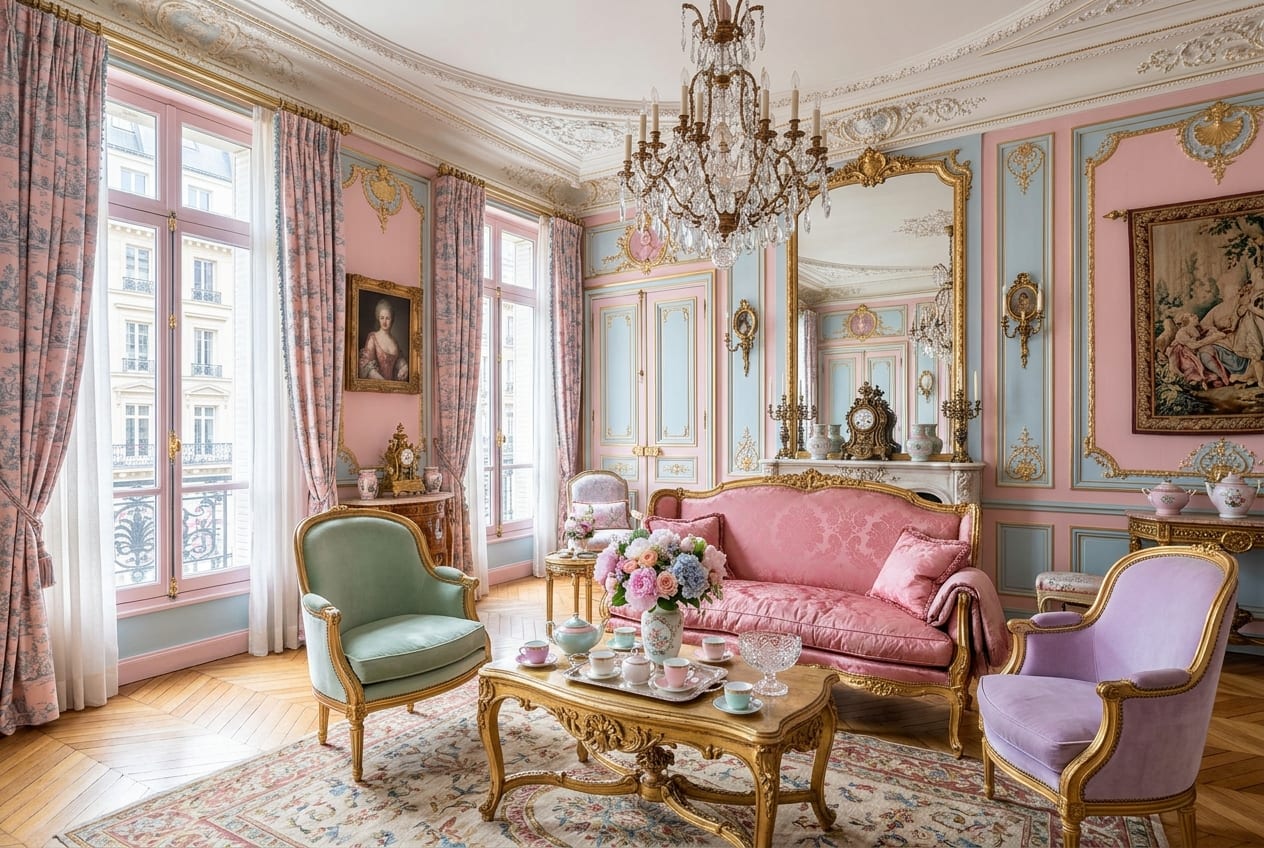
Parisian Toile Maximalism is Rococo revivalism for people who believe life should feel like afternoon tea at Versailles. It layers the sweetness of macaron-colored pastels with the drama of toile de Jouy, the opulence of gilt, and the curves of eighteenth-century France. This isn't minimalism's distant cousin—it's maximalism in a powdered wig, where more is more and every surface deserves a little ornament. Think pastoral scenes printed on walls, ribbon bows cast in sconces, and furniture so curvaceous it could curtsy.
The style draws directly from French Rococo, the art movement that flourished in the 1730s under Louis XV, when interiors became lighter, more playful, and obsessed with asymmetry and nature motifs. Toile de Jouy—that iconic pastoral print—was born in 1760 in the town of Jouy-en-Josas, depicting romantic countryside scenes in a single color on cream or white cotton. Combine Rococo's gilded shells and C-scrolls with toile's storytelling, and you get a look that's both historical and deeply romantic, a little bit country estate, a little bit royal boudoir.
People love it now because it's unabashedly pretty in an era that often mistakes starkness for sophistication. It's the antidote to beige, the permission slip to be delicate and dramatic at once. Parisian Toile Maximalism lets you play dress-up with your home, to live inside a pastel painting where every object has a flourish and nothing is too precious to enjoy. It's for anyone who wants their space to feel like a love letter written in buttercream.
The signatures
- Toile de Jouy wallpaper or fabric in pastoral pink or blue
- Gilded frames, mirrors, and furniture with Rococo curves
- Macaron-hued pastels: pinks, powder blues, lilacs, mint
- Ornate molding, boiserie panels, or applied trim
- Porcelain, ceramics, and delicate collectibles on display
- Silk, velvet, and ribbons in every soft texture
Anatomy of the look
Color & Paint
Colette's walls wear Macaron Pink like a silk gown, soft and enveloping, while trim and molding get painted in Powder Blue or left creamy white to mimic traditional boiserie paneling. Ceilings can take a whisper of Lilac Silk for an unexpected sweetness. The palette is never loud—it hums.
Walls & Pattern
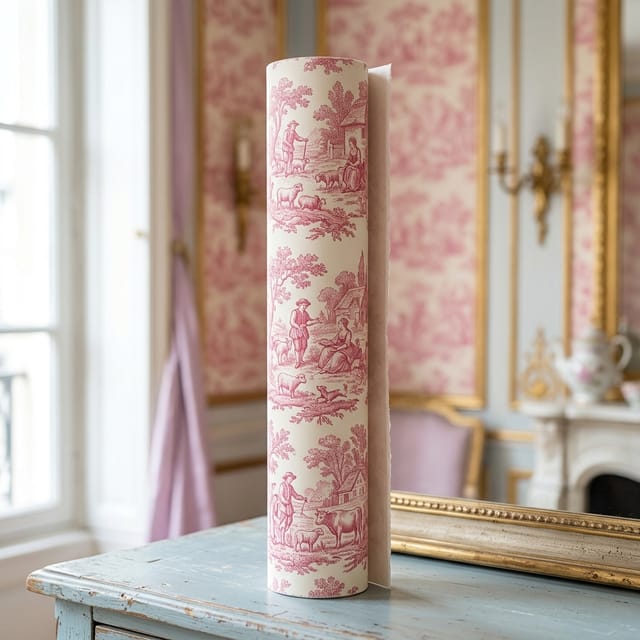
Toile de Jouy is the star—pastoral scenes of shepherdesses, gardens, and chateaux printed in soft pink or blue on cream. Colette layers it on one or two walls, or uses it as a backdrop behind open shelving. If wallpaper feels like too much commitment, framed toile fabric panels or large-scale toile art prints deliver the same narrative romance.
Furniture & Shapes
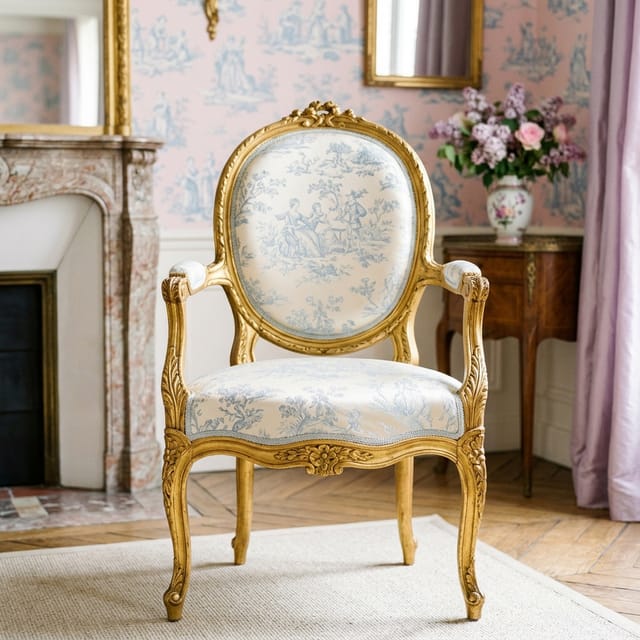
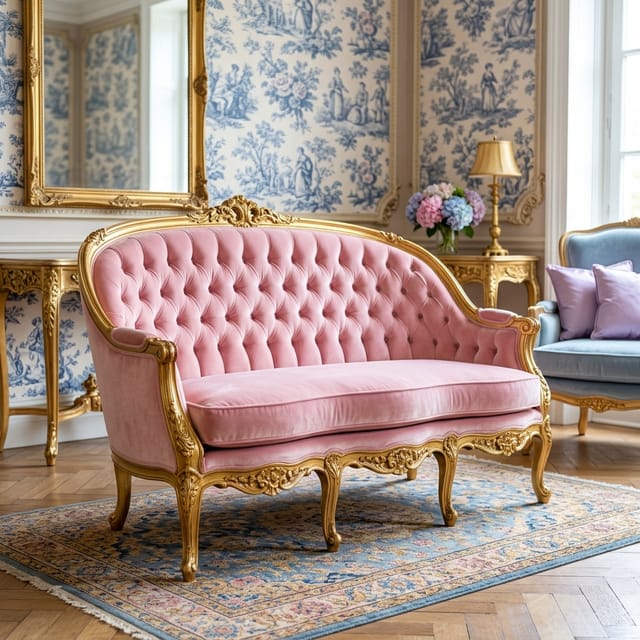
Every piece should curve. Colette favors cabriole legs, scalloped edges, and carved flourishes—Louis XV chairs, bergères, settees with rolled arms. Furniture is painted in soft whites, creams, or gilded, never dark or boxy. Even a modern piece can join the salon if it has a little sway in its silhouette.
Textiles
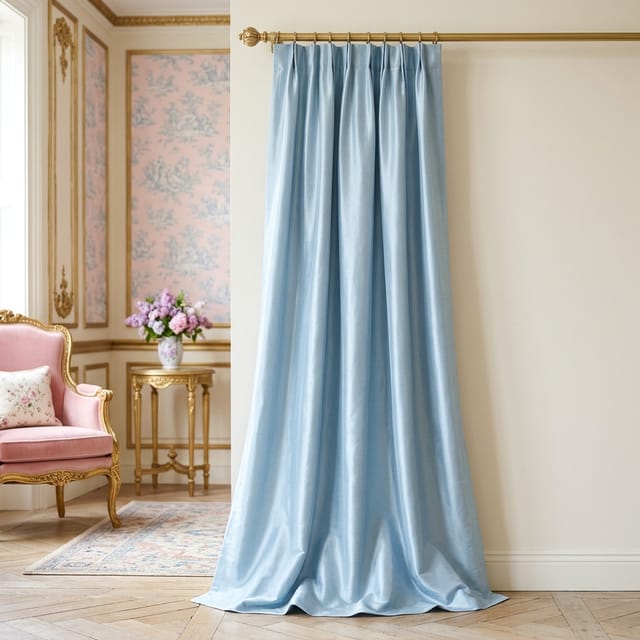
Silk, velvet, damask, and toile—Colette's textiles are soft, layered, and often trimmed with ribbon, fringe, or tassels. Cushions are plump and plentiful, curtains puddle on the floor, and throws are cashmere or faux fur in pastel tones. Every textile should feel like something you'd want to touch, then immediately apologize to for touching.
Lighting
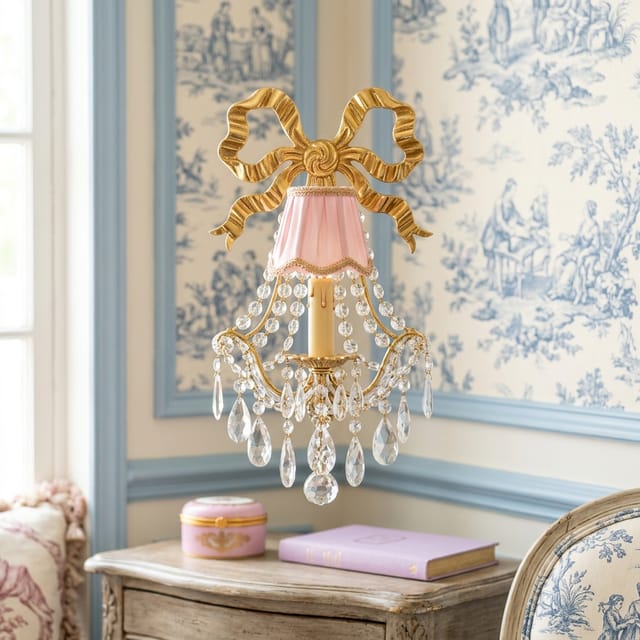
Chandeliers dripping with crystals, sconces shaped like ribbon bows or candelabras, and table lamps with pleated silk shades—Colette's lighting is jewelry for the room. Fixtures should be ornate, gilded, and a little bit extra. Even a simple lamp gets a makeover with a ruffled shade or porcelain base.
Collections & Accessories
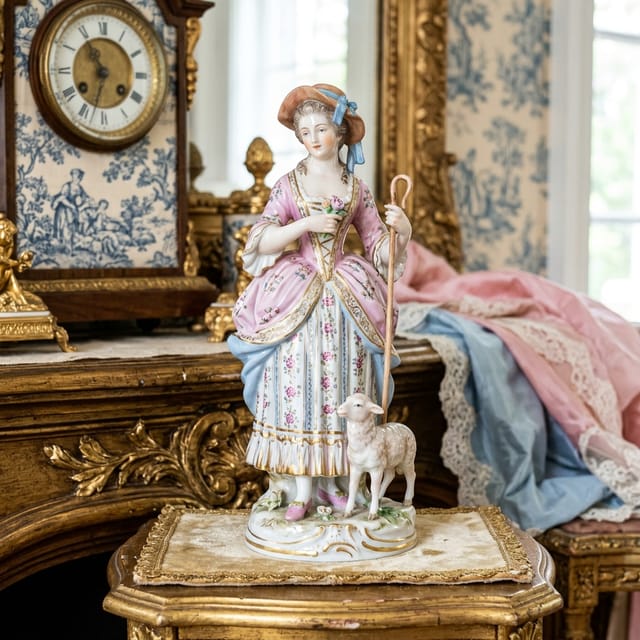
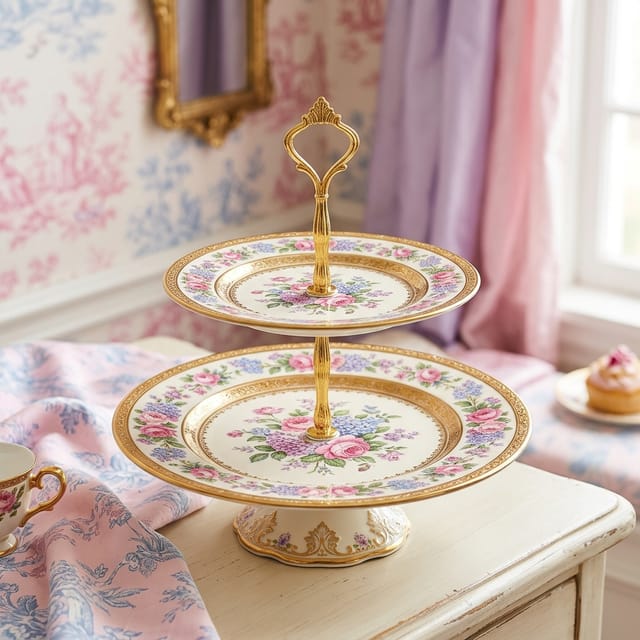
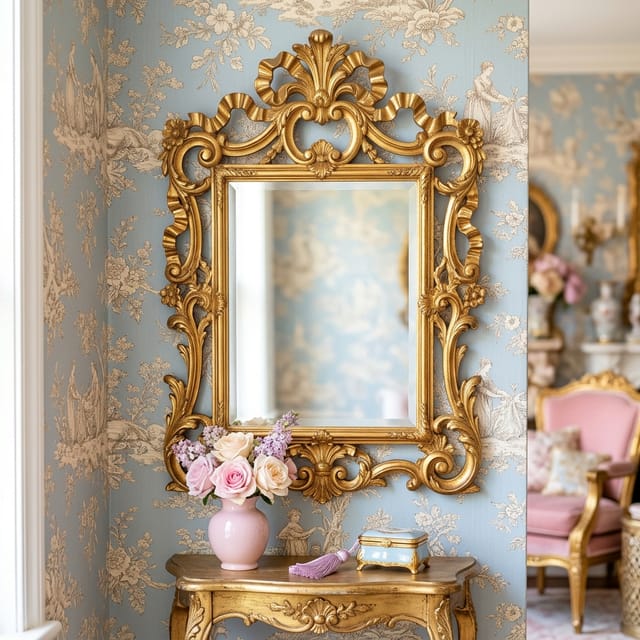
Colette collects like a magpie with a trust fund: porcelain figurines, gilt-framed miniatures, decorative boxes, and anything that can be displayed on a tiered cake stand. Mirrors are oversized and ornately framed. Every surface gets a little vignette—a stack of vintage books tied with ribbon, a bowl of silk flowers, a trinket dish shaped like a shell.
Plants & Flowers
Flowers are abundant and romantic—peonies, roses, hydrangeas in porcelain vases or gilt urns. Colette prefers arrangements that look freshly cut from a chateau garden, loose and lush. Potted plants are less common, but a topiary in a decorative planter or trailing ivy in a cherub planter works beautifully.
The recipe
The Colette Formula
- 160% soft pastel base (macaron pink or powder blue on walls, major upholstery)
- 225% cream, white, and gilt (furniture, trim, frames, mirrors)
- 310% toile pattern (wallpaper, fabric, or framed prints)
- 45% accent pastels (lilac, mint, peach in pillows, flowers, accessories)
Paint picks
Macaron Pink #F8E1E7
Main wall color for a sweet, enveloping base
Powder Blue #BFD7EA
Trim, molding, or accent walls to mimic boiserie
Lilac Silk #CDB4DB
Ceilings, inside bookcases, or a single accent wall
Gilt #C9A227
Not for walls—use in frames, furniture details, hardware
Room by room
Living Room
Anchor with a toile wallpaper accent wall behind the sofa, then layer in a gilded mirror, velvet settee, and crystal chandelier. Keep the coffee table curvaceous and topped with a porcelain tray of trinkets.
Bedroom
Dress the bed in layers—toile duvet, velvet pillows, a faux fur throw—and hang powder blue silk drapes that puddle. A gilded vanity table with a Rococo mirror turns getting ready into a ritual.
Kitchen & Dining
Use toile cafe curtains, display porcelain on open shelving, and set the table with gilt flatware and floral china. A tiered cake stand becomes both decor and functional dessert display.
Bathroom
Swap in a gilt-framed mirror, add a porcelain soap dish and toile hand towels, and paint the vanity in Powder Blue. A small crystal sconce makes even a rental bath feel like a powder room at Versailles.
Small Spaces & Rentals
Use peel-and-stick toile wallpaper on one wall, lean a large gilt mirror against it, and add pastel textiles and porcelain accessories. Removable trim molding can fake boiserie panels without nails.
Get it on any budget
Under $200
Under $500
Splurge
Renter-friendly
- Use peel-and-stick toile wallpaper or hang toile fabric panels with removable hooks for the same effect without commitment
- Add adhesive wall molding strips to mimic boiserie paneling—they peel off cleanly and transform plain walls instantly
- Swap out basic hardware (cabinet pulls, curtain rods) for gilded or ornate versions—they're easy to switch back when you move
- Layer textiles and accessories heavily (velvet pillows, silk throws, porcelain collections) to build the look without altering the space permanently
Easy to avoid
- Going too matchy—Colette mixes her pastels (pink walls, blue drapes, lilac pillows) rather than committing to one single shade throughout
- Choosing modern, angular furniture—the Rococo silhouette is all about curves, so boxy pieces will fight the aesthetic instead of supporting it
- Skipping the gilt—gold is what elevates pastels from nursery to salon, so don't be shy with gilded frames, mirrors, and hardware
- Overdoing the toile—one or two walls (or strategic fabric use) is plenty; covering every surface makes it feel like a theme park rather than a curated space
FAQ
What is Parisian Toile Maximalism?
Parisian Toile Maximalism combines the ornate curves and pastels of French Rococo with the narrative romance of toile de Jouy fabric. It's a layered, gilded, unapologetically pretty style that treats your home like a pastel-hued salon at Versailles—more is more, and everything deserves a flourish.
How do I use toile without it looking too busy?
Limit toile to one or two walls, or use it in smaller doses like curtains, pillow covers, or framed fabric panels. Balance it with solid pastel walls and plenty of cream or white so the pattern has room to breathe. The rest of the room should support the toile, not compete with it.
Can I do Rococo pastels in a modern home?
Absolutely—the key is mixing eras. Pair a modern sofa with gilded Rococo mirrors and toile pillows, or use pastel paint with contemporary lighting and vintage accessories. The contrast between sleek and ornate actually makes both elements more interesting.
Where do I find affordable Rococo-style furniture?
Look for French-style or vintage reproduction furniture at secondhand stores, estate sales, and online marketplaces. Even a simple wooden chair can be transformed with chalk paint in a pastel shade and new upholstery. Focus on curved silhouettes and carved details—you can always add gilt wax or gold spray paint to amp up the opulence.
What's the difference between Rococo and Victorian maximalism?
Rococo is lighter, more playful, and obsessed with asymmetry, curves, and pastoral themes—think pastels, gilt, and toile. Victorian maximalism is heavier, darker, and more formal, with rich jewel tones, dark woods, and densely patterned wallpapers. Rococo says 'let them eat cake'; Victorian says 'let's discuss it over tea in the parlor.'
Some links may earn MAX by Design a small commission at no cost to you.