The Style Guide · Western Maximalism
Western Rodeo Den Decor: How to Get Dusty's Lived-In Look
Dusty proves that Western maximalism isn't about theme park nostalgia—it's about building a room with stories in every corner and comfort in every chair.
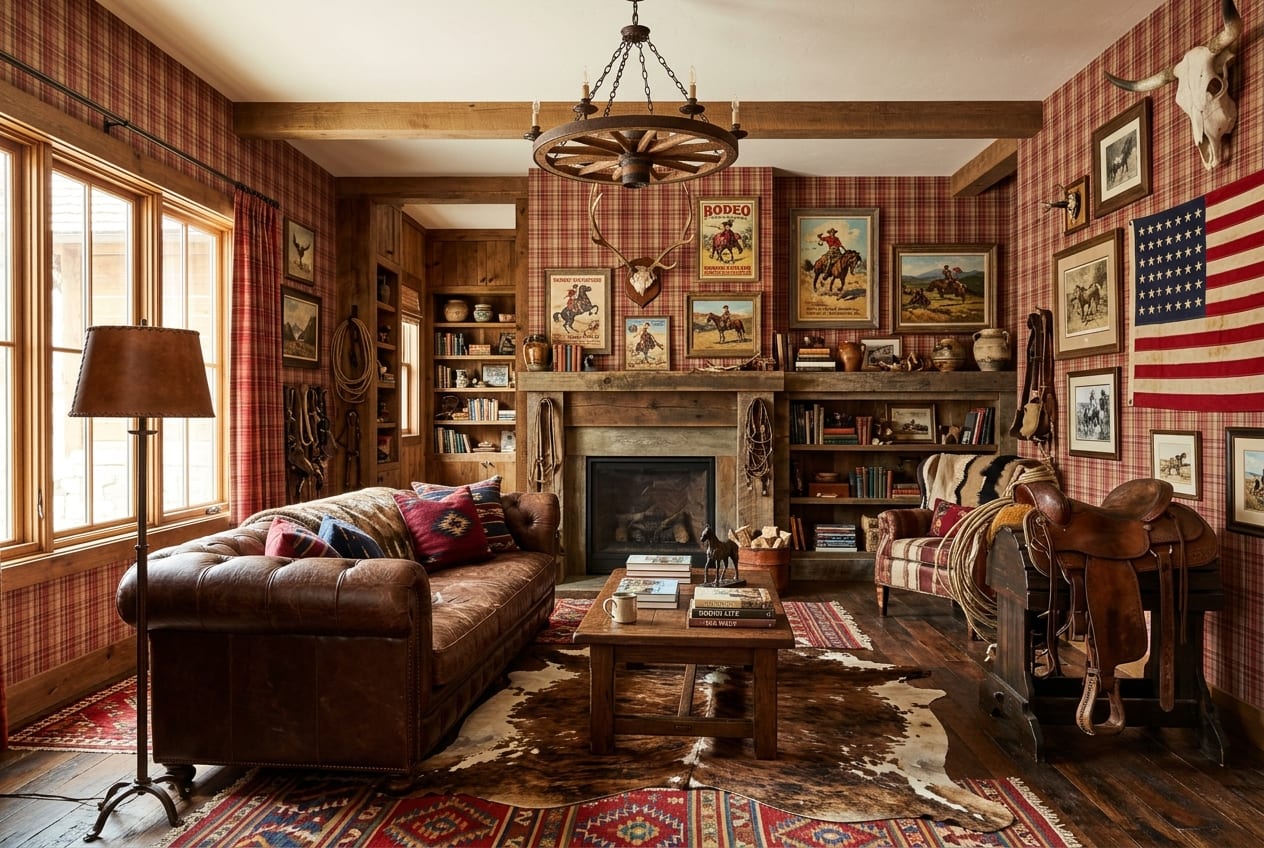
What is Western Rodeo Den Maximalism?
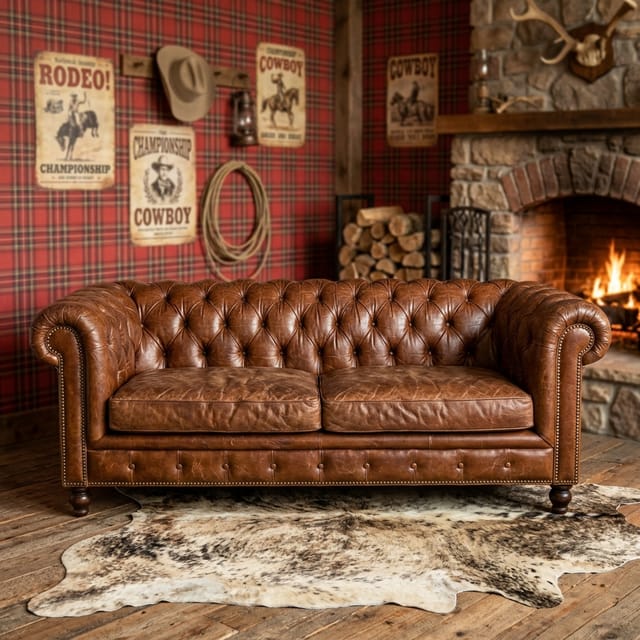
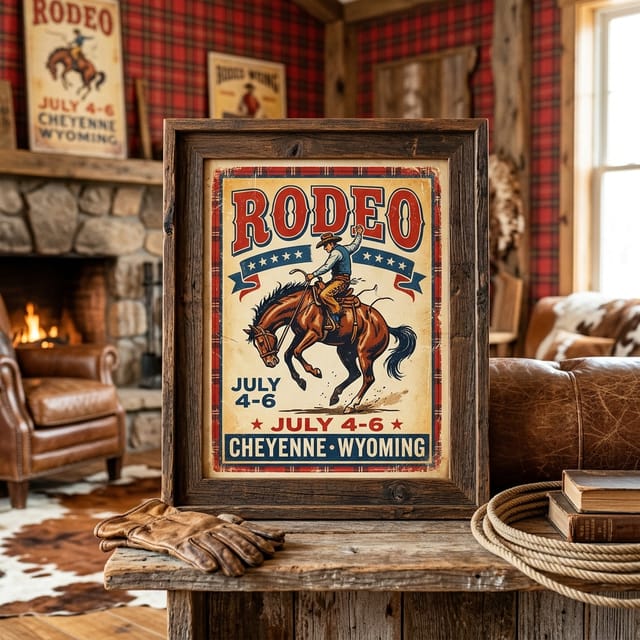
Western Rodeo Den maximalism is ranch house romanticism at full volume: red plaid walls stacked with vintage rodeo posters, saddle leather furniture worn soft from decades of use, cowhide underfoot, and collections of spurs, buckles, and boots displayed like the trophies they are. This isn't cowboy kitsch or dude ranch decoration—it's the aesthetic of working ranches, small-town rodeo bars, and hunting lodges where every surface tells a story and nothing matches because it was all earned, inherited, or rescued. Dusty layers Americana with abandon: Navajo textiles next to feed sack pillows, wagon wheel chandeliers above Chesterfield sofas, and enough patina to prove this room has lived.
The roots run deep through American Western heritage, from 19th-century cattle ranches and frontier homesteads to mid-century rodeo culture and the golden age of Western films. This style borrows heavily from Southwest design traditions—particularly Navajo and Mexican textiles—but filters them through the lens of the working cowboy rather than the Santa Fe gallery. The plaid walls nod to Pacific Northwest hunting lodges, while the leather and cowhide recall Texas ranch houses where function always trumped fashion. Rodeo posters and vintage Western advertising bring in the showmanship of county fairs and Wild West shows, when the frontier became entertainment but the aesthetic stayed gritty and real.
People love Dusty now because he offers maximalism with backbone—a style that celebrates wear and imperfection rather than hiding it. In an era of fast furniture and disposable decor, a room full of scuffed leather, faded textiles, and genuinely vintage finds feels like an act of resistance. This is maximalism for people who want their homes to look like they've been lived in for generations, even if they moved in last month. It's permission to mix high and low, old and older, precious and purely functional, as long as everything has character. Dusty doesn't apologize for being too much—he just pours you a whiskey and asks if you've heard the one about the bull in Amarillo.
The signatures
- Red plaid walls that anchor the entire room in bold, unapologetic pattern
- Saddle leather furniture worn soft and creased from decades of imagined use
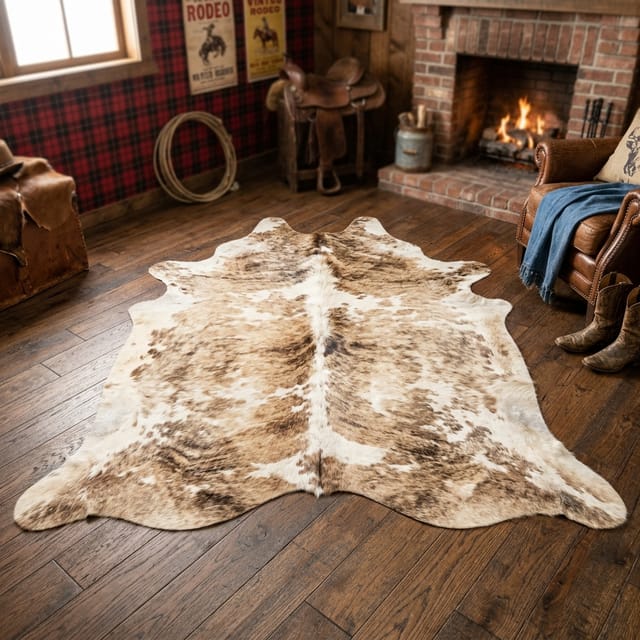
- Cowhide rugs layered like they wandered in from the barn
- Vintage rodeo posters, feed sack art, and Western ephemera covering every wall
- Navajo and Southwest textiles mixed with denim and wool
- Collections of working ranch objects: spurs, ropes, boots, buckles, brands
Anatomy of the look
Color & Paint
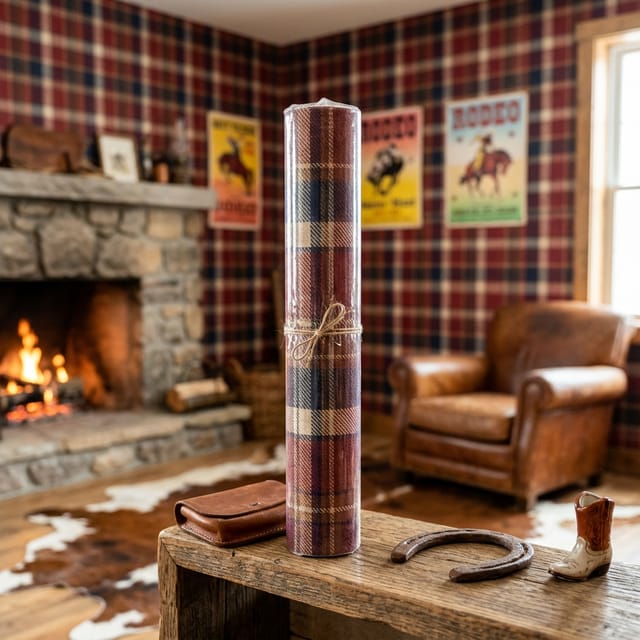
Dusty commits to Plaid Red on every wall—a gutsy move that makes the room feel wrapped in a vintage flannel shirt. This isn't fire-engine red but a deeper, dustier crimson that reads warm rather than aggressive, especially when layered with cream, leather brown, and denim blue. The plaid pattern itself does the heavy lifting, creating visual texture without additional paint techniques.
Walls & Pattern
Beyond the plaid wallpaper foundation, Dusty's walls are a gallery of Western Americana: vintage rodeo posters advertising long-past events, framed feed sack labels, old ranch brand illustrations, and black-and-white photographs of cowboys and cattle drives. The key is authentic or authentically aged ephemera rather than new reproduction art—things that look like they were pulled from a barn sale or inherited from a great-uncle. Frames are mismatched wood, often distressed, and hung salon-style with no concern for perfect spacing.
Furniture & Shapes
The furniture in Dusty's den has gravitas: a deep leather Chesterfield sofa in saddle brown, its tufting softened and creases deepened from years of imagined use. Alongside it, you might find a pair of cowhide-and-wood ranch chairs, a heavy pine coffee table scarred with boot marks, and a vintage steamer trunk doing double duty as storage and side table. Nothing here is delicate or precious—every piece looks like it could survive a poker game, a spilled beer, and a nap in full boots.
Textiles
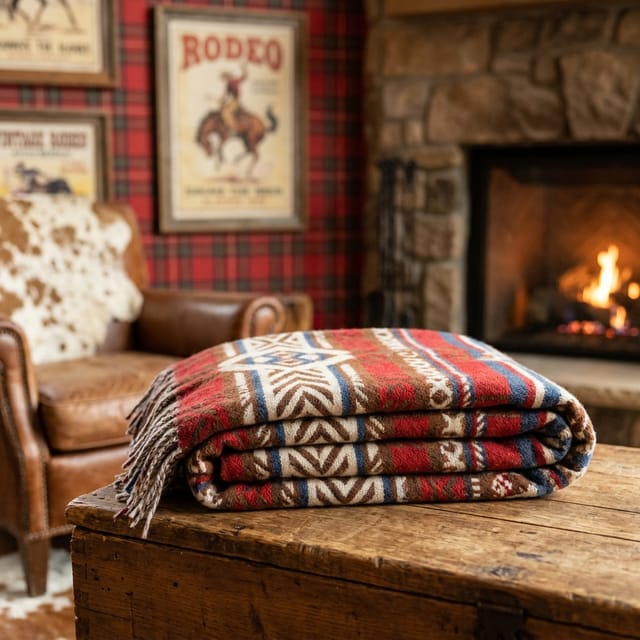
Textiles layer like a Western wardrobe: Navajo-pattern wool throws in cream, rust, and indigo draped over the sofa; kilim pillows in faded geometric patterns; a Pendleton-style blanket folded at the foot of a chair; and maybe a vintage quilt made from old denim and feed sacks. The mix is deliberately eclectic—Southwest meets Pacific Northwest meets Texas ranch—unified by natural fibers, earthy tones, and visible age. Nothing is too precious to actually use.
Lighting
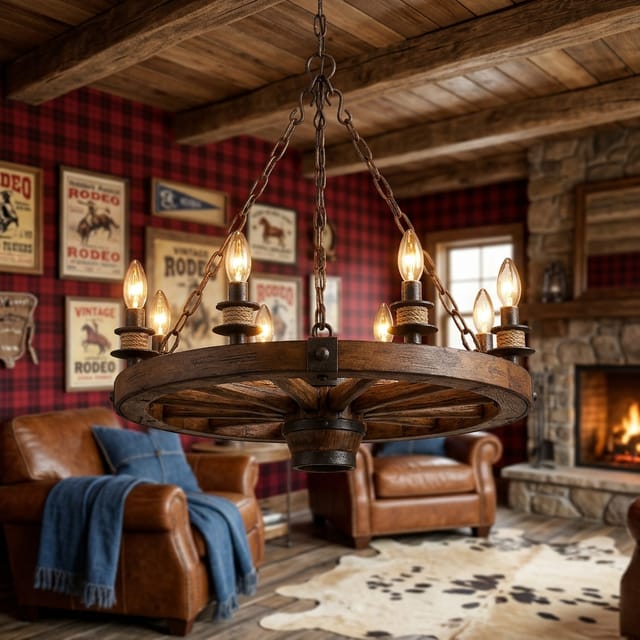
Dusty favors lighting that doubles as sculpture: a wagon wheel chandelier suspended over the coffee table, its spokes casting shadows like a campfire; wrought iron sconces with amber glass shades that glow like lanterns; and maybe a vintage gooseneck desk lamp on a side table for reading. The light itself is warm and low—this room is built for evenings, not mornings, and the lighting reflects that after-dark, storytelling atmosphere.
Collections & Accessories
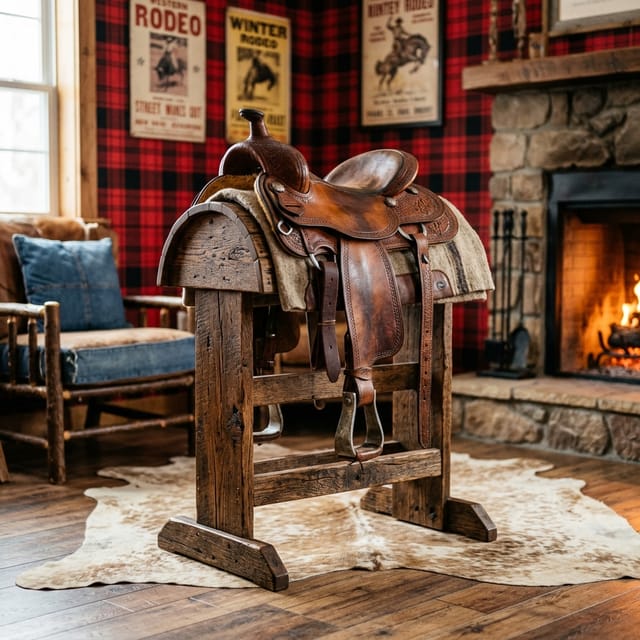
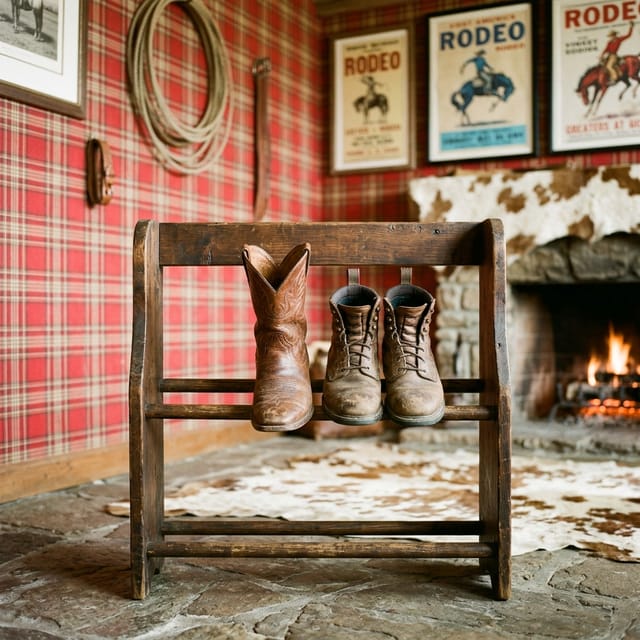
This is where Dusty really earns his maximalist stripes: collections of working ranch objects displayed with pride. An antique boot rack holds worn leather boots; a saddle rests on a wooden stand in the corner; spurs, belt buckles, and branding irons hang on the walls or cluster on shelves. Vintage whiskey decanters, poker chips in a wooden box, old leather-bound books, and a stack of well-thumbed Western novels complete the picture. Every object looks like it was used first and displayed second.
Plants & Flowers
Dusty isn't a fussy gardener, but he appreciates the occasional cactus in a terracotta pot or a bouquet of dried grasses and wheat stalks in an old ceramic jug. Succulents cluster on windowsills, and maybe a tough snake plant holds down a corner. The plant life here is low-maintenance and drought-tolerant, chosen for texture and Western authenticity rather than lushness. Think desert, not jungle.
The recipe
The Dusty Formula
- 160% saddle leather and warm wood tones to ground the space in ranch house reality
- 230% red plaid and Navajo textiles for bold pattern that feels earned, not bought
- 310% denim blue and cream accents to cool down the warmth and add breathing room
- 4Every piece should look like it has a story—buy vintage when you can, distress when you can't
Paint picks
Plaid Red #9C2F2F
All walls in wallpaper or paint—the bold foundation that makes everything else pop
Saddle Leather #7A4A2A
Trim, doors, or an accent wall in a hallway to extend the ranch house feel
Cowhide Cream #E9DFC9
Ceiling to lift the space and keep all that red from closing in
Denim Blue #2E3F66
Inside bookshelves or on a single accent wall in an adjoining room for contrast
Room by room
Living Room
This is Dusty's natural habitat—go all in with plaid walls, leather seating, and a wagon wheel chandelier. Layer cowhide rugs over sisal or jute, and fill one wall floor-to-ceiling with rodeo posters and Western ephemera.
Bedroom
Tone down the plaid to one accent wall behind the bed, then pile on Navajo blankets, kilim pillows, and a cowhide rug. Hang a collection of vintage spurs or belt buckles above the headboard, and use warm amber lighting to keep the mood intimate.
Kitchen & Dining
Bring in the Western den vibe through textiles and collections: Navajo runners on the table, vintage enamelware on open shelves, and a wrought iron chandelier overhead. Skip the plaid walls here in favor of warm wood or cream, but add a gallery wall of old ranch brand illustrations.
Bathroom
Keep it simple with saddle leather or cream walls, then add character through accessories: a cowhide bath mat, vintage Western advertising prints in distressed frames, and wrought iron fixtures. A wooden ladder towel rack adds ranch house charm without overwhelming a small space.
Small Spaces & Rentals
Use removable plaid wallpaper on one accent wall, then build Dusty's world through furniture and textiles: a leather chair, a Navajo throw, a cowhide rug, and a curated wall of vintage rodeo posters. Focus on portable collections—boots, hats, belt buckles—that you can take with you when you move.
Get it on any budget
Under $200
Under $500
Renter-friendly
- Use peel-and-stick plaid wallpaper instead of traditional wallpaper—it removes cleanly and makes the same bold statement without the commitment or damage
- Build your Western collections on freestanding shelves and bookcases rather than wall-mounted displays, so you can take everything with you when you move
- Layer rugs instead of replacing flooring: a large sisal or jute rug as a base, then smaller cowhide or Navajo rugs on top creates the layered ranch house look without touching the landlord's carpet
- Invest in portable statement pieces like a leather chair, wagon wheel chandelier (if your lease allows swapping fixtures), and vintage trunks that work as both storage and furniture—these travel with you and instantly transform any space into Dusty's den
Easy to avoid
- Going too literal with cowboy clichés—avoid cartoon cacti, horseshoe clocks, and anything that screams 'Western themed birthday party' rather than authentic ranch house living
- Buying everything new and distressed—the magic of Dusty is in genuine age and patina, so mix in real vintage finds from flea markets, estate sales, and antique shops whenever possible
- Skipping the textiles—leather and wood alone can feel cold and hard; you need the softness of wool throws, kilim pillows, and layered rugs to make the space welcoming rather than museum-like
- Forgetting to vary your browns—saddle leather, walnut wood, rusty iron, and cream cowhide are all different tones that keep the palette from going flat; pay attention to warm versus cool undertones and mix them deliberately
FAQ
How do I make red plaid walls work without my room looking like a hunting lodge?
Balance the plaid with sophisticated elements: a tufted leather Chesterfield instead of rustic log furniture, genuine vintage art instead of mass-produced cabin decor, and refined textiles like Navajo weavings rather than generic fleece. The plaid becomes a bold backdrop rather than a theme when everything else in the room has real character and history.
Where can I find authentic vintage Western decor on a budget?
Hit estate sales in rural areas, browse online marketplaces for local pickups, and check out farm auctions where working ranch items often sell for pennies. Antique malls in Western states are goldmines for rodeo posters, old spurs, and vintage leather goods. Remember that authentically worn beats artificially distressed every time, so patience pays off.
Can Western Rodeo Den style work in a modern apartment?
Absolutely—the contrast between sleek modern architecture and rugged Western maximalism is part of the appeal. Use the plaid and leather to warm up cold white walls and concrete floors, let vintage collections add character to minimalist built-ins, and embrace the tension between old and new. Dusty doesn't care what decade your building was born in.
How do I layer rugs the Western maximalist way?
Start with a large neutral base—sisal, jute, or a flat-weave kilim in cream or tan—that anchors the seating area. Layer smaller, more dramatic rugs on top: a cowhide angled under the coffee table, a Navajo runner along the sofa, or a sheepskin beside a reading chair. The layers should overlap slightly and look a bit haphazard, like they accumulated over time rather than being designed as a set.
What's the difference between Western kitsch and authentic Western maximalism?
Authentic Western maximalism uses real or realistically aged objects that could have come from a working ranch: worn leather, vintage rodeo ephemera, Navajo textiles, and collections of functional items like boots and spurs. Kitsch relies on cartoon versions and obvious reproductions: plastic cacti, brand-new 'distressed' signs with cheesy sayings, and anything that prioritizes the idea of 'Western' over the reality. If it looks like it belongs in a theme restaurant, skip it.
Some links may earn MAX by Design a small commission at no cost to you.