The Style Guide · Grandmillennial
Grandmillennial Dining Room: How to Get Hattie's Cozy, Layered Look
Hattie proves that the most memorable meals happen in rooms that feel like a long, lovely story—one you never want to end.
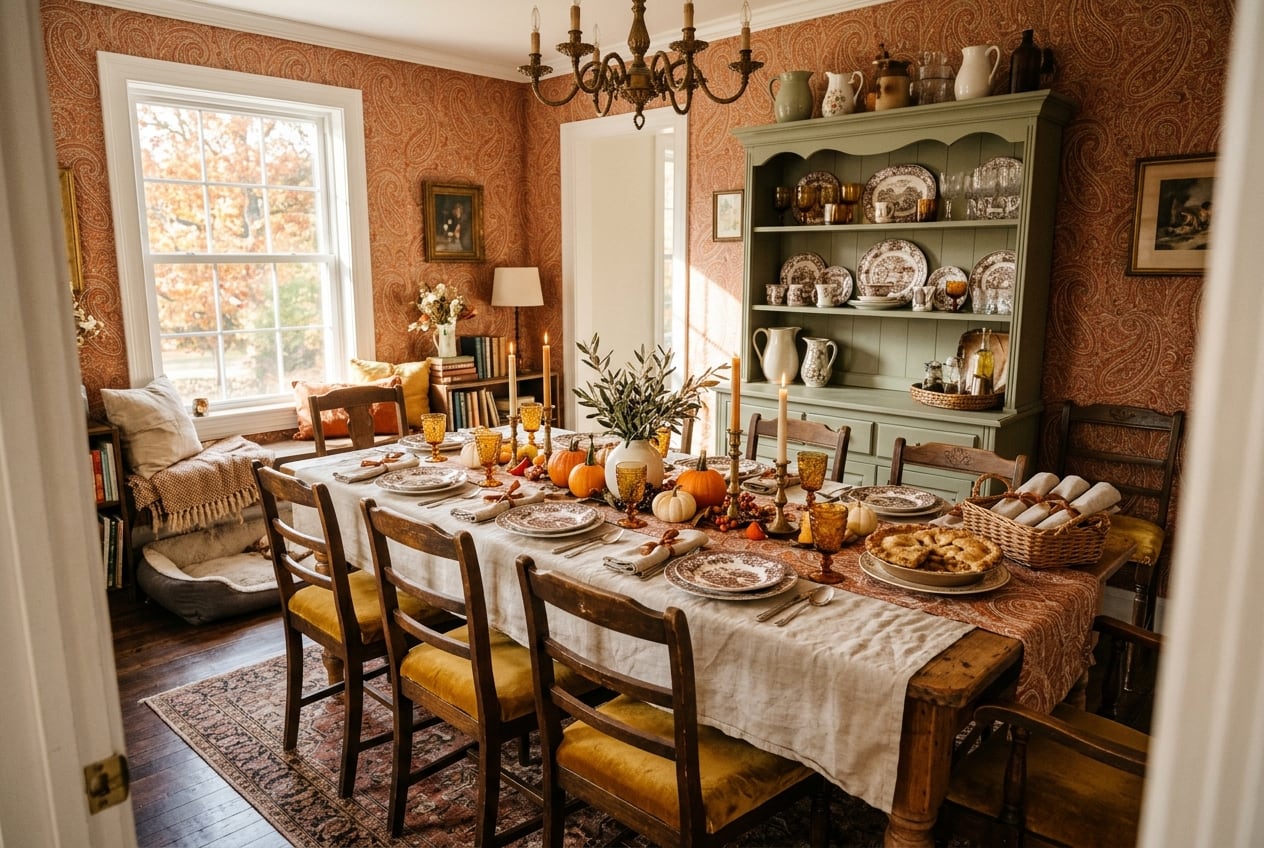
What is Grandmillennial Dining Room Maximalism?
Grandmillennial dining room maximalism is the art of setting a table that feels like it's been in the family for generations, even if you bought half of it last Tuesday. This is pattern on pattern on pattern—paisley wallpaper behind a hutch full of mismatched china, velvet chairs pulled up to a linen-draped table, brass candlesticks catching the light. It's the opposite of minimalist entertaining. Here, more is more, and the room itself is part of the welcome. Every surface tells you to sit down, stay awhile, and yes, there's always room for one more.
The grandmillennial movement emerged in the late 2010s as a joyful rebellion against the all-white, all-neutral interiors that dominated design culture. Millennials and Gen Z decorators started raiding their grandmothers' attics and estate sales, reclaiming the chintz, needlepoint, and traditional patterns that had been dismissed as dated. The dining room became ground zero for this revival—because if there's one room where tradition actually enhances the experience, it's the place where we gather to eat. The style draws from English country houses, American Colonial dining rooms, and the kind of Southern hospitality where the table is set before the guests even arrive.
People love grandmillennial dining rooms now because they offer something the internet can't: a sense of time moving slowly. In a world of meal kits and eating over the sink, a room like Hattie says that dinner is an event, that gathering matters, that beauty and comfort aren't mutually exclusive. It's maximalism with manners—layered and abundant, but never chaotic. And unlike stark modern dining rooms that photograph well but feel cold in person, grandmillennial spaces get better the longer you linger. They're designed for the second bottle of wine, the dessert you didn't plan on, the conversation that stretches past midnight.
The signatures
- Paisley, toile, or botanical wallpaper that wraps the room in pattern
- Mismatched vintage china and transferware displayed on open shelves or hutches
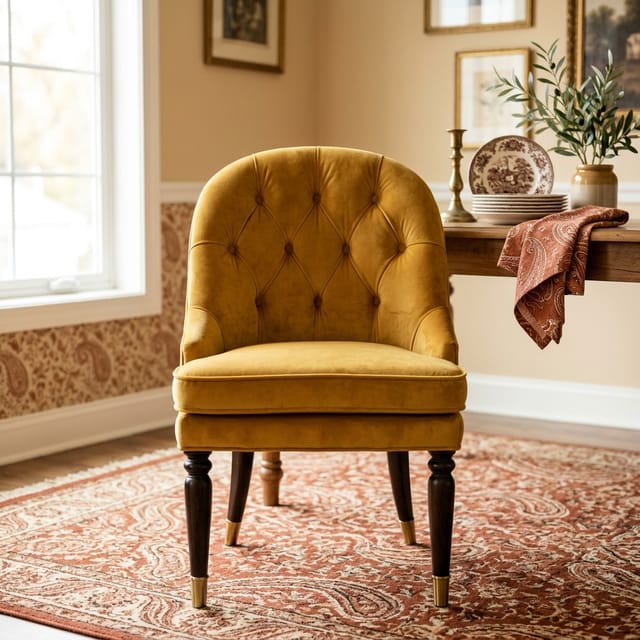
- Velvet or needlepoint dining chairs in jewel tones or warm mustards
- Layered table linens: runners over cloths, napkins that don't match the plates
- Brass or crystal lighting that casts a warm, flattering glow
- Collections of serving pieces, cake stands, and candlesticks that earn their keep
Anatomy of the look
Color & Paint
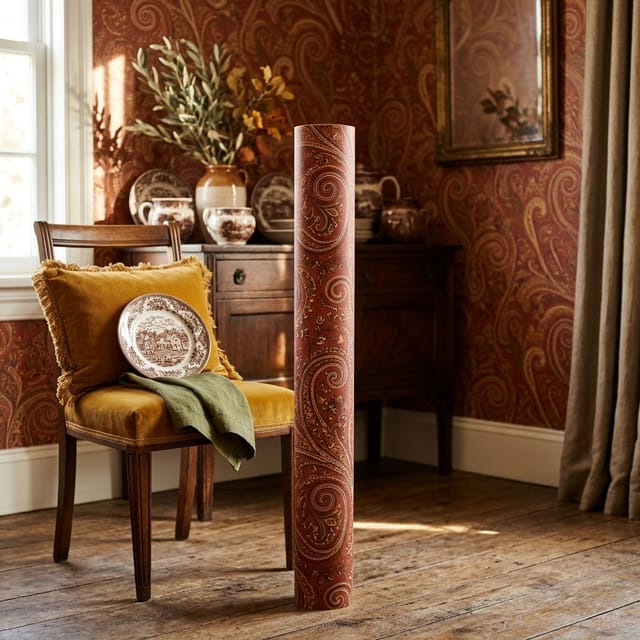
Hattie's palette is all about autumn harvest warmth—terracotta, mustard, brown, and cream, with olive green as the grounding note. The walls wear paisley wallpaper in rust and cream, which sets the entire mood. Trim and molding stay in soft, creamy off-whites to let the pattern breathe. This isn't a room that shouts; it glows.
Walls & Pattern
Beyond the paisley wallpaper, Hattie layers in framed botanical prints, vintage needlepoint samplers, and a large gilded mirror that bounces candlelight around the room. The key is to hang things in a salon-style cluster rather than a rigid grid—it should feel collected over time, not bought in one trip. Plate racks or open shelving also count as wall decor here, especially when they're loaded with patterned china.
Furniture & Shapes
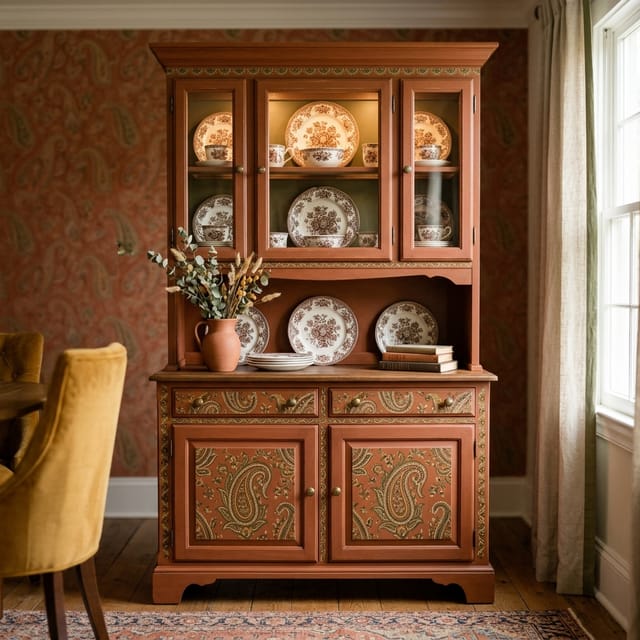
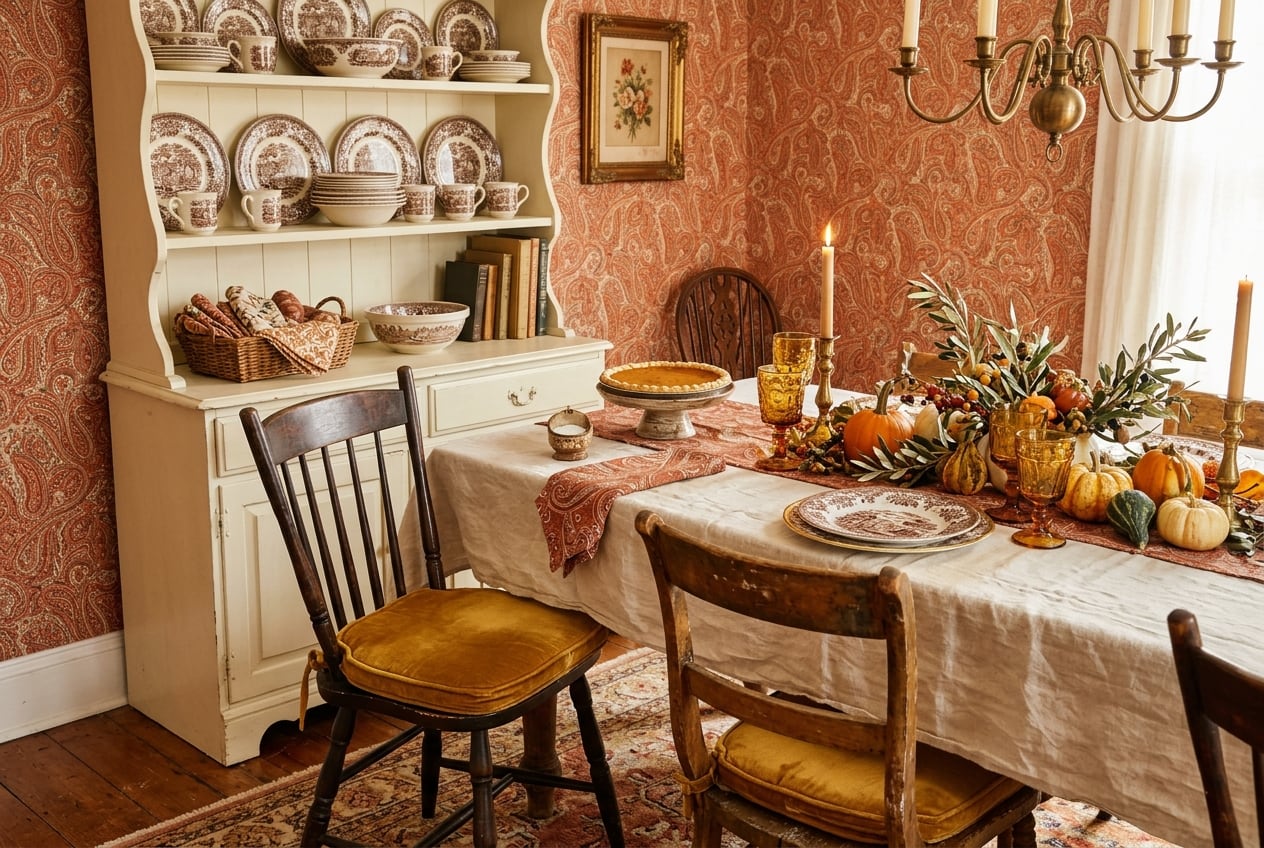
The dining table is a long, sturdy piece—wood with a warm finish, not too precious. Hattie's chairs are a mix: some with mustard velvet seats, others with needlepoint or cane backs. A painted hutch or china cabinet in cream or sage holds the transferware collection and serving pieces. The shapes lean traditional—turned legs, curved backs, nothing too modern or angular.
Textiles
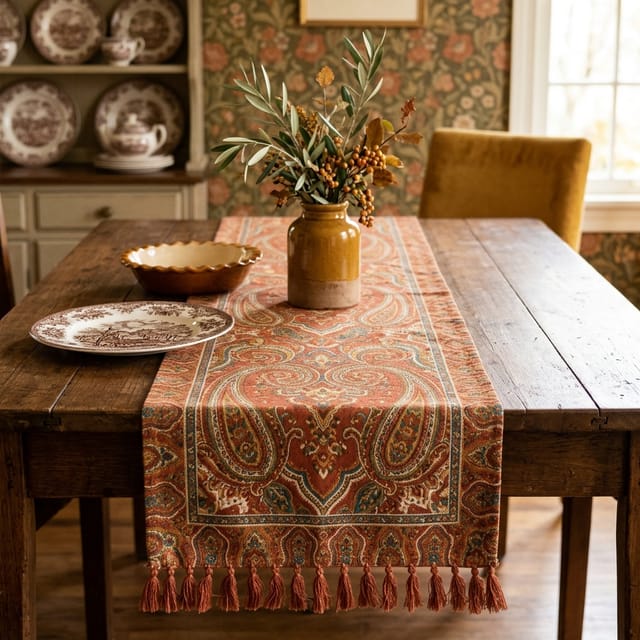
Layering is the whole game. A linen tablecloth in pie-crust cream gets topped with a paisley runner. Cloth napkins in mustard, olive, or rust—never matching, always coordinating—sit in napkin rings or tied with ribbon. The chair seats are velvet or needlepoint, and if you're feeling extra, add cushions with fringe or tassels. Every textile should feel substantial, like it could survive Thanksgiving and come back for Christmas.
Lighting
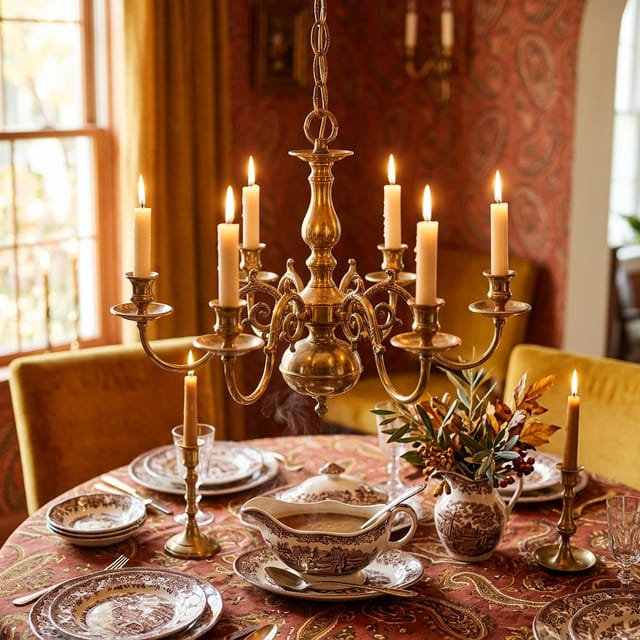
Hattie glows by candlelight and warm overhead fixtures. A brass candle chandelier hangs above the table, fitted with flame-tip bulbs for that flickering effect. Add brass or silver candlesticks down the center of the table, and don't skip the dimmer switch—you want to control the mood. Amber glass hurricane lamps or wall sconces add extra pools of light without feeling too bright.
Collections & Accessories
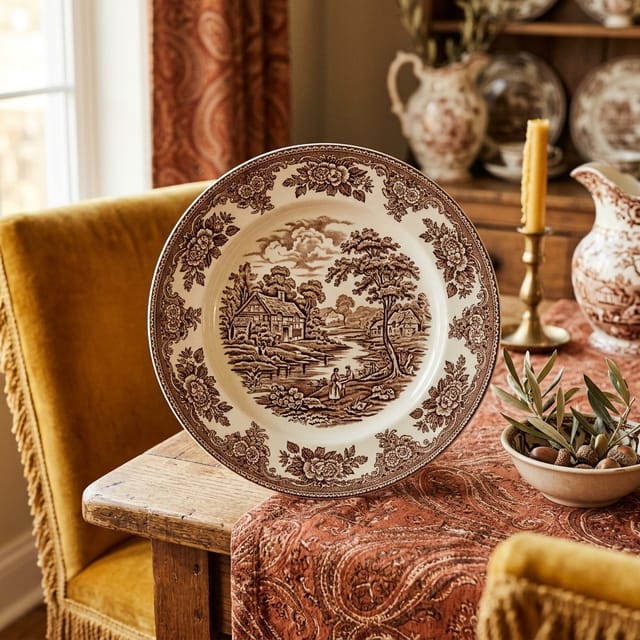
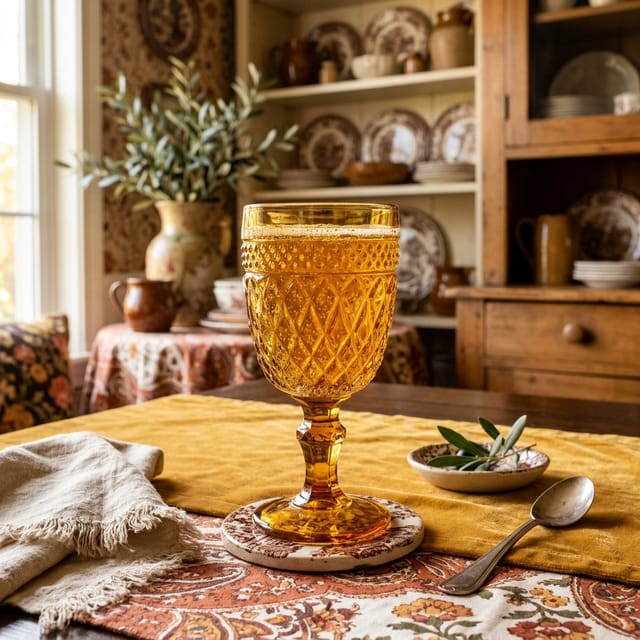
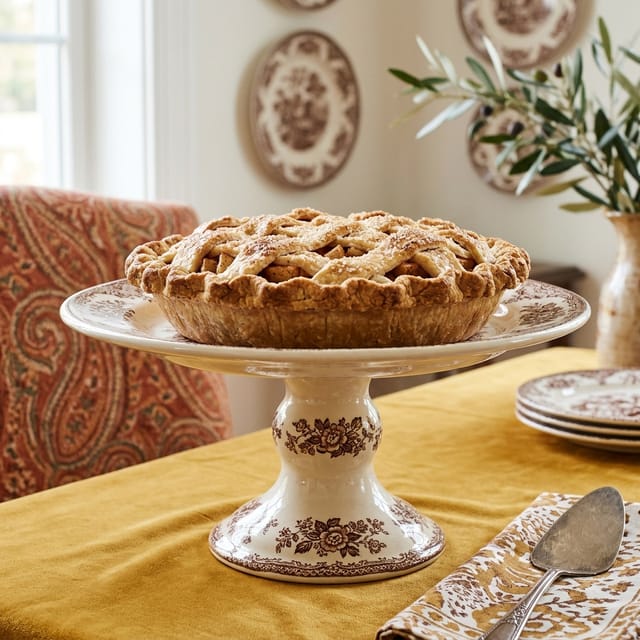
This is where grandmillennial style really shines. Brown transferware plates live on the hutch, stacked and displayed. A footed cake stand holds fruit or dessert. Amber glass goblets catch the light. Silver serving spoons, gravy boats, and butter dishes are out and ready. The rule: if it's beautiful and useful, it gets a place at the table. No hiding the good stuff in cabinets.
Plants & Flowers
Hattie's centerpiece is a low, abundant arrangement—olive branches, rust-colored dahlias, dried grasses, and maybe a few persimmons tucked in for good measure. The arrangement should never block sightlines across the table. Potted herbs in terracotta on the windowsill or hutch add life without fuss, and a bowl of seasonal fruit (pears, apples, pomegranates) doubles as decor.
The recipe
The Hattie Formula
- 160% warm neutrals (cream linens, wood table, painted hutch) to anchor the abundance
- 230% pattern and color (paisley wallpaper, velvet chairs, transferware) to create visual interest
- 310% metallic accents (brass candlesticks, gold mirror, silver serving pieces) to catch and reflect light
- 4Every item on display should be functional—no decorating for decoration's sake
Paint picks
Terracotta Paisley #B5532F
Accent wall or wallpaper base color—the warm, earthy anchor of the room
Mustard Velvet #D4A017
Chair upholstery, napkins, or painted furniture accents for a rich pop of color
Pie Crust #F3E7D3
Trim, ceiling, and tablecloths—the soft neutral that lets patterns shine
Olive Branch #5C6B3C
Painted hutch interior, napkins, or floral arrangements for grounding greenery
Room by room
Living Room
Bring Hattie's warmth into the living room with a paisley or botanical sofa, mismatched vintage pillows, and a gallery wall of framed needlepoint or pressed botanicals. Layer a patterned rug over sisal, and keep the coffee table set with a tray of books and a small vase of seasonal stems.
Bedroom
In the bedroom, grandmillennial maximalism means a quilted coverlet or floral duvet, a skirted nightstand, and wallpaper that wraps you in pattern. Hang a gilded mirror above the dresser, pile the bed with pillows in varying prints, and use a vintage tray to corral perfumes and jewelry.
Kitchen & Dining
Extend Hattie's aesthetic into the kitchen with open shelving stocked with mismatched china, a patterned runner on the counter, and canisters in vintage florals or transferware patterns. Hang copper pots, display wooden spoons in a crock, and keep fresh herbs on the windowsill in terracotta pots.
Bathroom
A grandmillennial bathroom gets floral or toile wallpaper, a skirted sink, and a collection of vintage perfume bottles or apothecary jars on a tray. Swap in brass fixtures, hang a gilt mirror, and use embroidered hand towels that are too pretty to hide in a drawer.
Small Spaces & Rentals
In a small rental dining nook, use peel-and-stick paisley wallpaper on one accent wall, add slipcovers in velvet or linen to basic chairs, and hang a small brass chandelier or pendant. A narrow console can serve as a hutch for displaying plates and glassware, and a round table maximizes seating in tight quarters.
Get it on any budget
Under $200
Under $500
Splurge
Renter-friendly
- Use peel-and-stick paisley or botanical wallpaper on one accent wall—it removes cleanly and makes a huge impact without committing to permanent pattern
- Slipcover basic rental chairs in velvet, linen, or needlepoint fabric to add color and texture without altering the furniture itself
- Hang a large mirror or gallery wall of prints using command strips or picture-hanging strips to avoid wall damage while adding grandmillennial charm
- Layer rugs over bland rental flooring—a patterned vintage-style rug under the table adds warmth and hides износ without requiring landlord approval
Easy to avoid
- Matching everything too perfectly—grandmillennial style thrives on collected-over-time charm, so mix your china patterns, vary your chair styles, and let things feel a little mismatched
- Choosing pattern without a unifying color story—Hattie works because terracotta, mustard, brown, and cream repeat across wallpaper, textiles, and accessories, creating cohesion within the abundance
- Forgetting about lighting—this style needs warm, layered light to glow properly, so invest in dimmers, candles, and fixtures that cast a flattering, golden light rather than harsh overhead brightness
- Displaying things you never use—grandmillennial maximalism celebrates functional beauty, so if those cake stands and serving pieces just gather dust, pare back to what you actually love and use regularly
FAQ
What is grandmillennial style in a dining room?
Grandmillennial style in a dining room is a maximalist approach that embraces traditional patterns, vintage china, and layered textiles—think paisley wallpaper, mismatched transferware, velvet chairs, and brass candlesticks. It's about creating a space that feels collected over time, warm, and designed for lingering over meals. The look celebrates the kind of formal-but-cozy dining rooms your grandmother might have had, updated with a younger, more playful sensibility.
How do I mix patterns in a grandmillennial dining room?
Start with a unifying color palette—like Hattie's terracotta, mustard, brown, and cream—and then vary the scale and type of pattern. Pair a large-scale paisley wallpaper with smaller florals on napkins, geometric needlepoint on chair seats, and transferware's delicate scenes on plates. The key is repetition of color across different patterns, which creates cohesion even when nothing technically matches.
Where can I find affordable transferware and vintage china?
Estate sales, thrift stores, and online marketplaces are goldmines for affordable transferware and mismatched vintage china. Look for brown or blue transferware in classic patterns—you don't need a full matching set, just pieces that share a color family. Start with a few dinner plates and build your collection slowly. Reproduction transferware is also widely available new and often costs less than hunting down pristine antiques.
Can I do grandmillennial style in a small dining area?
Absolutely—small spaces actually benefit from grandmillennial coziness. Use wallpaper on just one wall, hang a small brass chandelier or pendant, and choose a round table to maximize seating. A narrow console or small hutch can display china and glassware without taking up floor space. The key is editing: choose fewer but more impactful pieces, and keep the palette cohesive so the space feels abundant but not cluttered.
What's the difference between grandmillennial and traditional decor?
Grandmillennial style takes traditional elements—chintz, needlepoint, formal dining furniture—and layers them with more abundance, humor, and personal quirk than strict traditional decor allows. It's less about perfect symmetry and matching sets, more about collected charm and mixing high and low. Traditional decor can feel formal and untouchable; grandmillennial feels like you're invited to sit down, pour the wine, and stay for dessert.
Some links may earn MAX by Design a small commission at no cost to you.