The Style Guide · Mediterranean Maximalism
Riviera Majolica Maximalism: How to Get Lucia's Italian Summer Look
Lucia believes the best part of any day is the part that lasts too long—here's how to bring that sun-drunk, lemon-scented Italian abundance home.
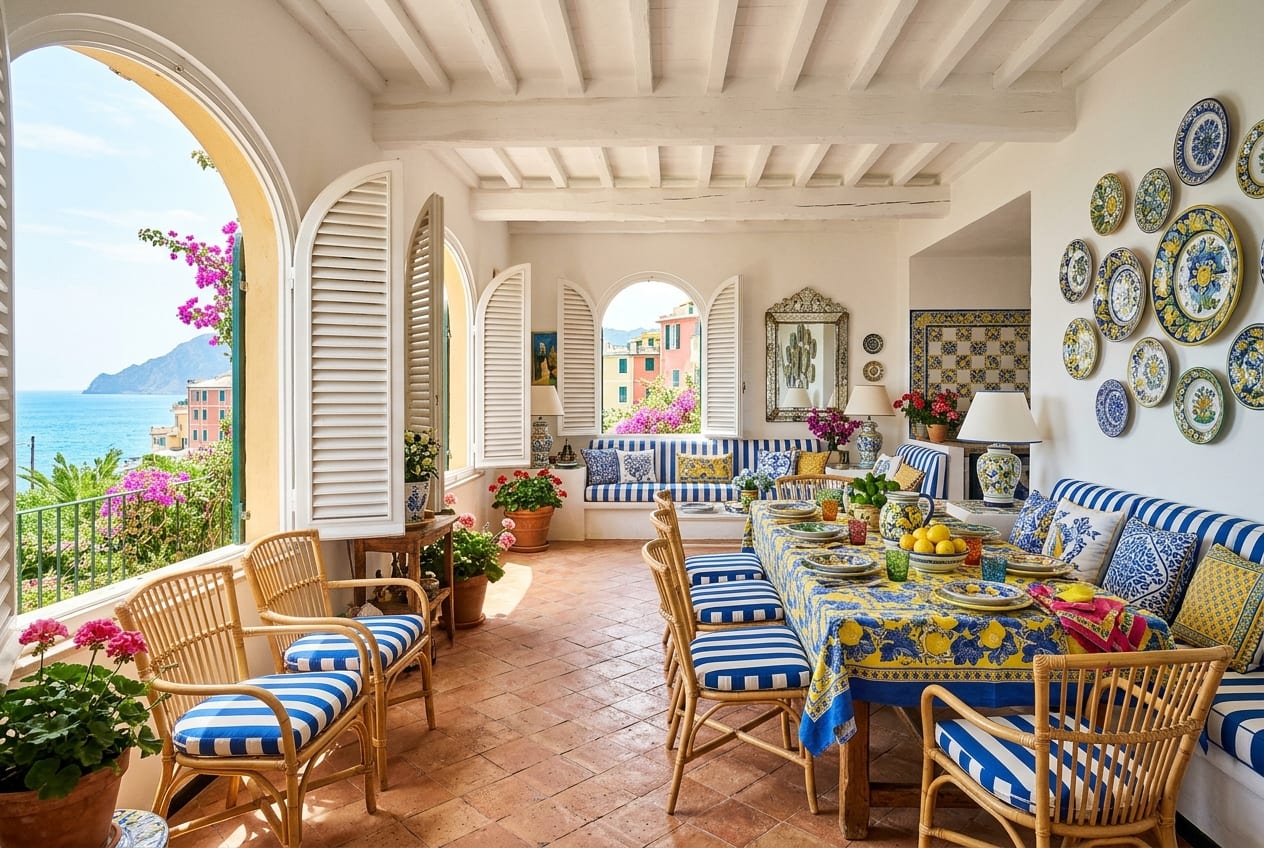
What is Riviera Majolica Maximalism?
Riviera Majolica Maximalism is Mediterranean abundance distilled into ceramic, citrus, and cobalt—a style where every surface tells the story of a long lunch under a striped awning. This is maximalism that smells like lemon zest and sounds like clinking wine glasses, where hand-painted tiles meet sun-bleached linens and nothing matches but everything belongs. Lucia's room doesn't whisper; it laughs with its whole chest, arms open, insisting you stay for one more course.
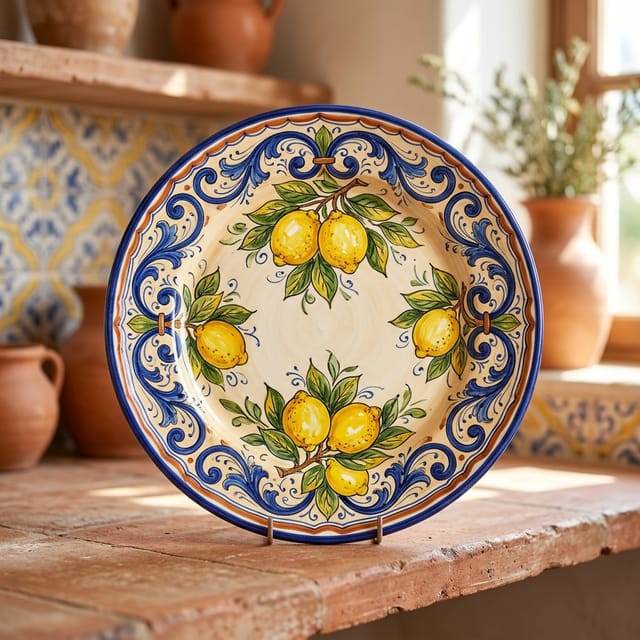
The style draws from centuries of Italian coastal living, where majolica ceramics—tin-glazed earthenware painted in brilliant blues and yellows—have decorated tables since the Renaissance. These hand-painted pieces traveled from Spanish and Moorish traditions through Italian workshops in Faenza, Deruta, and along the Amalfi Coast, becoming synonymous with la dolce vita. The Riviera's striped awnings, lemon groves, and terracotta-roofed villages provide the backdrop, while the Italian philosophy of abbondanza—joyful abundance—provides the permission to pile it all on without apology.
People love this style now because it offers permission to be excessive in the most life-affirming way. In a world of beige minimalism and hushed good taste, Lucia's room is a rebellion that tastes like limoncello and feels like sunshine on bare shoulders. It's maximalism for people who believe more is more when 'more' means more laughter, more guests, more platters of food, more reasons to linger. This isn't decorating for the camera—it's decorating for the life you want to live, where every day could turn into a feast.
The signatures
- Hand-painted majolica ceramics in cobalt and lemon yellow covering every surface
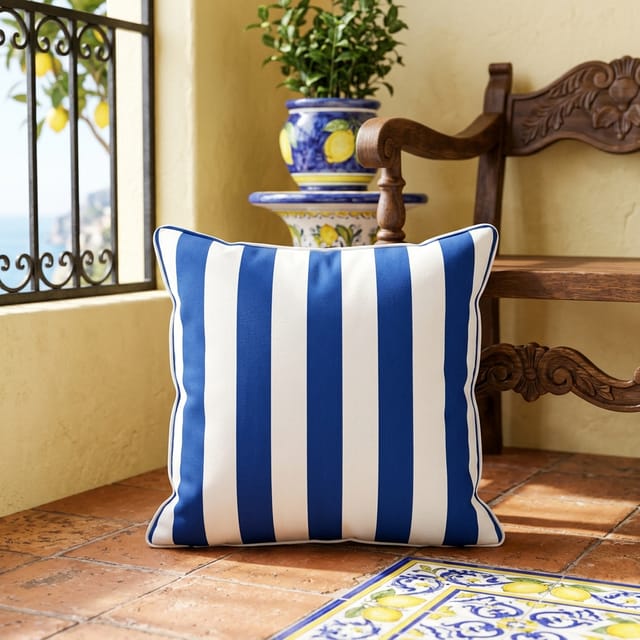
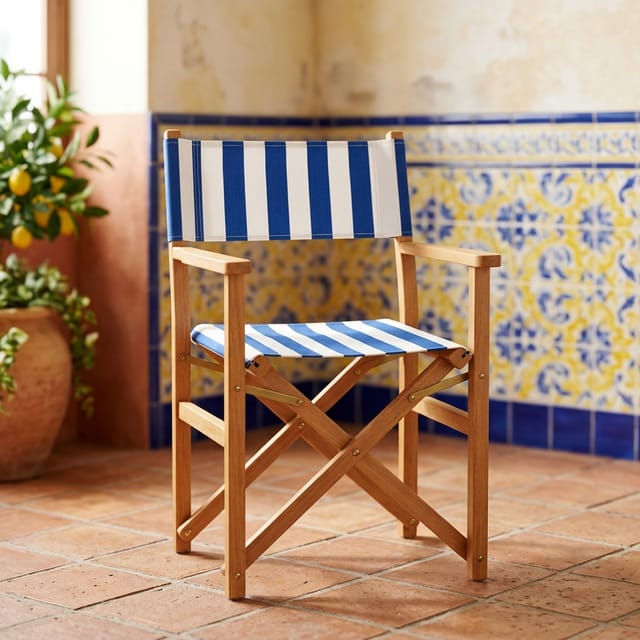
- Striped awning fabrics in blue and white or yellow and white
- Lemon motifs everywhere—printed, painted, carved, or growing in pots
- Terracotta floors, pots, and warm clay tones grounding the brightness
- Mismatched vintage glassware and ceramics collected like family stories
- Tables set as if company's always coming, because it probably is
Anatomy of the look
Color & Paint
Lucia's walls are Limoncello Cream, that buttery sunlit yellow that makes every hour feel like golden hour. Cobalt blue appears in bold strokes—painted door frames, a feature wall behind open shelving, or stenciled tile patterns. Terracotta warms the palette from below and in architectural details, while pure white keeps everything feeling coastal and breathable rather than heavy.
Walls & Pattern
Pattern here is joyfully unruly—hand-painted majolica tile patterns on backsplashes or as decorative wall panels, lemon-printed wallpaper in powder rooms, and open shelving displaying plates like art. Lucia layers stripes (awning fabric as curtains or upholstery) with florals (lemon blossoms, Mediterranean botanicals) and geometric tile patterns without a single worry about 'too much.' The walls are galleries for the ceramics that make this style sing.
Furniture & Shapes
Furniture is sturdy, convivial, and unapologetically Mediterranean—long wooden tables that seat ten (or twelve if you squeeze), rush-seat chairs, painted wood pieces in distressed blues and creams. Shapes are simple and rustic, often with turned legs and chunky proportions that suggest generations of use. Lucia prefers furniture that invites gathering over furniture that demands admiration, pieces that can handle a spilled Aperol Spritz and keep the party going.
Textiles
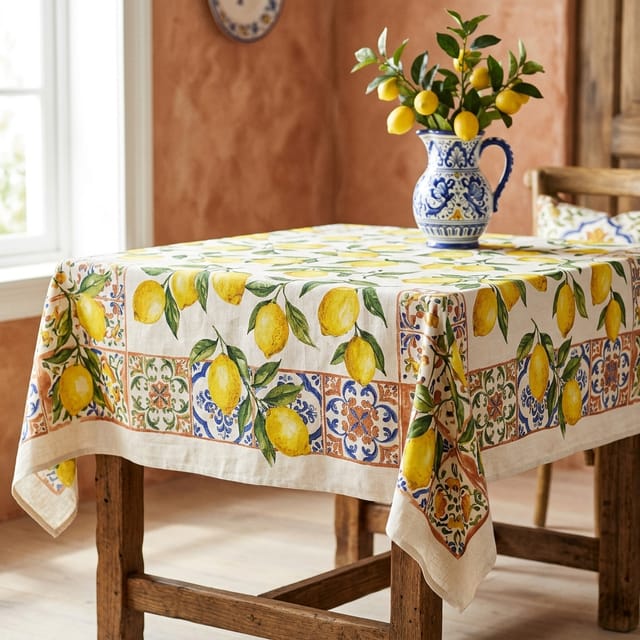
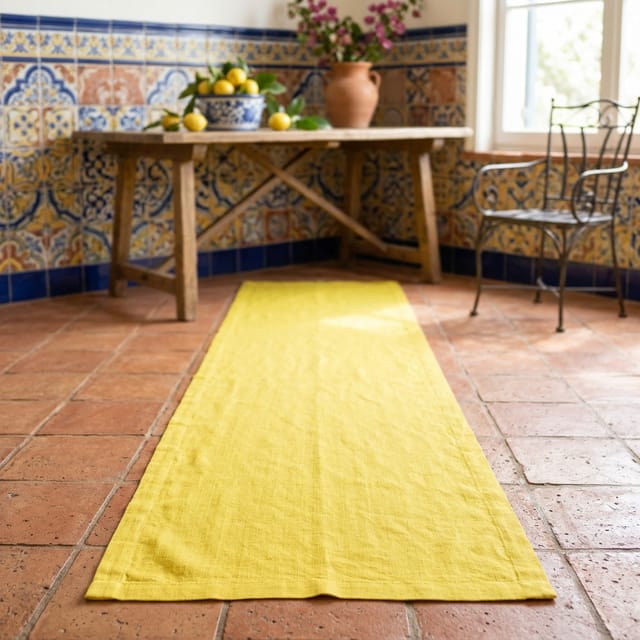
Textiles are sun-washed linens and cotton in stripes, checks, and lemon prints—never precious, always washable. Think rumpled linen tablecloths that puddle on the floor, striped cushions on every chair, and cotton dish towels used as napkins because who's counting. Lucia layers texture through natural fibers: linen, cotton, jute, and the occasional vintage lace or eyelet that whispers of grandmothers and trousseau chests.
Lighting
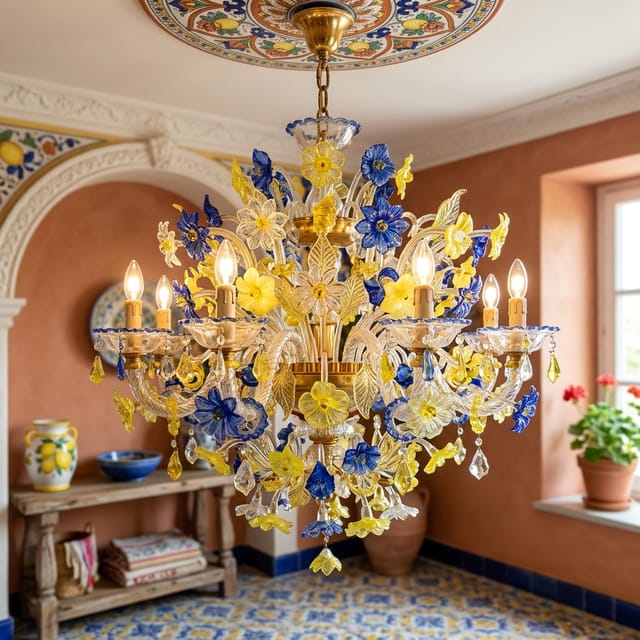
Lighting is warm, abundant, and a little bit extra—vintage Murano glass chandeliers dripping with color, ceramic pendant lights in majolica patterns, and lots of candles in mismatched holders. Lucia believes in lighting that flatters everyone at the table and makes the wine glow. Wrought iron fixtures with a rustic patina, glass hurricanes protecting candle flames from the sea breeze, and the occasional string of market lights all contribute to the magic-hour glow.
Collections & Accessories
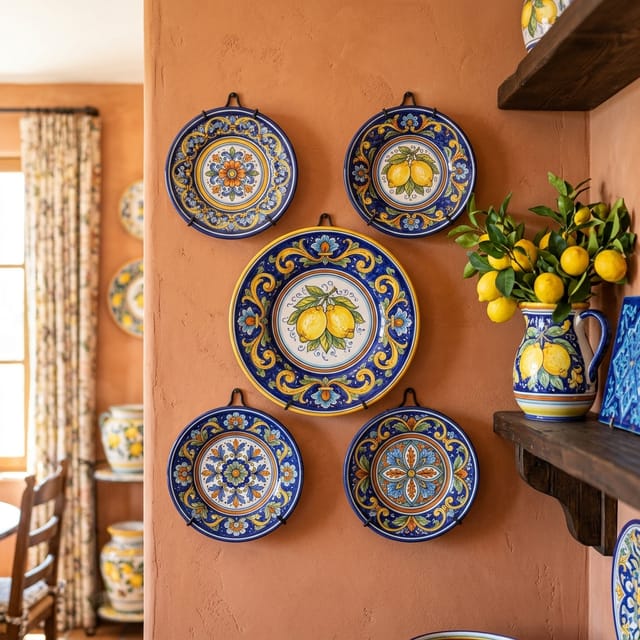
This is where Riviera Majolica Maximalism truly lives: in the glorious abundance of hand-painted ceramics, vintage glassware, and lemon-themed everything. Majolica plates line the walls and stack on open shelves, vintage Italian pottery crowds the sideboard, and collections of colored glass catch the light. Lucia displays rather than stores—olive oil bottles become sculpture, wooden spoons stand in crocks, and every surface holds something beautiful and useful. Lemons appear as ceramic sculptures, in vintage prints, and growing in terra cotta pots.
Plants & Flowers
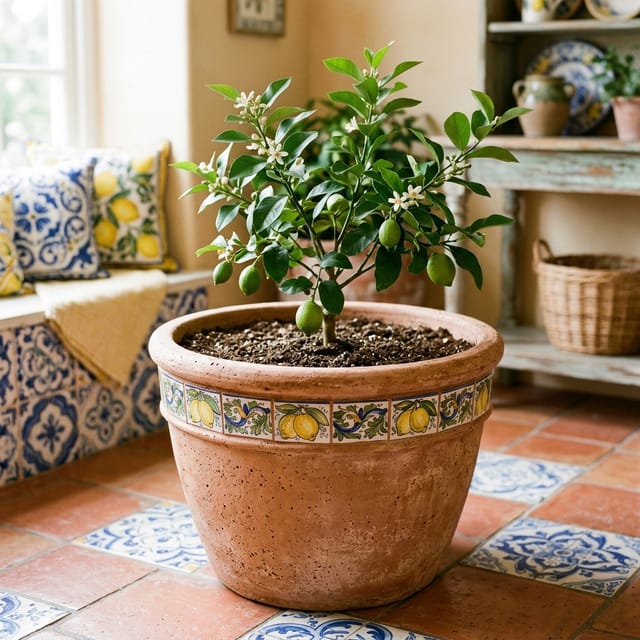
Plants are edible, fragrant, and abundant—potted lemon trees (real or very convincing faux), herbs in terracotta pots lining the windowsill, and olive branches in ceramic pitchers. Flowers are market-fresh and casual: sunflowers, wildflowers, or simple greenery in majolica vases. Lucia treats plants like ingredients, not just decoration—you might snip basil for dinner or squeeze a lemon into your drink, because beauty should be useful and useful things should be beautiful.
The recipe
The Lucia Formula
- 160% Limoncello Cream as your sunlit base—walls, larger linens, the foundation that makes everything else pop
- 225% Majolica Cobalt in hand-painted ceramics, striped textiles, and painted accents—the signature blue that makes it Mediterranean
- 310% Amalfi Lemon in concentrated bursts—printed fabrics, ceramic details, actual lemons—for zest and joy
- 45% Terracotta warmth in floors, pots, and earthy accents to ground all that brightness and keep it from floating away
Paint picks
Limoncello Cream #FFF8E1
Main walls, ceilings—the warm neutral that bathes everything in perpetual golden hour
Amalfi Lemon #F2D04B
Accent wall in dining area, painted furniture details, or inside open cabinets for surprise brightness
Majolica Cobalt #1F4FA3
Door frames, window trim, feature wall behind dish display, or painted ceiling in small spaces
Terracotta #C46A4A
Architectural details, painted floor borders, or exterior doors to warm the entrance
Room by room
Living Room
Turn your living room into an indoor piazza with a long low table surrounded by mismatched seating, striped cushions piled everywhere, and walls of majolica plates. Keep it casual enough that someone could put their feet up, but beautiful enough that they'll want to stay all afternoon.
Bedroom
Soften Lucia's exuberance for the bedroom with Limoncello Cream walls, white linens with blue embroidered edges, and just a few choice majolica pieces on the nightstand. Let striped curtains filter the morning light and keep a small lemon tree by the window for that citrus-scented wake-up.
Kitchen & Dining
This is Lucia's throne room—go all in with open shelving displaying your majolica collection, a long table always set for guests, and herbs growing in terracotta pots on every surface. Layer lemon-print tablecloths with striped runners, hang colorful glass pendants, and make sure there's room for at least eight because someone's always staying for dinner.
Bathroom
Bring the Italian bathhouse home with cobalt blue painted vanity, majolica soap dishes and toothbrush holders, and lemon-printed hand towels. Add a small potted herb on the windowsill and display pretty bottles of oils and soaps like they're part of the decor—because they are.
Small Spaces & Rentals
Renters can achieve Lucia's magic through removable elements: display majolica plates on plate stands instead of hanging them, use striped curtains and tablecloths for major impact, and create a vignette of lemon trees and ceramic pieces on a sideboard. The style lives in the objects you bring, not the walls you can't change.
Get it on any budget
Under $200
Under $500
Renter-friendly
- Create a majolica gallery wall using plate stands and easels instead of drilling holes—you can rearrange the collection as it grows and take it all with you when you move
- Use large potted lemon trees and herbs to bring in the Italian garden feeling without touching the landlord's landscaping, clustering them near windows and doorways for maximum impact
- Layer your Riviera style through textiles: striped curtains, lemon-print tablecloths, and piles of cushions transform any space without permanent changes
- Paint furniture instead of walls—a thrifted sideboard in Majolica Cobalt or a bookshelf in Amalfi Lemon gives you the color impact you crave and moves with you to your next Italian summer
Easy to avoid
- Going too matchy with your majolica—real Italian tables mix patterns, eras, and even styles of ceramics. The charm is in the collected-over-time feeling, not the department store set.
- Forgetting the warmth—all that blue and white needs terracotta and lemon yellow to keep it from feeling cold. Ground your brightness with warm clay tones and golden creams.
- Displaying your ceramics too preciously—Lucia uses her beautiful things. Plates should look like they just came off the table, not like museum pieces. A little casual abundance beats perfect spacing every time.
- Skipping the textiles—the striped awning fabrics and rumpled linens are what make this style feel lived-in and inviting rather than just decorative. Layer those cushions, let that tablecloth wrinkle, embrace the softness.
FAQ
What is Riviera Majolica Maximalism?
Riviera Majolica Maximalism is a Mediterranean-inspired style built around hand-painted Italian ceramics, lemon yellows, cobalt blues, and the philosophy that more is more when it comes to gathering, abundance, and joy. It's maximalism that celebrates Italian coastal living, long lunches, and the art of making every day feel like a feast.
How do I start collecting majolica ceramics on a budget?
Start with modern majolica-style pieces from home goods stores, which give you the hand-painted look for less, then add vintage pieces gradually from estate sales, antique markets, and online marketplaces. Focus on building a collection of different sizes and patterns rather than matching sets—the mismatched abundance is the whole point. Even a few key pieces displayed on open shelves or plate stands can anchor the style.
Can I do this style without a dining room?
Absolutely—Lucia's spirit lives wherever you gather to eat, even if that's a small kitchen table or a coffee table surrounded by floor cushions. Focus on the elements you can control: layer lemon-print and striped textiles, display majolica pieces on whatever surfaces you have, add potted herbs and a lemon tree, and set your table like company's coming even when it's just you. The style is about abundance of spirit, not square footage.
What's the difference between Riviera Majolica and other Mediterranean styles?
Riviera Majolica Maximalism is specifically about Italian coastal abundance—it's more exuberant and collected than minimalist Mediterranean whites, more focused on ceramics and lemons than Greek island blues, and more maximalist than Tuscan rustic. While other Mediterranean styles might edit down, Lucia piles it on: more plates, more pattern, more reasons to stay for dessert.
How do I keep this style from feeling too themed or restaurant-like?
The key is mixing eras, using pieces that show wear and history, and treating everything as functional rather than decorative. Real homes have mismatched chairs, stacks of everyday dishes mixed with special pieces, and herbs you actually cook with. Avoid buying everything new or matching, skip the overtly touristy Italian signs, and focus on creating a space that feels collected and lived-in rather than designed all at once. Let some things be imperfect—that's where the soul lives.
Some links may earn MAX by Design a small commission at no cost to you.