The Style Guide · Mexican Maximalism
Mexican Maximalism: How to Get Paloma's Vibrant Patio Look
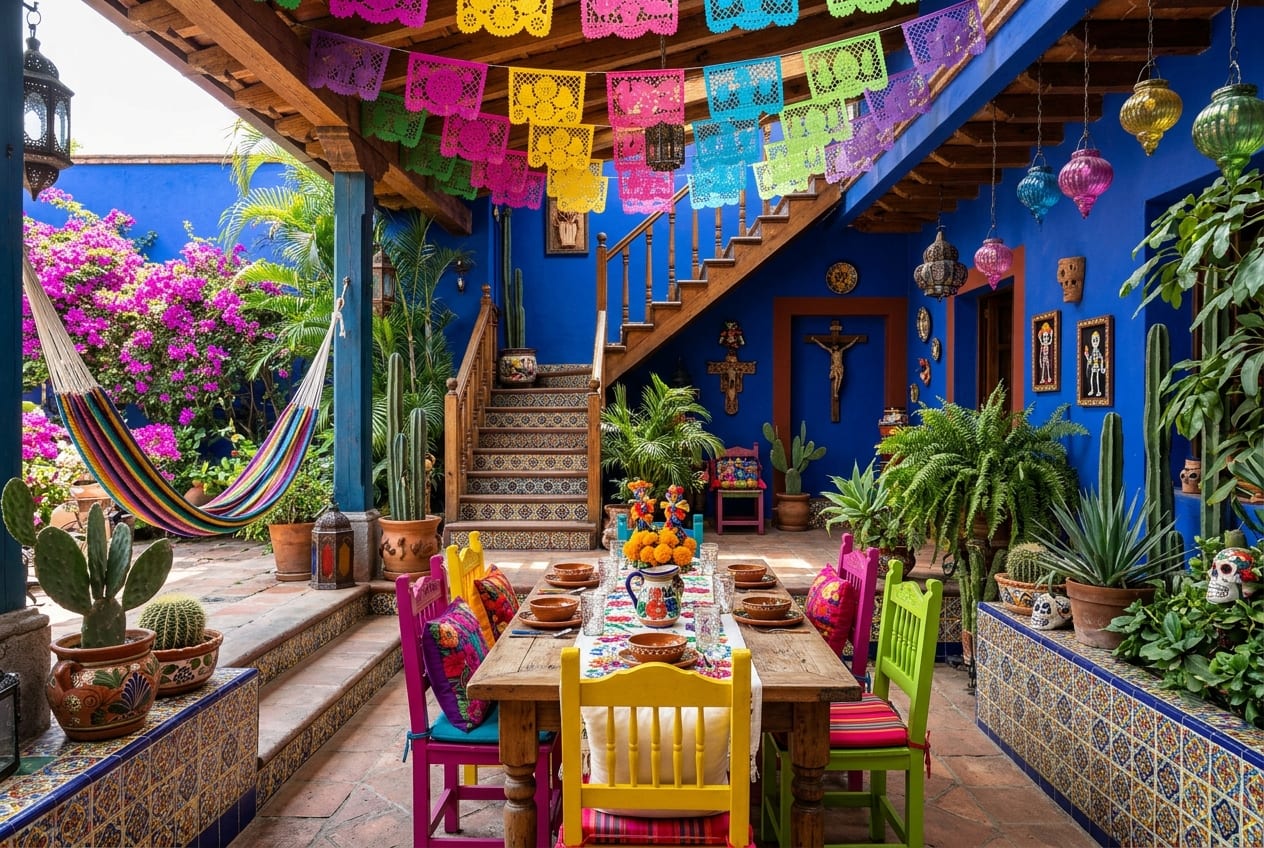
Paloma proves that the best parties happen when your patio is painted cobalt blue and every surface celebrates color, craft, and community.
What is Mexican Maximalism?
Mexican Maximalism is color as hospitality, pattern as welcome. It's the design philosophy that says outdoor spaces aren't afterthoughts but the heart of the home, where cobalt blue walls meet hand-painted ceramics and every corner invites you to sit, stay, eat. This isn't decoration for show. It's decoration for living, loudly and together, where brightness isn't just aesthetic but cultural memory made visible.
This style draws from centuries of Mexican craft traditions: Talavera pottery from Puebla with its distinctive blue-and-white patterns, the punched-paper art of papel picado that decorates every celebration, the bold palette of Casa Azul where Frida Kahlo turned her courtyard into a canvas. It pulls from mercado stalls overflowing with woven textiles, from colonial courtyards with their fountain-centered geometry, from the everyday genius of painting furniture in primary brights because joy costs nothing extra.
People love Mexican Maximalism now because it rejects the beige patio, the tasteful neutral deck. It insists that outdoor rooms deserve the same decorative intensity as interiors, that gathering spaces should announce their purpose in saturated color. In an era of dopamine decor and pattern-on-pattern confidence, Paloma offers permission to paint your walls cobalt, hang banners overhead, and trust that more color means more welcome.
The signatures
- Cobalt blue walls that make every other color sing
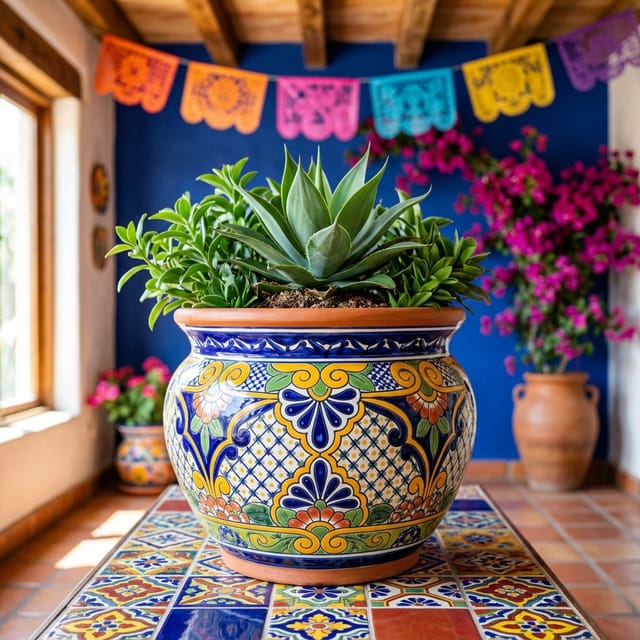
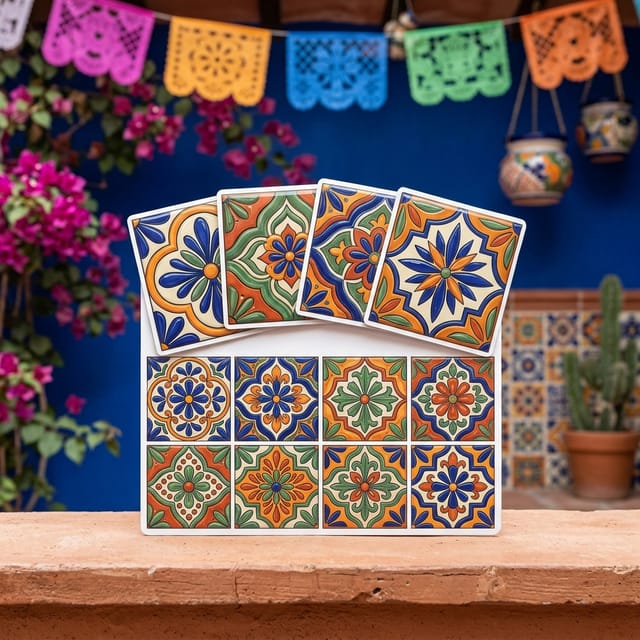
- Talavera tiles and ceramics in traditional blue, yellow, green patterns
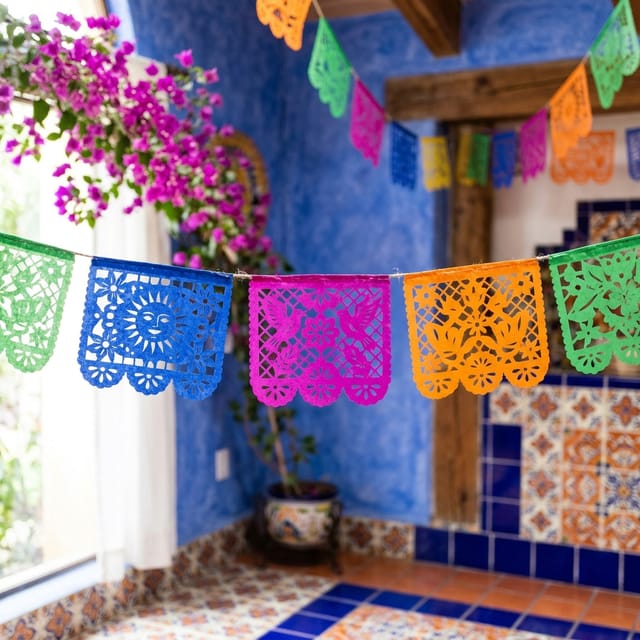
- Papel picado banners strung overhead like permanent celebration
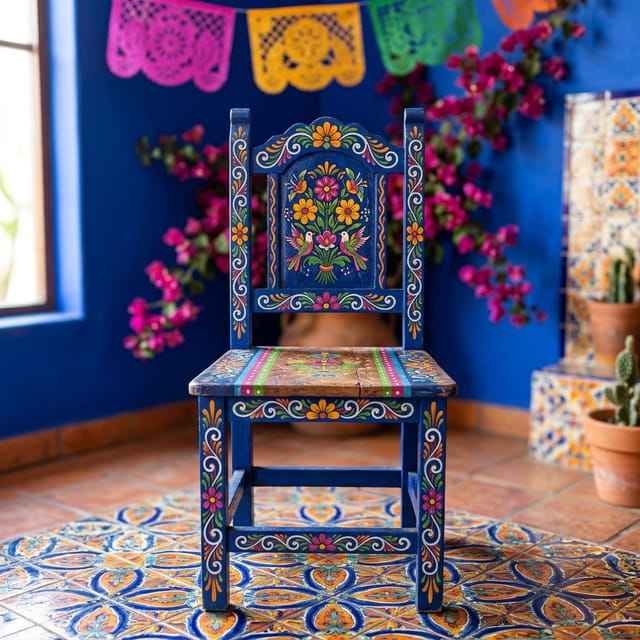
- Hand-painted wooden furniture in primary brights
- Bougainvillea and abundant flowering vines
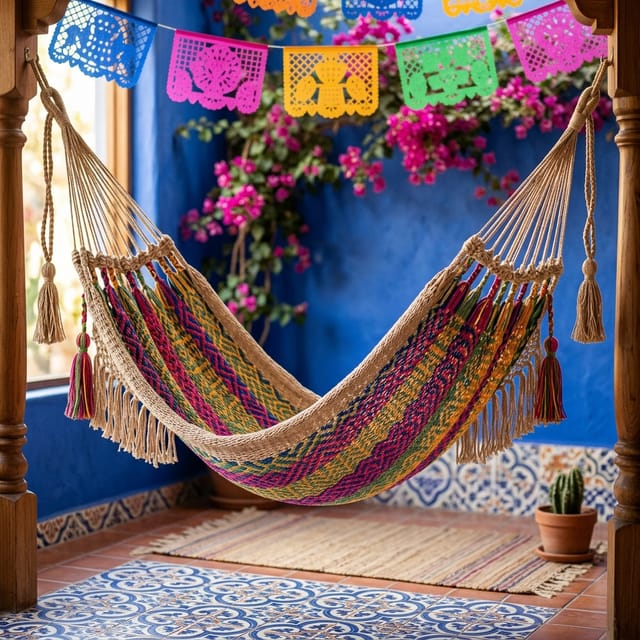
- Hammocks, equipales, and seating for spontaneous gatherings
Anatomy of the look
Color & Paint
Paloma starts with cobalt walls, that specific electric blue that makes white trim pop and flowers glow. This isn't shy blue or coastal blue. It's the saturated, sun-defying blue of Casa Azul, bold enough to hold its own against magenta bougainvillea and marigold chairs. Accent walls, posts, and planters get painted in complementary brights—never pastels, always primaries.
Walls & Pattern
Beyond paint, pattern arrives through Talavera tiles used as accents on risers, tabletops, or as decorative inserts in stucco walls. Papel picado banners string overhead, their punched designs casting moving shadows and signaling fiesta. Stenciled motifs borrowed from folk art—suns, flowers, geometric borders—can be painted directly onto walls or furniture for that hand-done, mercado feel.
Furniture & Shapes
Furniture is painted wood and woven leather: chairs in marigold yellow or turquoise, equipale chairs with their pigskin seats and cedar frames, benches sturdy enough for six. Nothing matches in a set-from-a-catalog way, but everything shares a commitment to handmade character and bright paint. Tables are simple wood, often painted or topped with tile mosaics.
Textiles
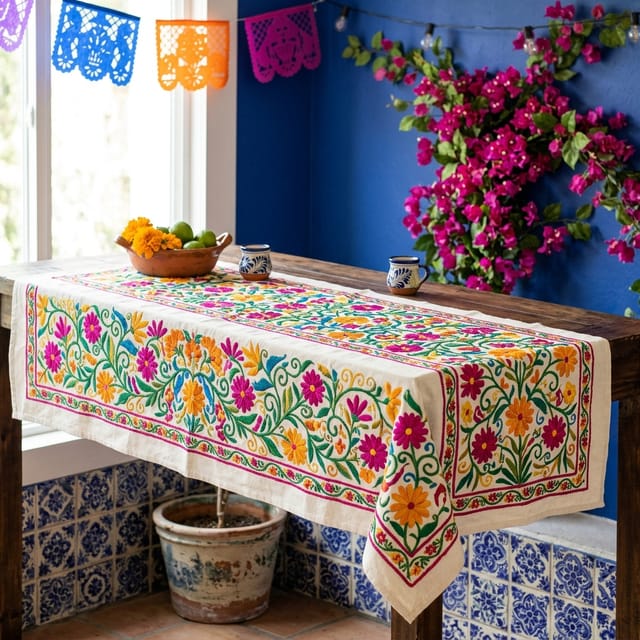
Textiles bring pattern and softness: embroidered tablecloths with floral or geometric motifs, woven striped blankets draped over chairs, cushions covered in Otomi embroidery or bright serape stripes. These aren't precious. They're meant to be sat on, spilled on, lived with. Outdoor fabrics in traditional patterns keep the look weather-ready without sacrificing color.
Lighting
Lighting is festive and functional: strings of colorful globe lights, punched tin lanterns that cast patterned shadows, hanging star-shaped fixtures. Candles cluster in painted tin holders and glass votives. The goal is warm, layered light for long evenings, the kind that makes faces glow and conversation linger after sunset.
Collections & Accessories
Paloma collects Talavera pottery, painted ceramic suns, hand-glazed serving dishes displayed on open shelves or hung on walls. Mirrors framed in painted tin, woven baskets, carved wooden saints. Every object has craft behind it, pattern on it, story in it. Collections group by color or type but never hide—this is a room that celebrates abundance.
Plants & Flowers
Plants are lush, abundant, and unapologetically bright. Bougainvillea spills over walls in magenta and orange, geraniums crowd terracotta pots, cacti and succulents fill painted planters. Marigolds nod to tradition. Climbing vines soften hard edges. The effect is controlled chaos, a garden that knows exactly how much is enough and then adds a little more.
The recipe
The Paloma Formula
- 160% cobalt blue as your base (walls, largest surfaces) to anchor the brightness
- 225% warm primaries (marigold, magenta, cactus green) in furniture and flowers
- 310% traditional Talavera pattern (blue and white, yellow accents) in tiles and ceramics
- 45% metallic and natural (punched tin, terracotta, woven fibers) to ground all that color
Paint picks
Casa Azul Cobalt #1E4FB8
Main walls, posts, or one dramatic accent wall that defines the entire space
Bougainvillea #D6247A
Furniture accents, planter trim, door frames for punches of warm magenta
Marigold #F2C230
Chairs, table legs, window frames—anywhere you want sunshine to stick around
Cactus Green #2F9E5B
Planters, shutters, or secondary furniture for botanical balance
Room by room
Living Room
Bring Paloma indoors with one cobalt accent wall, Talavera-patterned throw pillows, and papel picado strung across the ceiling. Keep seating flexible and abundant—floor cushions, poufs, chairs that move for spontaneous gatherings.
Bedroom
Paint the headboard wall cobalt and layer embroidered textiles in marigold and magenta. A woven hammock chair in the corner and Talavera pottery on shelves bring the patio's joy inside without overwhelming a sleep space.
Kitchen & Dining
Use Talavera tile as a backsplash or on stair risers leading to the dining area. Paint dining chairs in mismatched brights, hang papel picado above the table, and display hand-painted ceramics on open shelving like the art they are.
Bathroom
Talavera tiles shine in bathrooms—use them on floors, as shower accents, or framing mirrors. Paint vanity cabinets cobalt or marigold, add woven baskets for storage, and let bright hand towels channel Paloma's fearless color mixing.
Small Spaces & Rentals
Can't paint walls cobalt? Paint a bookshelf, a room divider, or large planters instead. Removable Talavera tile stickers, papel picado banners, and a collection of bright painted pots create the look without a lease violation.
Get it on any budget
Under $200
Under $500
Splurge
Renter-friendly
- Use Talavera tile stickers on floors, risers, or tabletops instead of permanent installations—they peel off cleanly when you move
- Paint furniture, planters, and freestanding shelves in cobalt and marigold rather than walls, creating the same visual impact without touching landlord surfaces
- Hang papel picado banners and string lights from removable hooks or tension rods across patios, balconies, or indoor ceilings
- Bring color through textiles and collections: bright cushions, embroidered tablecloths, painted ceramics, and abundant potted plants that move with you
Easy to avoid
- Choosing pale or dusty versions of these colors—Paloma needs saturated primaries, not pastel interpretations, to achieve her joyful intensity
- Buying everything new and matching from one store, which kills the handmade, collected-over-time character that makes this style feel authentic and lived-in
- Forgetting that this is a gathering style—skimping on seating, tables, or lighting means missing the whole point of creating a space that welcomes everyone
- Treating Talavera and folk art motifs as generic 'Southwestern' decor—respect the specific Mexican craft traditions by seeking out authentic patterns and supporting artisans when possible
FAQ
What is Mexican maximalism in interior design?
Mexican Maximalism is a vibrant design style rooted in Mexican craft traditions, characterized by saturated primary colors (especially cobalt blue), hand-painted Talavera ceramics, papel picado banners, and abundant pattern. It celebrates color as hospitality, turning outdoor and indoor spaces into joyful gathering places that honor folk art and communal living.
How do I decorate a patio in Mexican style?
Start with cobalt blue paint on walls or large surfaces, add Talavera tile accents and painted wooden furniture in primary brights. String papel picado banners overhead, fill terracotta and ceramic pots with bougainvillea and bright flowers, hang colorful lights, and include plenty of seating—hammocks, chairs, benches—for gathering. Layer embroidered textiles and handmade accessories.
What colors are used in Mexican maximalist decor?
Mexican Maximalism uses saturated primary colors: cobalt and electric blue, marigold yellow, magenta pink, cactus and lime green, terracotta orange. These aren't pastels or muted tones but bold, sun-bright hues inspired by traditional craft, markets, and the painted walls of homes like Frida Kahlo's Casa Azul. White trim makes colors pop even more.
Can I do Mexican maximalism in a small space or rental?
Absolutely. Use removable Talavera tile stickers instead of permanent installations, paint furniture and planters rather than walls, and hang papel picado from removable hooks. Bring color through textiles, cushions, painted ceramics, and potted plants. Even a small balcony becomes Paloma with cobalt-painted chairs, string lights, and abundant flowers.
Where can I buy Talavera tiles and Mexican decor?
Search for Talavera tile stickers or decals for renter-friendly options, look for hand-painted ceramics and planters at import stores and online marketplaces, and find papel picado banners through party supply shops or artisan sellers. Painted wooden furniture and embroidered textiles appear at home goods stores, while authentic pieces come from Mexican artisan cooperatives and specialty importers.
Some links may earn MAX by Design a small commission at no cost to you.