The Style Guide · Cottage Maximalism
Cottage Maximalist Decor: How to Get Posy's Soft, Floral Look
Cottage maximalism is maximalism in a whisper—all the abundance, none of the shout.
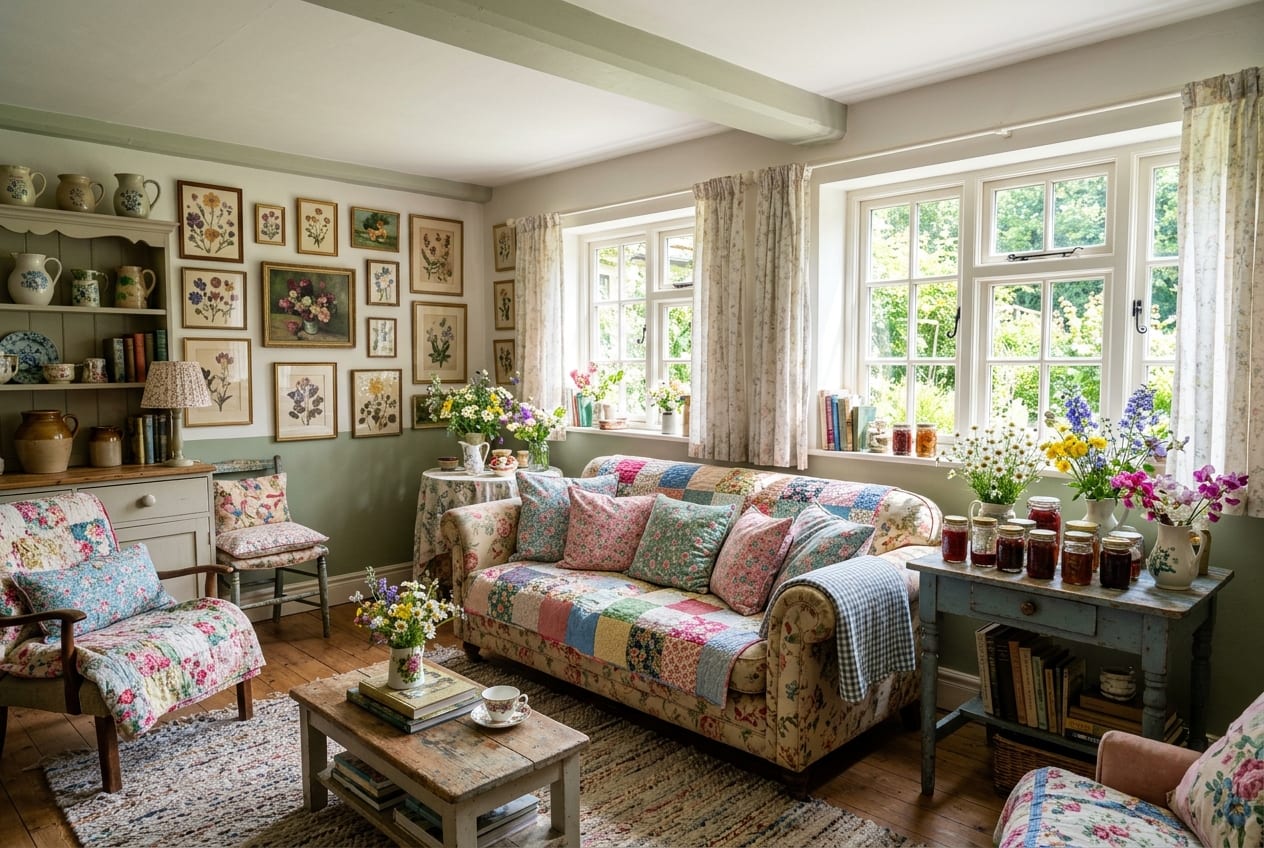
What is Cottage Maximalism?
Cottage maximalism is what happens when English country charm meets a 'more is more' philosophy, but keeps its voice down. It's maximalism at garden-party volume: layers upon layers of floral patterns, mismatched vintage finds, and collections displayed with pride, all held together by a palette so soft it feels like filtered morning light. Where other maximalist styles might shout, cottage maximalism hums a tune while arranging flowers.
This style draws from the English cottage tradition—think thatched roofs, cottage gardens, and chintz that's been loved for generations—but filters it through a contemporary lens that values personal collections and unabashed pattern mixing. It borrows the layered textile approach of grandmillennial style, the floral devotion of cottagecore, and the 'nothing matches but everything goes' confidence of true maximalism. The result feels like stepping into a country house that's been lovingly lived in for decades, even if you moved in last month.
People are drawn to cottage maximalism now because it offers comfort without minimalism's rules and abundance without intimidation. It's maximalism you can actually live in, where a floral sofa can coexist with floral curtains and floral wallpaper because the colors are gentle enough to play nicely together. In a world that often feels too loud, cottage maximalism creates spaces that feel full but never overwhelming—like a deep breath in a garden after rain.
The signatures
- Multiple floral patterns in one room, unified by a soft pastel palette
- Vintage or vintage-inspired furniture with gentle curves and painted finishes
- Collections displayed openly: teacups, vases, books, pressed flowers
- Layers of textiles in gingham, florals, lace, and linen
- Warm white or cream walls that let patterns shine without competing
- Fresh or dried flowers in mismatched vessels throughout
Anatomy of the look
Color & Paint
Posy lives in the softest end of the color spectrum, where pastels have been washed in sunlight until they're barely there. Walls stay in the warm white to pale cream family, creating a gentle canvas that makes every floral pattern feel like it belongs. Painted furniture introduces sage greens and dusty roses, but always with a matte or chalky finish that keeps things feeling found rather than bought.
Walls & Pattern
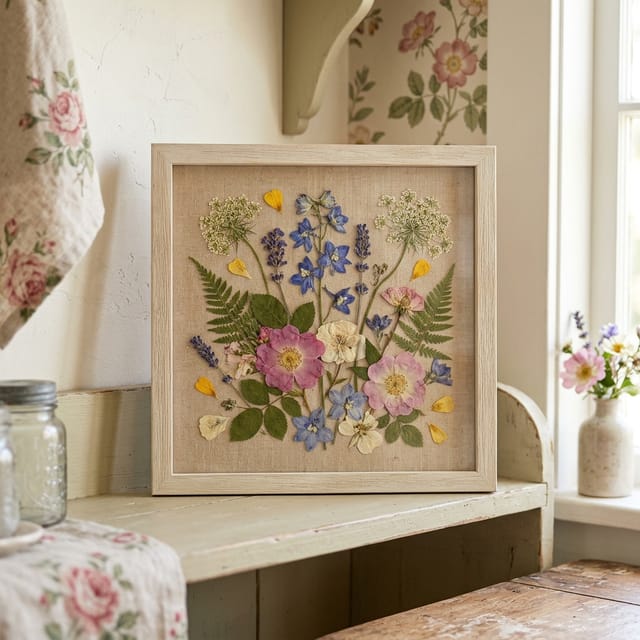
This is where cottage maximalism earns its name. Posy isn't afraid of floral wallpaper, especially in smaller doses—an accent wall, inside a bookshelf, or lining the back of a cabinet. If wallpaper feels too permanent, she layers framed botanical prints, vintage floral plates, and pressed-flower art until the walls tell their own garden story. The key is keeping the background colors light and letting the patterns do the talking.
Furniture & Shapes
Furniture in cottage maximalism favors curves over angles and vintage charm over modern sleekness. Think skirted armchairs, spindle-back chairs, painted wood dressers with carved details, and anything that looks like it might have come from a country estate sale. Posy mixes wood tones freely—a pine table with oak chairs with a painted cream sideboard—because real cottages accumulated furniture over time, and so can you.
Textiles
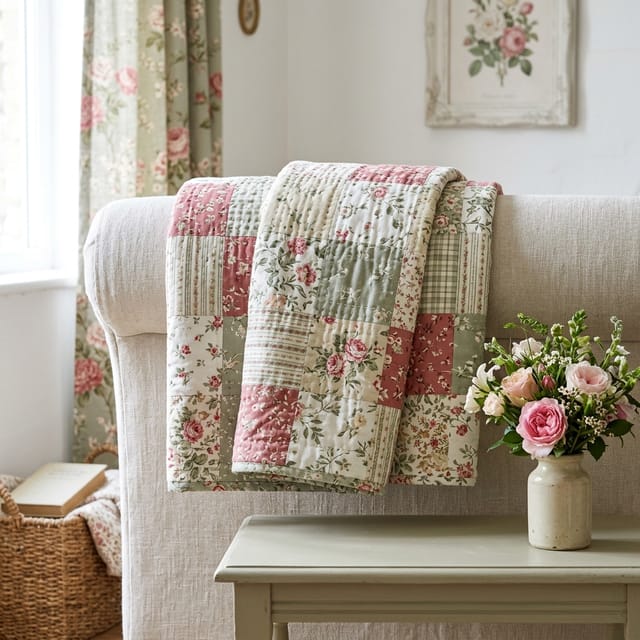
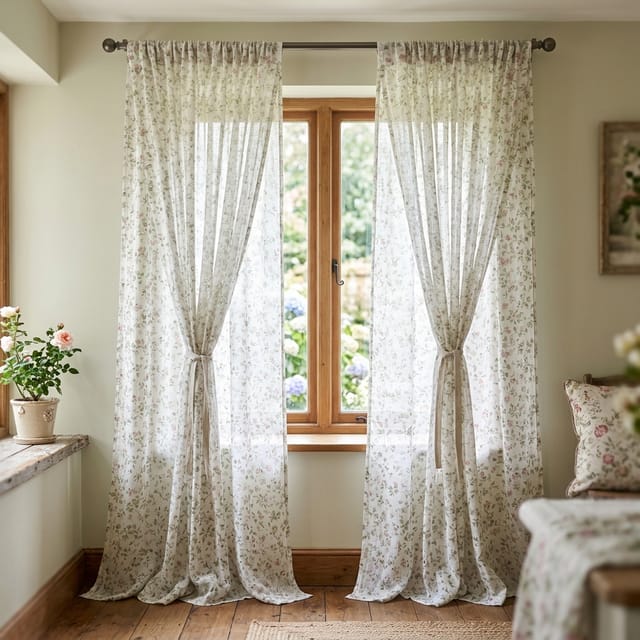
If cottage maximalism has a secret weapon, it's textiles. Posy layers them fearlessly: a floral quilt over linen sheets, gingham pillows on a rose-print chair, lace curtains behind floral ones. The trick is keeping the palette consistent—when everything lives in the same family of sage, rose, cream, and soft white, patterns can pile up without chaos. Natural fabrics like cotton, linen, and worn velvet add to the lived-in, touchable quality.
Lighting
Lighting in Posy's world is always warm, always soft, always a little bit romantic. She favors table lamps with fabric shades (bonus points for floral), vintage-style chandeliers with candle-like bulbs, and warm Edison bulbs that cast everything in a golden glow. Overhead lighting is gentle and diffused—this is not a room for bright white LEDs. Candles in mismatched holders appear on every surface that's safe for flame.
Collections & Accessories
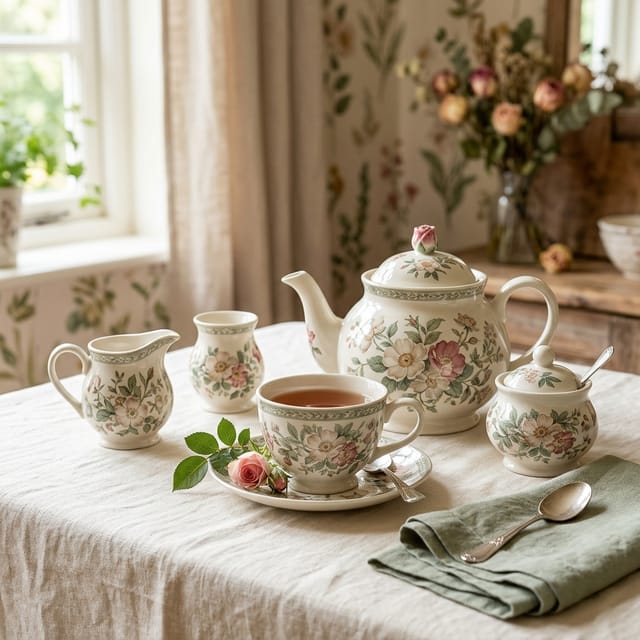
Cottage maximalism is a collector's style, and Posy displays her finds with pride. Teacups and saucers line open shelving, vintage books stack on side tables with their spines facing out, small vases gather in groups of three or five. The collections feel personal and accumulated—like things you'd actually use or genuinely love—rather than styled for a magazine. Trays, cake stands, and tiered servers help corral smaller items while keeping them visible.
Plants & Flowers
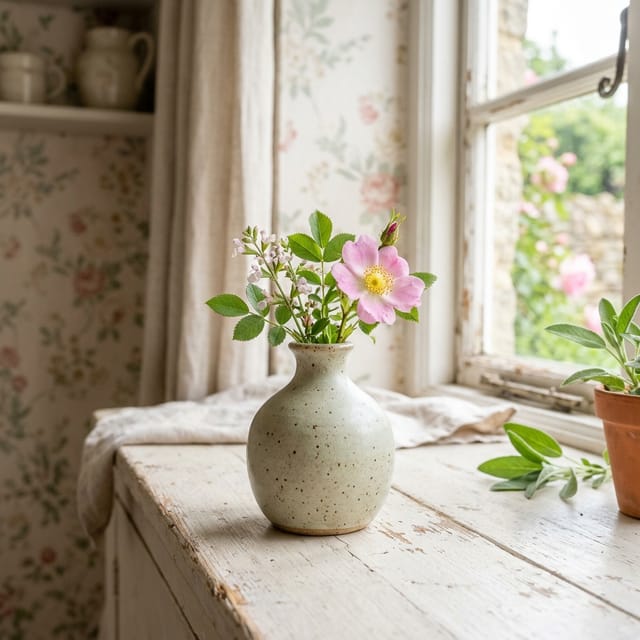
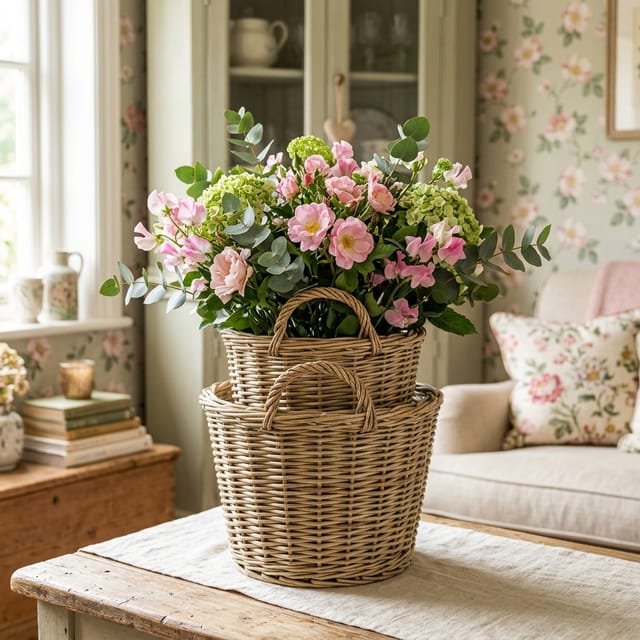
Fresh flowers are non-negotiable in cottage maximalism, even if they're from the grocery store. Posy arranges them loosely in mismatched vessels—a cream pitcher here, a collection of bud vases there, a teacup that lost its saucer. Dried flowers work too, especially in soft pinks and creams. For greenery, she prefers soft, trailing plants like pothos or ferns over anything too architectural. Even the plants feel gentle here.
The recipe
The Posy Formula
- 160% soft neutrals (cream, warm white, pale linen) as your foundation
- 230% gentle pastels (sage, rose, soft pink) in patterns and painted pieces
- 310% deeper accents (forest green, dusty mauve) for just enough contrast
- 4At least three different floral patterns in the same room, same palette
Paint picks
Linen White #F7F3E8
Walls, ceilings, and trim—the soft light that holds everything else
Sage Cream #EAF0E2
Accent walls, inside cabinets, or painted furniture for garden calm
Dog Rose #E7A9B6
Painted chairs, picture frames, or a single accent wall for gentle blush
Sage #A7C4A0
Dressers, side tables, or door frames as the leafy thread throughout
Room by room
Living Room
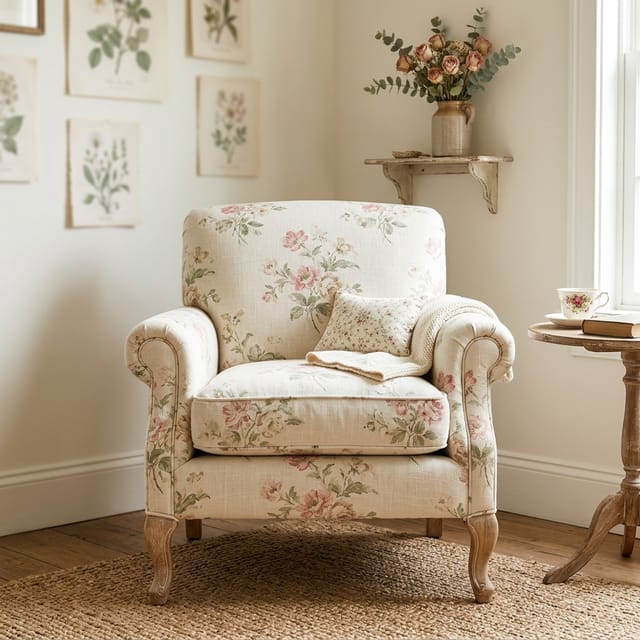
Start with a floral armchair or sofa, then layer in gingham or ticking stripe pillows. Display your book collection openly, with small vases of flowers tucked between stacks. A painted coffee table in sage or cream anchors the space without adding visual weight.
Bedroom
Layer your bed with a patchwork or floral quilt, linen sheets, and mismatched pillowcases—nothing should match too perfectly. Hang a small chandelier or use table lamps with fabric shades on both nightstands. Frame pressed flowers or botanical prints above the bed for your own personal garden wall.
Kitchen & Dining
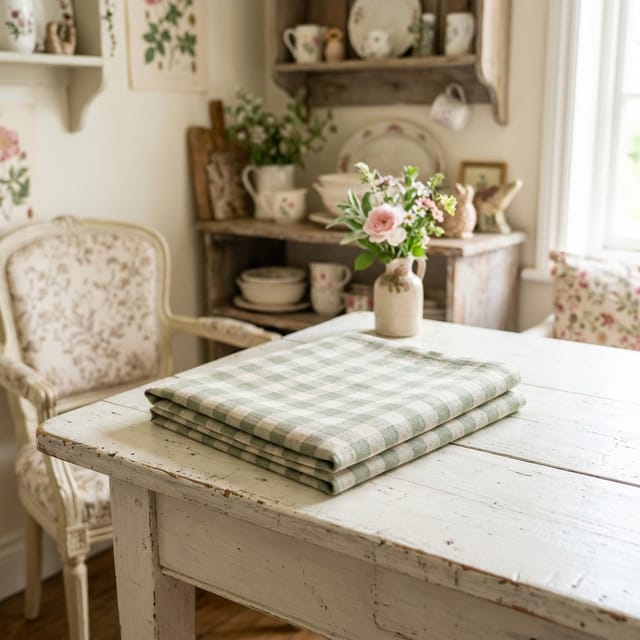
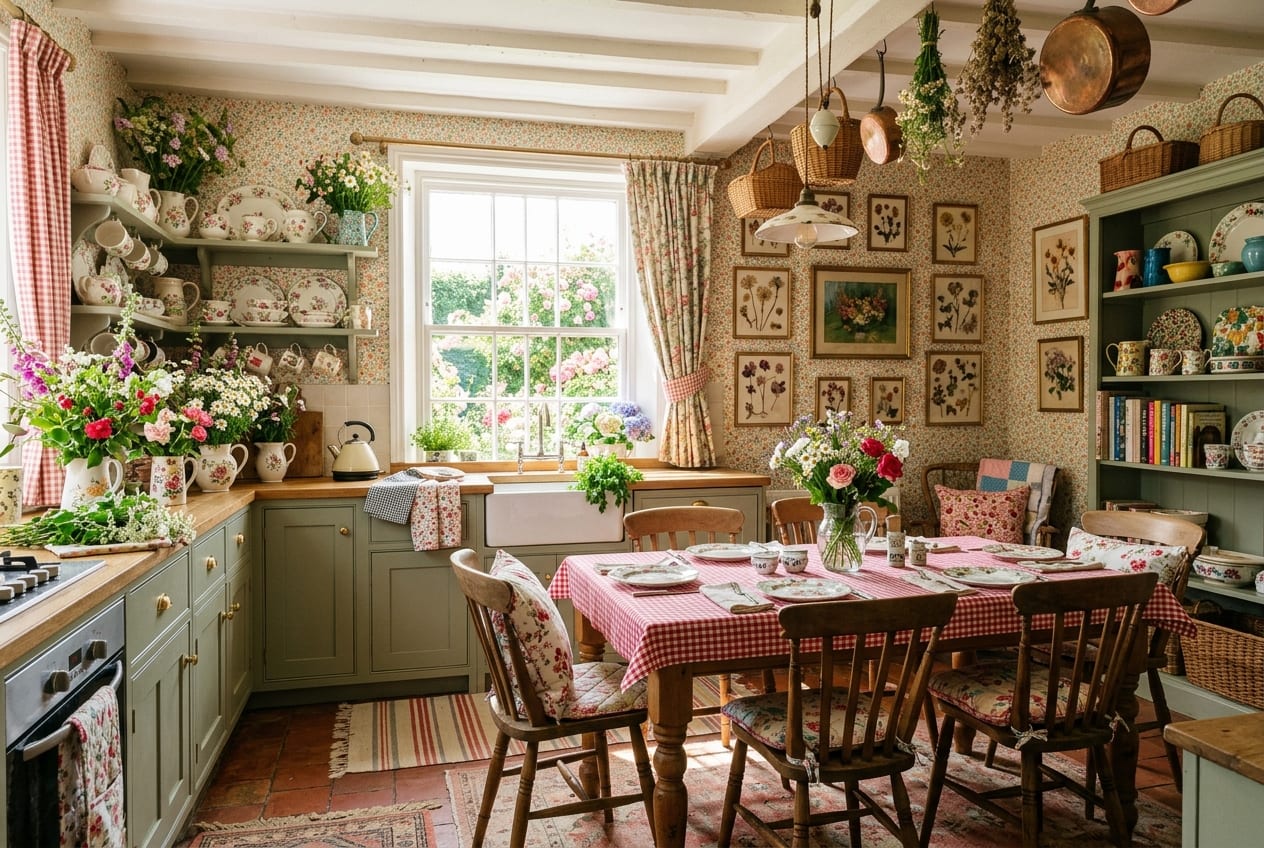
Open shelving is your friend here—display your prettiest dishes, teacups, and serving pieces where you can see them daily. A gingham tablecloth or floral runner sets the cottage tone, while mismatched chairs painted in your palette add maximalist charm. Keep fresh flowers on the table and counters in whatever vessels make you happy.
Bathroom
Even small bathrooms can embrace cottage maximalism through textiles and collections. Hang floral or lace curtains, display vintage perfume bottles or apothecary jars on open shelves, and use a painted stool or ladder for towel storage. A small vase of flowers and a framed botanical print complete the garden-room feeling.
Small Spaces & Rentals
Cottage maximalism actually works beautifully in small spaces because the soft palette keeps things from feeling cramped. Focus on removable wallpaper in one area, lots of textiles you can take with you, and vertical displays of collections. The gentle colors make even a crowded room feel airy and breathable.
Get it on any budget
Under $200
Under $500
Splurge
Renter-friendly
- Use peel-and-stick floral wallpaper on one wall or inside a bookshelf for removable pattern
- Invest in textiles rather than permanent changes—curtains, throws, and pillows travel with you
- Create a gallery wall with Command strips to display botanical prints and pressed flowers
- Paint furniture pieces instead of walls for color that moves when you do
Easy to avoid
- Using too many bright or saturated colors—cottage maximalism lives in the pastel and neutral range, so keep your palette soft even as you layer patterns
- Matching everything too perfectly—the charm is in the collected-over-time feeling, so embrace mismatched chairs, different floral patterns, and furniture from different eras
- Forgetting the maximalist part—don't hold back on pattern, collections, or textiles just because the colors are gentle; this style needs abundance to work
- Choosing harsh white paint—warm whites and creams are essential to the sun-washed feeling; stark white will make everything else look too precious
FAQ
Can you mix different floral patterns in cottage maximalism?
Absolutely—mixing florals is essential to cottage maximalism. The key is keeping them in the same color family (like all pastels or all pink-and-green combinations) and varying the scale (a large cabbage rose print with a small ditsy floral, for example). When the palette is cohesive, even three or four different floral patterns in one room will feel intentional rather than chaotic.
What's the difference between cottage maximalism and grandmillennial style?
There's significant overlap, but cottage maximalism tends to be softer and more floral-focused, while grandmillennial style often includes bolder colors, more formal furniture, and preppy patterns like chinoiserie or toile. Cottage maximalism is the garden-party cousin—a bit more relaxed, a bit more pastel, and always ready with fresh flowers. Both celebrate vintage charm and pattern mixing, just with different energy levels.
How do I start cottage maximalism if I have modern furniture?
Begin with textiles—a floral quilt, gingham pillows, and lace curtains can soften modern pieces significantly. Add vintage-inspired accessories like ceramic vases, painted frames, and botanical prints. Consider painting one modern piece (like a side table or bookshelf) in a soft sage or cream to bridge the styles. The beauty of cottage maximalism is that it's more about the overall feeling than any single piece, so you can build it gradually.
Is cottage maximalism only for bedrooms?
Not at all—cottage maximalism works beautifully in any room, from living rooms to kitchens to bathrooms. The soft palette actually makes it easier to live with throughout your home than bolder maximalist styles. Kitchens especially shine in this style, with open shelving for displaying pretty dishes and plenty of opportunities for gingham, florals, and fresh flowers. Just adjust the practical elements for each room's function.
Where can I find affordable cottage maximalist furniture?
Thrift stores and estate sales are goldmines for vintage wooden furniture that you can paint in your palette. Look for pieces with curves, carved details, or spindle legs—the shape matters more than the current finish. Online marketplaces often have people selling grandma's old furniture at reasonable prices. For new pieces, search for terms like 'cottage style,' 'vintage-inspired,' or 'farmhouse' furniture, which often have the right shapes even if you need to add your own paint or fabric.
Some links may earn MAX by Design a small commission at no cost to you.