The Style Guide · Fairycore & Storybook
Woodland Mural Maximalism: How to Get Sylvie's Enchanted Look
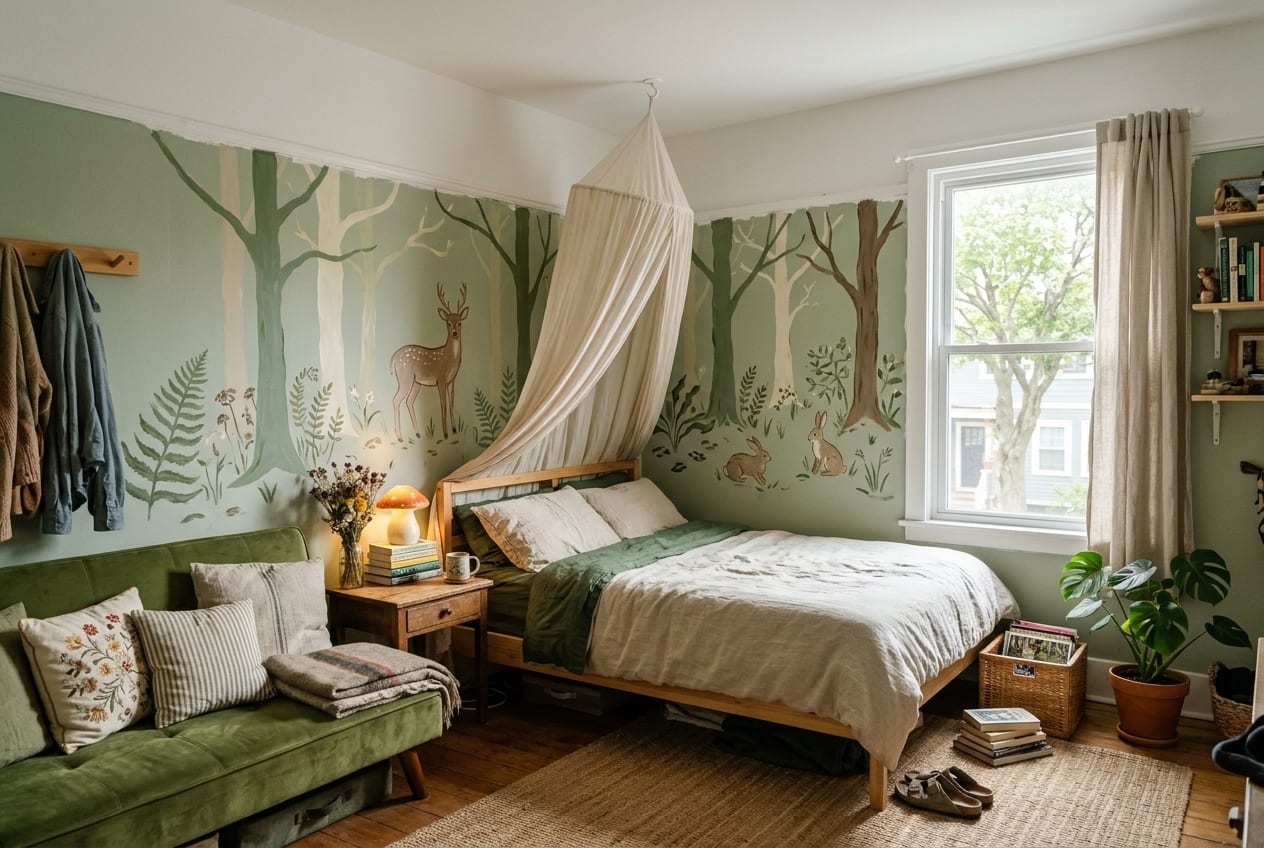
Step into Sylvie's bedroom, where hand-painted trees whisper on the walls and every corner holds a secret from the forest.
What is Woodland Mural Maximalism?
Woodland Mural Maximalism transforms your bedroom into an enchanted forest where you're the main character in a storybook. Unlike minimalist nature-inspired rooms that add a single botanical print, this style commits fully to the fantasy: hand-painted murals that wrap around walls, carved wooden furniture that looks like it grew from the earth, and layers of moss velvet, linen, and dried botanicals that make you feel like you've stepped through a wardrobe into another world. The room itself becomes the art, with every surface telling part of the forest's story.
This style draws from centuries of fairy tale illustration, from Arthur Rackham's gnarled trees to Beatrix Potter's cozy woodland burrows, blended with the Arts and Crafts movement's reverence for natural materials and handcrafted detail. It shares DNA with cottagecore's pastoral romance and whimsigoth's moody enchantment, but adds the theatrical commitment of a painted backdrop, like the elaborate nursery murals wealthy Victorians commissioned or the trompe l'oeil garden rooms of Italian villas. The recent explosion of fairycore and goblincore aesthetics on social media has brought this once-rare approach into reach for regular people with paintbrushes and vision.
People are drawn to Woodland Mural Maximalism now because it offers complete escapism in the one room where we're most vulnerable and need it most. After spending our days staring at screens in beige apartments, we crave immersion in something handmade, something that can't be scrolled past. Painting your own forest mural, even imperfectly, is an act of world-building that makes your bedroom feel like a sanctuary only you can enter. It's maximalism with a whisper instead of a shout, where abundance comes from nature's infinite detail rather than bold pattern clashes.
The signatures
- Hand-painted or large-scale woodland murals covering at least two walls
- Moss green velvet and natural linen layered on beds and seating
- Carved or rustic wood furniture with organic, branch-like shapes
- Sheer canopies and gauzy drapes that filter light like morning mist
- Collections of dried flowers, pressed botanicals, and found forest objects
- Warm, dappled lighting that mimics golden hour filtering through leaves
Anatomy of the look
Color & Paint
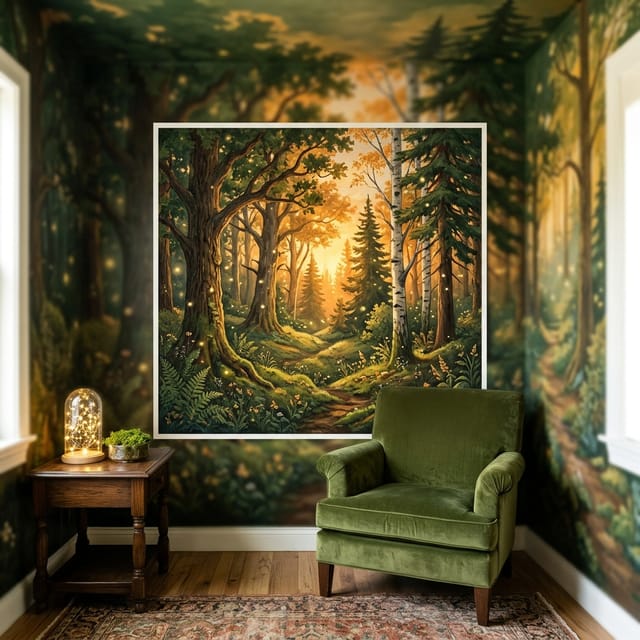
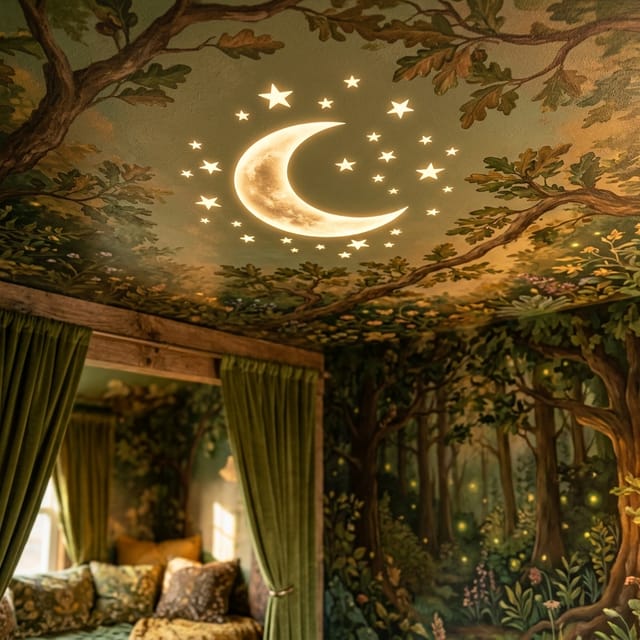
Sylvie's walls are where the magic begins, with a hand-painted forest mural in soft sage, moss green, and cream wrapping around at least two walls to create immersion. The trees don't need to be perfect, they need to feel alive, with visible brushstrokes and slightly irregular trunks that look like they grew there. A painted moon or dappled light effect on the ceiling extends the forest canopy overhead, while untouched walls stay in warm cream or the palest grey-green to let the mural breathe.
Walls & Pattern
Beyond the painted mural, Sylvie layers in pattern through vintage botanical prints in mismatched frames, pressed fern specimens under glass, and framed pages from old fairy tale books. Wallpaper appears only in small doses, perhaps a William Morris-style leaf pattern in an alcove or behind shelving, never competing with the mural. The goal is to make the walls feel like a living scrapbook of the forest, with three-dimensional elements like mounted antlers, dried flower wreaths, and small shelves holding bird nests or acorns.
Furniture & Shapes
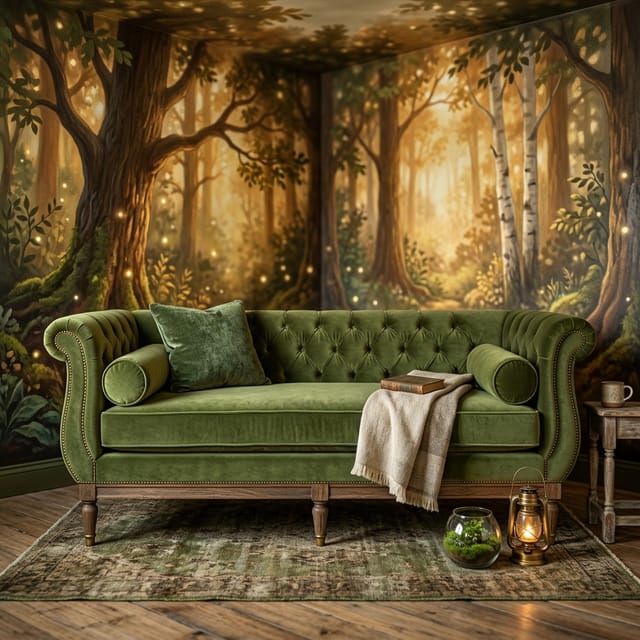
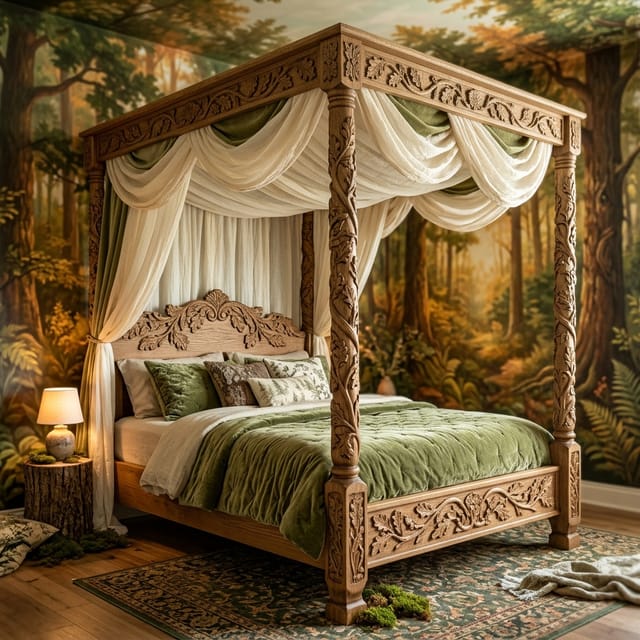
Furniture in Sylvie's room looks like it was carved from the forest itself, with a wooden canopy bed frame featuring posts that twist like branches or a headboard with organic curves. A moss green velvet daybed or reading nook creates a plush nest for daytime dreaming, while nightstands and dressers come in warm oak or walnut with visible wood grain and handcrafted details. Every piece should feel substantial and earthy, avoiding anything too sleek or modern that would break the spell.
Textiles
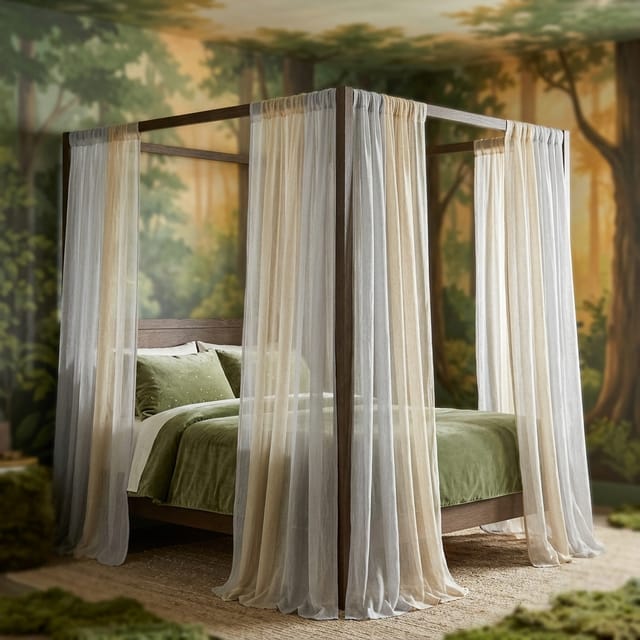
Sylvie's textiles are a study in texture, layering heavy moss velvet with whisper-soft linen in cream and natural oat tones. Sheer canopy drapes in gauzy cotton or linen hang from the bed frame, filtering light and creating that crucial sense of being sheltered deep in the woods. Throw blankets in chunky knit or faux fur add cozy weight, while embroidered pillows featuring mushrooms, moths, or woodland creatures bring in whimsical detail without veering into juvenile territory.
Lighting
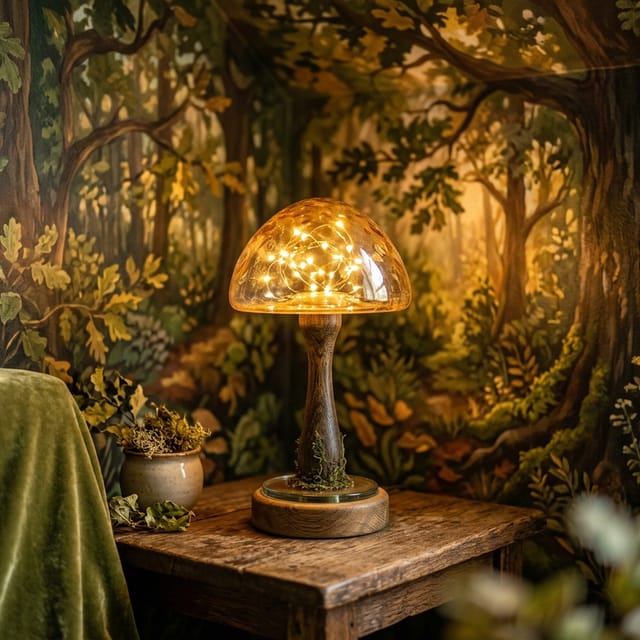
Lighting in Sylvie's room mimics the dappled, golden quality of sun filtering through a forest canopy, with no harsh overhead fixtures allowed. Mushroom-shaped lamps with warm Edison bulbs create pools of amber light on nightstands, while string lights with fabric or paper shades can be woven through the bed canopy or along the mural's painted branches. Candles in brass holders or wooden candlesticks add flickering, living light that makes the painted trees seem to sway.
Collections & Accessories
Sylvie's accessories are curated like a naturalist's cabinet of curiosities, with dried flower bundles hanging upside down from hooks, vintage glass cloches protecting bird nests or mushroom specimens, and small wooden boxes holding acorns, pinecones, and pretty stones. Books are essential, stacked on nightstands with clothbound fairy tale collections and field guides to mushrooms or birds. Every object should feel found or handmade, never mass-produced, building a sense that this room has been slowly enchanted over time.
Plants & Flowers
Living plants in Sylvie's room lean toward ferns, ivy, and trailing pothos that echo the painted forest, placed in terracotta pots or hanging planters that bring the mural to life. Dried flowers are equally important, with bundles of lavender, eucalyptus, and statice in earthenware vases or hanging from exposed beams and curtain rods. The mix of living and preserved botanicals creates layers of green at different heights, making the room feel genuinely inhabited by the forest rather than just decorated with its image.
The recipe
The Sylvie Formula
- 160% soft, earthy neutrals (cream, oat, warm grey) as your base on bedding, curtains, and unpainted walls
- 230% forest greens from sage to deep moss in velvet, painted murals, and living plants
- 310% warm golden and wood tones in lighting, frames, and furniture that create that perpetual golden hour glow
- 4Every flat surface should hold something from nature: a bird's nest, a bundle of wheat, a single perfect acorn
Paint picks
Moss #5E7A4A
The main green for your mural trees and forest floor, also perfect for a velvet daybed or accent wall behind shelving
Golden Hour #D9B26A
Use sparingly as painted sunlight filtering through mural branches, or as a ceiling wash to warm the whole room
Oak Bark #8A6A4F
For painted tree trunks and branches in the mural, creating depth and that essential woody warmth
Moonlight #EDE6D6
Your base wall color on unpainted surfaces, plus use for a painted moon or stars on the ceiling to extend the forest sky
Room by room
Living Room
A woodland mural works beautifully behind a sofa or reading nook in a living room, especially if you scale it to one accent wall and surround it with forest green velvet seating and stacks of vintage books. Keep the rest of the room in warm neutrals so it feels like a cozy clearing rather than overwhelming the space where you entertain.
Bedroom
This is Sylvie's natural habitat, where you can commit fully to the forest fantasy since bedrooms are private sanctuaries. Paint your mural on the wall behind the bed and the adjacent wall to create wraparound immersion, then add a canopy bed and moss velvet to complete the enchanted clearing where you sleep.
Kitchen & Dining
In a kitchen or dining room, scale down to a single mural wall behind open shelving displaying earthenware and wooden bowls, paired with forest green cabinets and brass hardware. This creates a woodland cottage feel without making a food-prep space feel too dark or fantastical.
Bathroom
A small bathroom can handle a full woodland mural if you keep fixtures white and add warm brass faucets and wood accents, creating a secret forest bathing grotto. Hang eucalyptus in the shower and display soaps and oils in vintage glass bottles to extend the natural apothecary feeling.
Small Spaces & Rentals
If you can't paint, use a large-scale peel-and-stick forest mural on one wall and layer in the look through moss green textiles, potted ferns, and dried flower arrangements. Even in a tiny room, one committed mural wall plus a velvet reading chair creates the enchanted forest feeling without permanent changes.
Get it on any budget
Under $200
Under $500
Renter-friendly
- Use large-scale peel-and-stick forest murals that remove cleanly instead of painting directly on walls, choosing designs with soft, painterly styles rather than photographic forests
- Create a forest headboard effect by hanging a tapestry or large fabric panel with woodland imagery behind your bed, flanked by potted ferns and string lights
- Lean large framed botanical prints or a standing room divider painted with trees against the wall to create the mural effect without permanent installation
- Focus your budget on transformative textiles like a moss velvet duvet, sheer canopy, and multiple throw pillows that completely change the room's feeling without touching the walls
Easy to avoid
- Painting your mural too dark or detailed, which can make the room feel closed-in rather than enchanted. Keep your forest in soft, muted greens with plenty of cream and warm undertones, and leave some walls unpainted so the room can breathe.
- Mixing in too many other maximalist styles like bold florals or geometric patterns, which breaks the woodland spell. Sylvie is a committed aesthetic that works because everything points to the same forest fantasy, so save your suzanis and ikats for other rooms.
- Using only dried or only living plants, when the magic comes from mixing both. Fresh ferns and trailing ivy make the painted forest feel alive, while dried flowers and preserved branches add the romantic, timeless quality of a fairy tale.
- Choosing furniture that's too modern or minimalist, which creates jarring contrast with the romantic mural. Even if you love mid-century design, this room needs wood furniture with visible grain, carved details, or organic shapes to maintain the enchanted cottage feeling.
FAQ
How do I paint a woodland mural if I'm not artistic?
Start by projecting or tracing a simple forest outline on your wall, focusing on just tree trunks and a few main branches rather than detailed leaves. Use a limited palette of two or three greens plus cream, and embrace imperfection—slightly wobbly trees look more handmade and charming than stiff, perfect ones. You can also use large peel-and-stick murals as your base and paint over them to add personal touches and depth.
What's the difference between woodland maximalism and cottagecore?
Cottagecore focuses on pastoral, farmhouse-inspired spaces with floral patterns, gingham, and a lighter, more cheerful palette, while woodland maximalism commits to the forest itself as the room's main character through murals and deeper, mossier greens. Woodland maximalism is more theatrical and immersive, transforming your entire room into an enchanted forest rather than decorating with nature-inspired accents. They're cousins, but Sylvie is specifically about bringing the woods indoors, not the countryside.
Can woodland mural maximalism work in a room with low natural light?
Yes, but you'll need to be strategic about keeping your palette lighter and adding plenty of warm artificial lighting. Use more cream and sage in your mural rather than deep forest green, paint your ceiling in the lightest tone to reflect light, and layer in multiple light sources at different heights—string lights, table lamps, and candles—to create that dappled golden hour glow even on cloudy days.
How do I keep a woodland bedroom from feeling too childish or themed?
Avoid cartoon animals and stick to sophisticated, painterly mural styles with visible brushstrokes and muted colors. Choose vintage botanical illustrations over cute woodland creature prints, use adult-scale furniture in real wood and velvet rather than small painted pieces, and keep your accessories natural and found rather than crafty. The key is committing to the romance and mystery of the forest, not the Disney version.
What if I want to change my bedroom style later?
If you're worried about commitment, start with a peel-and-stick mural that can be removed, or paint your forest on just one accent wall that can be easily repainted. Focus your bigger investments on versatile pieces like a quality wood bed frame and neutral linen bedding that will work with other styles, and put your woodland personality into easily changeable elements like velvet pillows, dried flowers, and botanical prints that can be swapped out when you're ready for something new.
Some links may earn MAX by Design a small commission at no cost to you.