The Style Guide · Art Deco Maximalism
Art Deco Maximalism: How to Get Zelda's Jazz-Age Glamour Look
Zelda never left the party of 1925, and she's still teaching us how to make every evening an entrance.
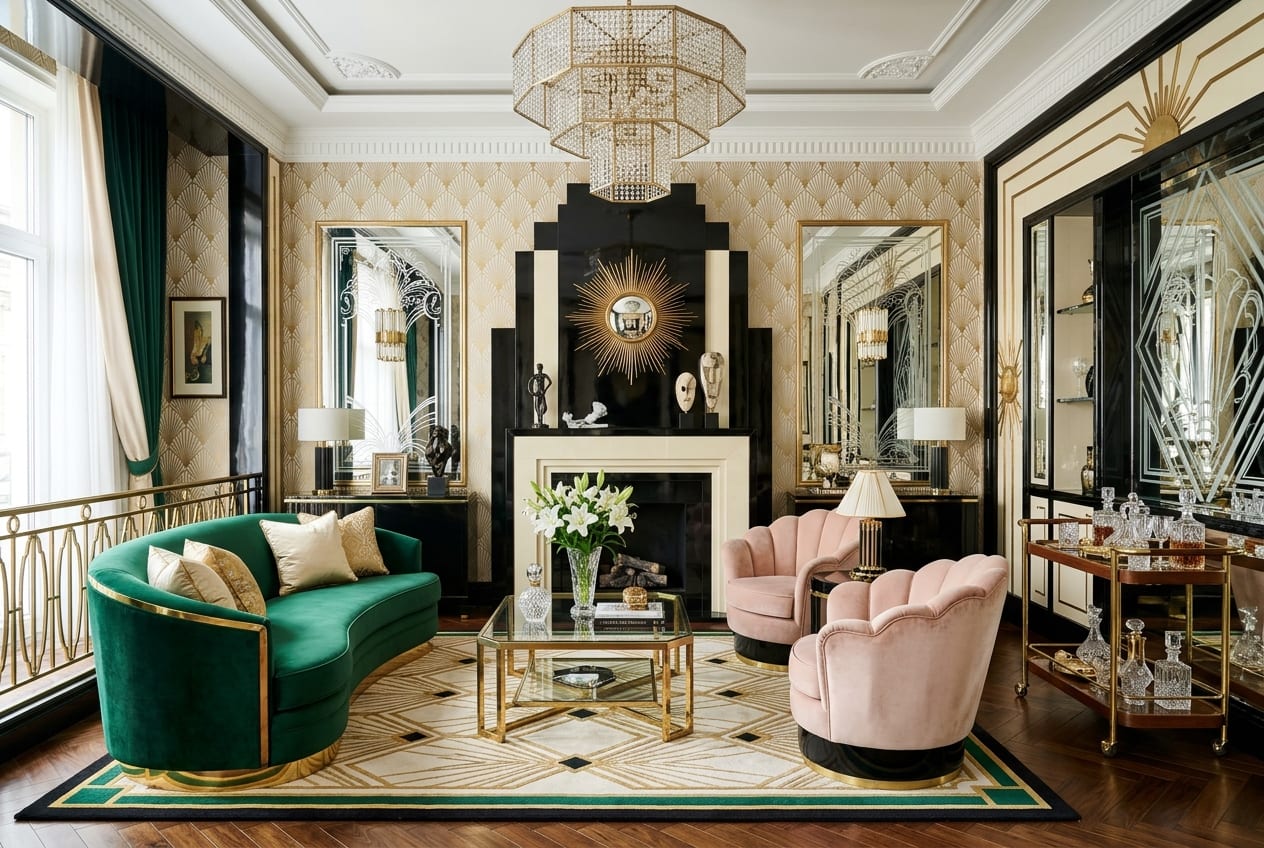
What is Art Deco Maximalism?
Art Deco maximalism is glamour that refuses to whisper. It's the design language of Jazz Age excess translated for modern homes that crave drama, geometry, and a touch of speakeasy mystery. Where minimalism asks you to edit, Zelda asks you to add another layer of velvet, another brass sunburst, another reason to dress for dinner at home. This is maximalism with architectural bones—every curve calculated, every shine intentional, every corner an opportunity for geometric glory.
Born in 1920s Paris and perfected in the nightclubs and luxury liners of the era, Art Deco celebrated machine-age precision wrapped in opulent materials. It drew from Egyptian revival, Cubism, and the sleek lines of streamlined industrial design, creating interiors that felt both futuristic and decadent. The style traveled from the Chrysler Building to cocktail lounges, bringing zigzag patterns, exotic veneers, and mirrored surfaces everywhere it went. It was optimism in geometric form, luxury that announced itself in brass and black lacquer.
Today's maximalists love Art Deco because it gives permission to be unabashedly glamorous without feeling stuffy or museum-precious. It's a style that understands drama, that knows how to throw light around a room through strategic shine and reflection. In an era of beige minimalism, Zelda offers something better: a room that makes you want to put on velvet just to sit in it, that turns an ordinary Tuesday into an occasion worth celebrating with the good glassware.
The signatures
- Geometric patterns in zigzags, chevrons, fans, and sunbursts
- High-contrast color schemes anchored in black, gold, and jewel tones
- Glossy lacquered surfaces that reflect light like still water
- Brass and chrome details in angular, architectural forms
- Luxe textiles: velvet, silk, and fur in saturated colors
- Stepped and curved furniture silhouettes that echo skyscraper profiles
Anatomy of the look
Color & Paint
Zelda's palette is a study in high-contrast sophistication: champagne walls create a luminous backdrop that makes black lacquer furniture pop like punctuation marks, while emerald velvet adds jewel-box richness. The brass accents aren't an afterthought—they're the geometric stitching that holds the whole look together. Paint one accent wall in deep black with high-gloss finish, or commit to champagne throughout and let your furniture provide the drama.
Walls & Pattern
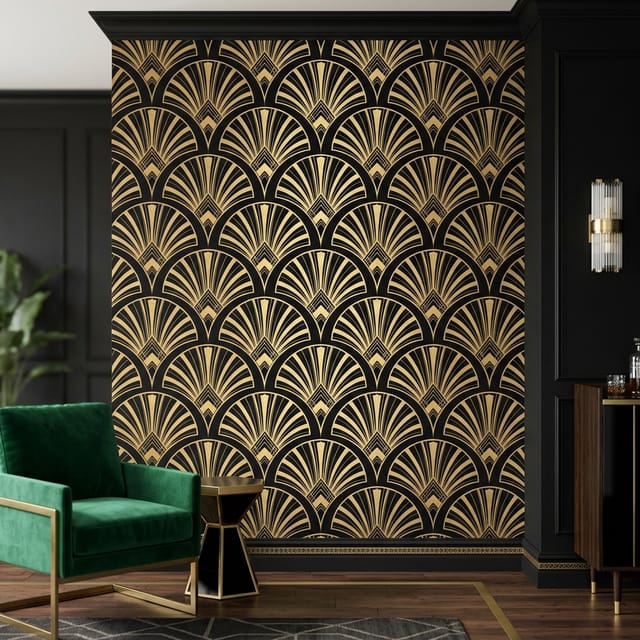
Geometric wallpaper is Zelda's love language—think Art Deco fan patterns, Greek key borders, or hexagonal tile effects in black and gold. She's not afraid of pattern on pattern, layering a geometric rug over patterned wallpaper because the shared vocabulary of angles makes it work. Wainscoting painted in contrasting colors adds architectural detail that echoes the stepped profiles of 1920s buildings.
Furniture & Shapes
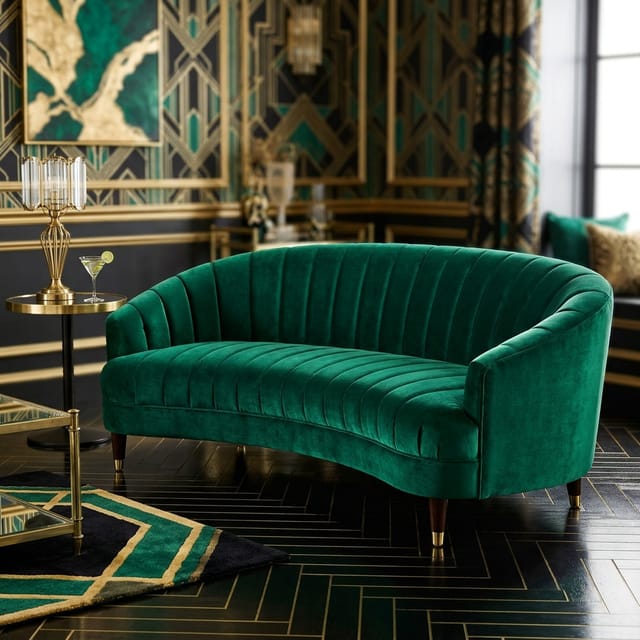
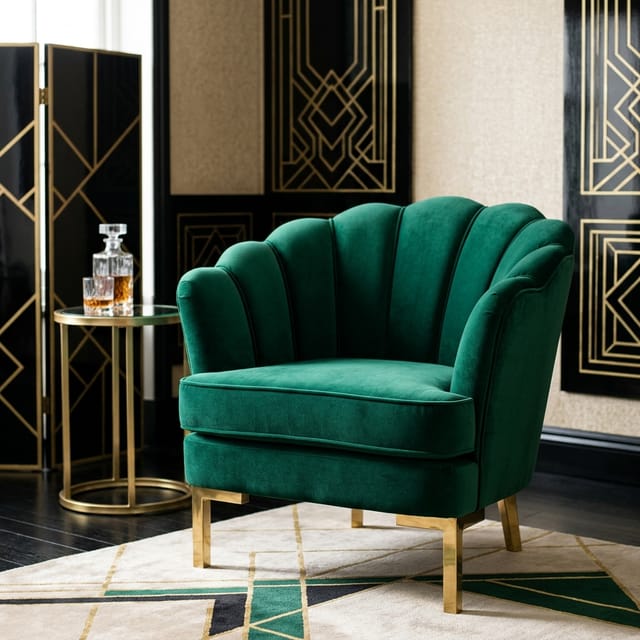
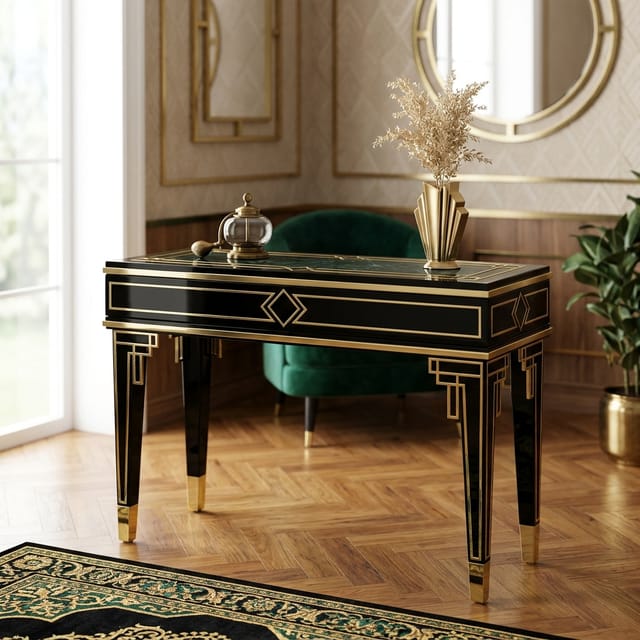
Look for furniture with curves that feel architectural—rounded barrel backs, waterfall edges, and stepped profiles that reference skyscraper silhouettes. Zelda loves a curved sofa in jewel-toned velvet, a black lacquer console with brass pulls, and chairs with geometric cutouts or inlaid details. The furniture should have presence and weight, pieces that anchor a room rather than fade into it.
Textiles
Velvet is non-negotiable, preferably in emerald, sapphire, or ruby tones that catch light like cut gemstones. Layer in silk pillows with geometric embroidery, faux fur throws that add texture without softening the architectural edge, and window treatments in heavy fabrics that puddle dramatically on the floor. Even your table linens should have a bit of sheen—this isn't a cotton-napkin kind of room.
Lighting
Lighting in Zelda's world is jewelry for the ceiling—think tiered glass chandeliers, brass sconces with geometric shades, and table lamps with sculptural bases in chrome or marble. She loves light that creates drama through shadow and reflection, fixtures that cast geometric patterns on walls and ceilings. Dimmer switches are essential because the right lighting level is somewhere between candlelit speakeasy and Broadway opening night.
Collections & Accessories
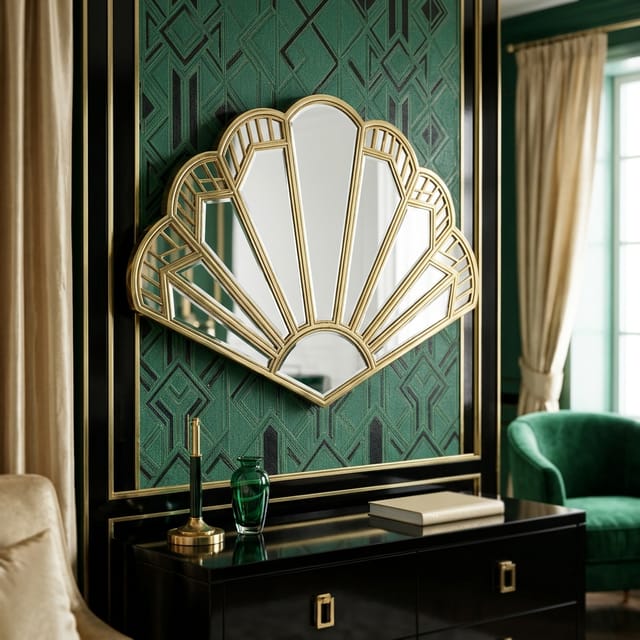
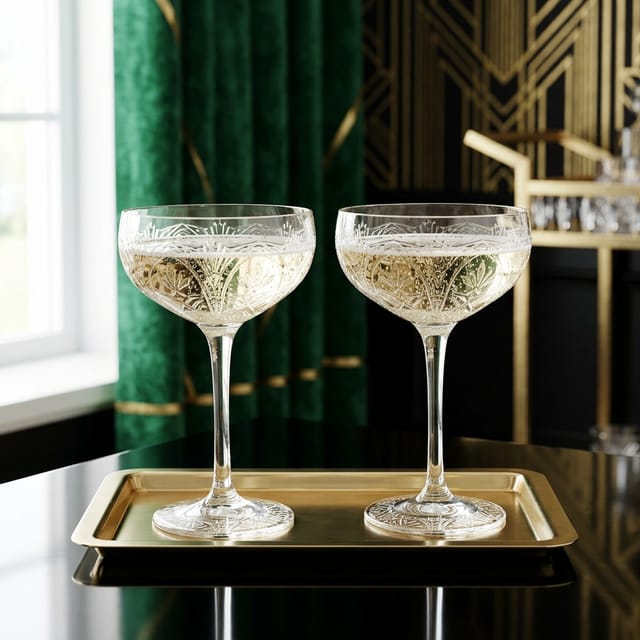
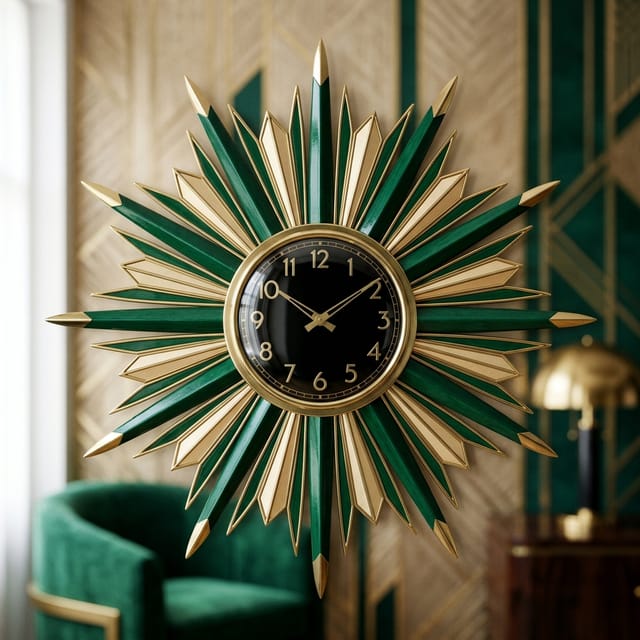
Display accessories that celebrate the machine age and exotic travels: chrome cocktail shakers, sunburst mirrors in graduated sizes, Egyptian-inspired sculptures, and vintage champagne coupes arranged on mirrored trays. Zelda collects objects with geometric clarity—nothing too organic or rustic. Books should be stacked with spines facing out to show off their vintage typography, and every surface needs at least one reflective element to bounce light around.
Plants & Flowers
Zelda's flora is architectural and dramatic—think tall birds of paradise, sculptural orchids in geometric planters, or a single dramatic palm that could have graced a 1920s hotel lobby. Flowers should be arranged with geometric precision: calla lilies in a black vase, white roses in a brass compote, or dramatic branches in a tall cylinder. Nothing too cottagey or wildflower-casual—these are arrangements that know they're being looked at.
The recipe
The Zelda Formula
- 160% champagne or cream base to create a luminous backdrop that makes everything else shine
- 220% high-contrast black in lacquered furniture and accent walls for architectural drama
- 315% jewel-tone velvet in emerald, sapphire, or ruby to add saturated luxury
- 45% brass geometry in mirrors, lighting, and hardware to stitch the whole look together with shine
Paint picks
Champagne Fizz #F4EBDD
Main walls and ceiling to create a warm, reflective backdrop that glows in lamplight
Piano Lacquer #101010
One accent wall or all trim in high-gloss finish for maximum drama and reflection
Speakeasy Emerald #0F5C46
Inside bookcases, back of open shelving, or a powder room for jewel-box intensity
Deco Brass #C9A227
Ceiling or interior of a bar cabinet for unexpected metallic glamour overhead
Room by room
Living Room
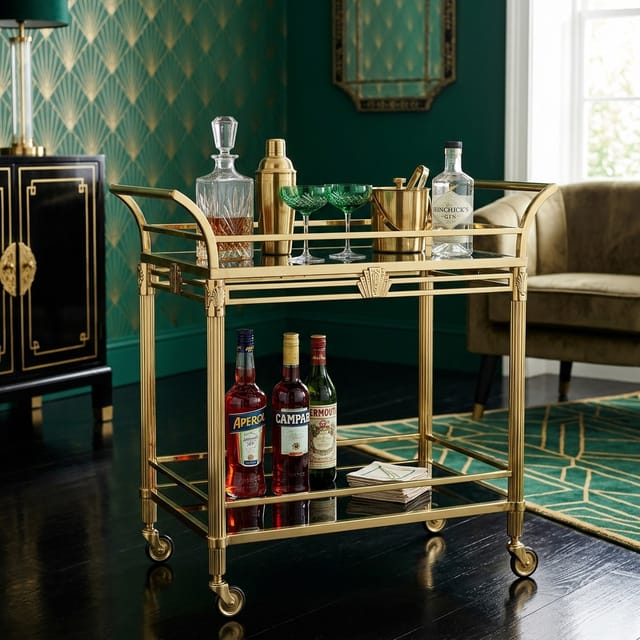
Anchor with a curved velvet sofa in emerald or sapphire, flank with black lacquer side tables, and hang a massive sunburst mirror as your focal point. Layer in brass floor lamps, geometric wallpaper on one accent wall, and a bar cart styled like you're expecting guests from 1928.
Bedroom
Upholster or find a headboard with Art Deco curves, dress the bed in champagne silk and emerald velvet, and install geometric sconces on either side. A mirrored nightstand, black lacquer dresser, and vintage-style vanity with a round mirror complete the boudoir-worthy scene.
Kitchen & Dining
If you can't remodel, focus on the dining area: a round table with a marble or black lacquer top, velvet dining chairs with brass legs, and a statement chandelier with tiered glass or geometric brass. Style open shelving with matching glassware—champagne coupes, cocktail glasses—and display them like the sculptures they are.
Bathroom
Go full jewel box with deep emerald or black walls, brass fixtures and mirrors with geometric frames, and white marble or hex tile floors. Add a vintage-style vanity tray with glass bottles, a small chandelier if your ceiling height allows, and the plushest black towels you can find.
Small Spaces & Rentals
Use mirrors strategically to multiply light and space—a large sunburst mirror or a wall of smaller geometric mirrors creates architectural interest without permanent changes. Invest in a few key velvet pieces and a brass bar cart that can move from room to room, and use removable geometric wallpaper on one wall to establish the style without commitment.
Get it on any budget
Under $200
Under $500
Renter-friendly
- Use removable Art Deco geometric wallpaper on one accent wall—it makes a huge impact and comes off cleanly when you move
- Invest in furniture and lighting rather than built-ins: a stunning brass floor lamp and velvet sofa travel with you and instantly establish the style
- Layer geometric rugs over builder-grade carpet to hide flooring you can't change and add pattern that reinforces the Deco vocabulary
- Swap out basic hardware on existing furniture and cabinets with brass geometric pulls—it's a small change that reads as major commitment to the aesthetic
Easy to avoid
- Mixing in too many curved, organic shapes—Zelda's world is angular and geometric, so save the flowing botanicals for another room
- Using flat, matte finishes throughout when the style depends on shine and reflection to create its glamorous atmosphere
- Choosing furniture that's too small or delicate—Art Deco pieces have presence and architectural weight, not spindly mid-century legs
- Forgetting the lighting—this style needs multiple sources at different levels to create the layered, dramatic glow that makes everything look expensive
FAQ
What's the difference between Art Deco and Art Nouveau?
Art Nouveau (1890-1910) is all about organic curves, flowing lines, and nature-inspired motifs—think Mucha posters and Tiffany lamps. Art Deco (1920s-1930s) is geometric, angular, and machine-age inspired with zigzags, sunbursts, and streamlined symmetry. If it looks like it grew, it's Nouveau; if it looks like it was engineered, it's Deco.
Can Art Deco maximalism work in a small apartment?
Absolutely—in fact, the style's emphasis on mirrors and reflective surfaces actually helps small spaces feel larger and more glamorous. Focus on one or two statement pieces like a velvet sofa or large sunburst mirror, use the full color palette but in smaller doses, and let geometric patterns on walls or rugs define the space without adding physical bulk.
How do I mix Art Deco with furniture I already own?
Start by identifying pieces that have geometric lines, substantial presence, or can be easily updated—a simple dresser becomes Deco with new brass geometric pulls. Add Deco elements through textiles (velvet pillows, geometric rugs), lighting (brass sconces, tiered chandelier), and accessories (sunburst mirrors, mirrored trays) that establish the style without requiring you to replace everything. The strong geometric vocabulary is forgiving of mixing eras as long as the shapes speak the same angular language.
What metals work in Art Deco besides brass?
Chrome, nickel, and silver are all period-appropriate and create a cooler, more streamlined version of the look—think ocean liner rather than jazz club. You can mix brass and chrome in the same space as long as you commit to both rather than adding just one chrome piece to an otherwise all-brass room. Copper and rose gold read too warm and contemporary for authentic Deco, but if you love them, use sparingly as accent notes.
How can I do Art Deco maximalism without it feeling like a themed restaurant?
The key is using the vocabulary without the costume: incorporate geometric patterns and luxe materials in a way that feels layered and personal rather than matching-set perfect. Mix in contemporary art, personal collections, and a few pieces from other eras that share the geometric sensibility. Let the style inform your choices without making every single item scream 1925—Zelda lives in the present, she just dresses with Jazz Age glamour.
Some links may earn MAX by Design a small commission at no cost to you.